Chicken with chickpeas and bell pepper
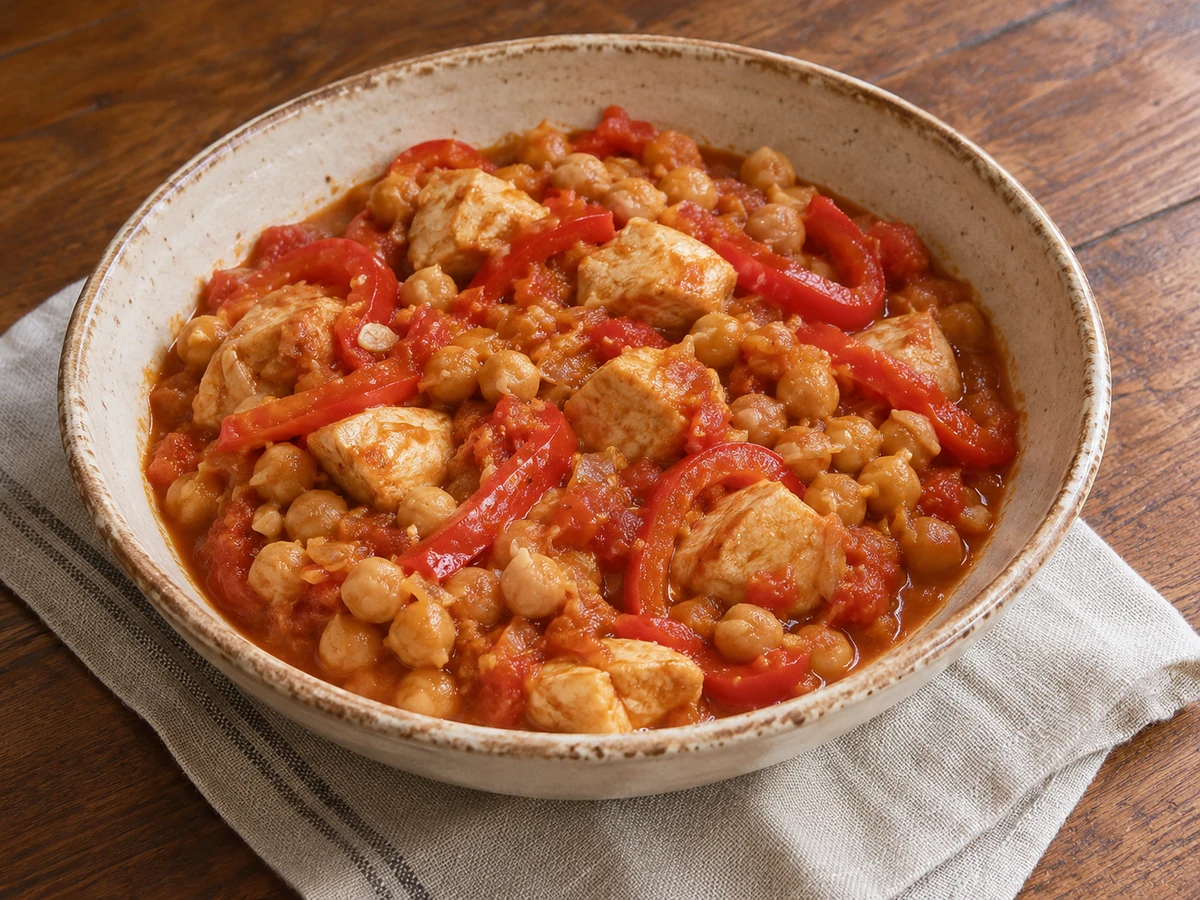
Pieces of chicken breast, cooked chickpeas and red bell pepper strips simmer in a light tomato sauce. A contemporary creation for Angola à table.
Ingredients
- 600 g raw skinless boneless chicken breast
- 400 g chickpeas already cooked without salt, drained
- 400 g raw red bell pepper, weight after removing stalk and seeds
- 300 g raw tomatoes
- 150 g peeled raw onion
- 10 g peeled raw garlic
- 20 g olive oil
- 300 ml drinking water, with a small hot reserve if needed
- 3 g salt
Preparation
Prepare vegetables: 400 g trimmed pepper in 1 cm strips, 300 g diced tomatoes, 150 g chopped onion and 10 g chopped garlic. Check 400 g drained cooked chickpeas.
On a separate board, cut 600 g skinless boneless chicken breast into 3 cm pieces; clean hands and utensils after handling.
Soften onion in 20 g oil for 8 minutes, add garlic for 1 minute, then tomatoes with their juice for 6 minutes.
Add pepper, a total of 300 ml water and 3 g salt; simmer partly covered for 10 minutes.
Add chicken, resume simmering and cook gently for 12 minutes, turning halfway through.
Fold in chickpeas and cook another 8 minutes. Check at least 74 °C at the centre of several thick chicken pieces; extend cooking if necessary.
Adjust consistency with a little hot water or a brief reduction, rest off the heat for 5 minutes and divide into four portions.
Introduction
This dish relies on three textures remaining recognisable in the same spoonful: tender chicken, a soft chickpea and a supple strip of pepper. Tomato makes a light sauce; it should not conceal the ingredients beneath a thick purée. The chicken goes in once the vegetables have begun cooking. This gives the pepper time to soften without unnecessarily extending the cooking of lean meat.
The recipe is a contemporary proposal for the Angola à table collection. It is not presented as an ancient Angolan speciality and receives no invented regional name. Chickpeas provide variation on pulse-based stews, without claiming to replace a traditional ingredient identically. The quantities make four main-course portions, with no rice, bread or other accompaniment included in the nutritional values.
Cultural context
This composition combines lean poultry, a whole pulse and red bell pepper as a contemporary editorial proposal. The title directly describes ingredients. It does not claim to represent a single Angolan tradition or establish a national origin for this precise combination. The diversity of the country's cuisines deserves more than historical attribution based only on the contents of one pan.
For national agricultural and food context, consult FAO in Angola: https://www.fao.org/angola. This institutional reference illuminates a setting; it does not certify the recipe. Poultry cooking recommendations can be consulted through USDA-FSIS: https://ask.fsis.usda.gov/article/What-is-a-safe-internal-temperature-for-cooking-meat-and-poultry.
Tips
Weigh chickpeas after cooking and draining, and peppers after trimming.
Keep heat moderate after adding chicken to limit drying.
Insert the probe into the centre of a thick piece without touching the pan's metal base.
Remove already cooked chicken before reducing sauce for a long time.
To double the recipe, choose a wider pan and check temperature; do not automatically double timings.
Planning
Start with the vegetables and chickpeas before handling chicken. Wash the peppers, remove stalks, thick membranes and seeds, then weigh 400 g usable flesh. Cut strips about one centimetre wide and four centimetres long. This lets them mingle with chickpeas without making long bands that are awkward to serve. Wash and dice the tomatoes, retaining their juice. Chop onion and garlic separately because their cooking times differ.
The 400 g chickpeas are a cooked, drained weight, not dried seeds. If starting with dried chickpeas, prepare and cook them separately according to the package, then weigh the required amount; this preliminary work is outside the stated timings. Check tenderness: they should crush under moderate pressure. Firm grains will not necessarily finish cooking during the final minutes in tomato sauce. Salted canned chickpeas would also change the nutritional assumptions.
Prepare the chicken next on a board reserved for raw meat. Do not rinse it under the tap. Remove any bone or cartilage fragments and weigh 600 g usable breast. Cut even pieces about three centimetres across and refrigerate while starting the sauce. Wash hands and clean knife, board and worktop before returning to the ready-to-cook vegetables. Use a clean plate for any meat once cooked.
Heat the 20 g oil in a deep sauté pan holding at least three litres. Add onion and soften over medium heat for eight minutes, stirring. It should soften without strong browning. Add garlic for one minute, then tomatoes and all their juice for six minutes. Gently scrape the bottom with a spoon to lift onion juices. If it dries too quickly, use a little of the measured 300 ml water rather than adding oil.
Add pepper strips, remaining water and three grams of salt. Partly cover and simmer for ten minutes. Put in chicken pieces, spread through the sauce and wait for simmering to resume. Cook gently for twelve minutes, turning pieces halfway through. Add chickpeas and continue for eight minutes, or longer if needed to cook the chicken completely. Check several thick pieces with a clean probe: aim for at least 74 °C at the centre. Time alone and exterior colour cannot guarantee this.
Peppers should be supple but identifiable and chickpeas hot through the centre. If the sauce looks too thin, temporarily remove cooked chicken to a clean plate and reduce the liquid uncovered for a few minutes before reuniting everything. If too thick, add a little hot water and stir gently. Rest off the heat for five minutes before dividing. The stated forty-five minutes of cooking is a guide including normal adjustments; extend it when actual conditions require.
Serving
First divide chicken pieces between four shallow bowls, then share chickpeas, peppers and sauce. This avoids a meat-heavy portion and another made almost entirely of vegetables. The dish can be eaten alone; a separately chosen accompaniment changes the meal's nutrients and is outside the calculation. Serve hot without leaving the pan on the table for a long time.
Storage
Promptly divide leftovers into shallow containers. Refrigerate at no more than 4 °C within two hours of cooking, sooner in very hot conditions, and consume within forty-eight hours. Do not use the container that held raw chicken for leftovers. Reheat only the amount needed to 74 °C at the centre, stirring to distribute heat. Loosen with a little water if chickpeas have absorbed sauce.
Variations
For a thicker sauce, crush a small spoonful of the chickpeas already included before returning them to the dish; do not add another quantity of pulses. Yellow peppers may replace red to change flavour, but their composition is not strictly identical. Bone-in thighs require reassessing edible weights and cooking time; they are not a direct exchange for the 600 g breast.
Nutrition notes
Chicken and chickpeas contribute to protein; chickpeas also provide carbohydrates and fibre. All oil is counted even if some remains on the pan walls. Added water does not reduce total recipe energy, but changes sauce concentration. Values describe one quarter of every ingredient, without accompaniments. They remain composition estimates rather than a promise of health effects.
Conclusion
The essential point is to prepare vegetables before adding poultry, then check the latter with a thermometer. Already tender chickpeas heat through at the end, preserving their shape. Cautiously adjusted sauce and even sharing of solids make the four portions more comparable. This editorial formula is offered for cooking and is not declared kitchen-tested.
Enjoy your meal
Enjoy your meal!