Mussels with pumpkin and coconut milk
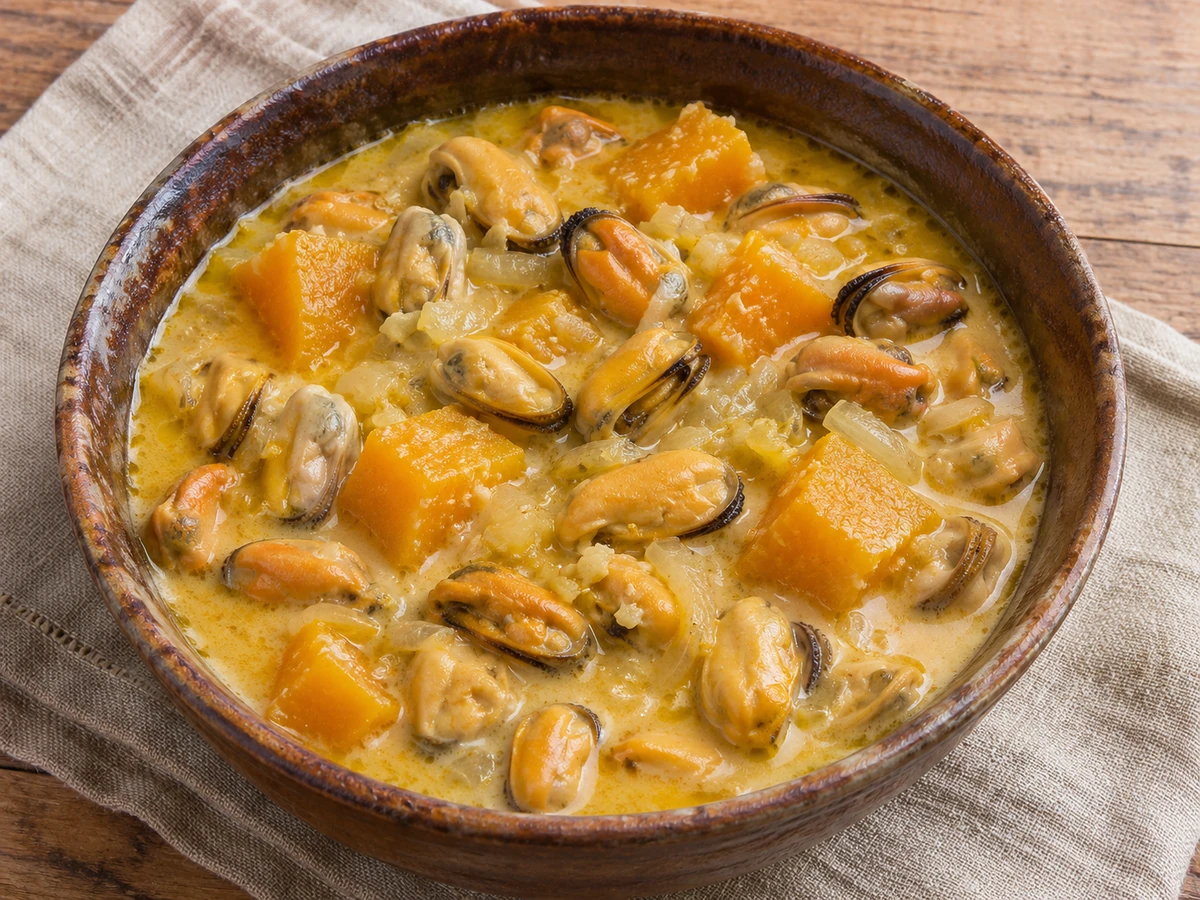
Mussel meat cooks in a fluid pumpkin, coconut milk and ginger sauce. A contemporary shell-free creation for Angola à table.
Ingredients
- 600 g raw shelled common mussel meat, without added salt or brine, thawed and drained weight
- 600 g raw pumpkin, weight without skin or seeds
- 200 g unsweetened coconut milk, thoroughly mixed
- 150 g peeled onion
- 10 g peeled garlic
- 10 g peeled fresh ginger
- 15 g olive oil
- 150 ml drinking water
- 1 g salt
Preparation
Thaw raw mussel meat in the refrigerator, drain and weigh 600 g; check for shell fragments.
Prepare 600 g pumpkin in 2 cm cubes; chop 150 g onion, 10 g garlic and 10 g ginger.
Soften onion in 15 g oil for 6–7 minutes; add garlic and ginger for 1 minute.
Add pumpkin and 150 ml water; cover and cook gently for 12–15 minutes until large cubes are tender.
Add 200 g thoroughly mixed coconut milk and 1 g salt; simmer for 3 minutes.
Add mussels; cover and cook for about 6–8 minutes. Check 70 °C in the centres of thick meats and hold this temperature for 2 minutes; extend if needed.
Divide mussels, pumpkin and all sauce into four servings; serve hot.
Introduction
Pumpkin and mussels need different cooking times: the former must be tender before the latter enter the saucepan. This recipe brings them together in a coconut sauce fluid enough to share with a spoon, without turning the pumpkin into a blended soup. Orange pieces remain recognisable while the mussel meat provides a firmer texture. No whole shellfish are included in this formula, allowing the genuinely edible quantity to be specified.
The 600 g means raw, shelled common mussel meat without added salt or brine, weighed after thawing and draining. Choose a product explicitly labelled raw or have it prepared by a professional. A bag of already cooked mussels does not correspond to the recipe. Whole shellfish weight cannot be replaced by the same weight of meat; yields vary and no fixed conversion factor is imposed here. Four servings are intended, excluding rice or other accompaniments.
Cultural context
This combination of mussels, pumpkin and coconut milk is a contemporary editorial creation. It carries no fabricated traditional name and does not claim to represent all Angolan coastal cuisines. Choosing shelled meat is a practical formulation choice rather than an asserted local custom.
The general context is documented by FAO in Angola: https://www.fao.org/angola. For the core-cooking reference, consult the Food Standards Agency: https://www.food.gov.uk/safety-hygiene/cooking-your-food. These institutional references inform context and preparation; they do not attest to this recipe's origin.
Tips
Weigh mussel meat after thawing and draining, not with protective ice glaze.
Retain juices formed during cooking, but discard thawing liquid.
Check pumpkin tenderness before introducing mussels.
Stir coconut milk before weighing.
For larger quantities, use a wider saucepan and check several thick meats with the probe.
Planning
Thaw the mussel meat in a covered container in the refrigerator at no more than 4 °C, following the manufacturer's instructions. Plan ahead: this operation is not included in the stated sixty minutes of preparation and cooking. Drain the thawing liquid, then weigh 600 g meat. Do not use a product of uncertain origin, canned or marinated mussels. Check for visible shell fragments. In contrast to thawing liquid, the juices released during cooking in the sauce are retained in the dish.
Wash the pumpkin before cutting, remove skin, seeds and fibres, then weigh 600 g usable flesh. Cut into approximately 2 cm cubes. Equal-sized pieces cook more evenly; thin slices would break down before larger cubes became tender. Chop onion, garlic and ginger, keeping them separate. Stir the coconut milk in its container before weighing 200 g: the fatty part must not remain behind or form the entire measured quantity.
Use a wide covered saucepan holding at least three litres. Heat fifteen grams of oil over medium heat and soften the onion for six to seven minutes without strong browning. Add garlic and ginger for one minute. Add pumpkin cubes and 150 ml water, stir and cover. Cook gently for twelve to fifteen minutes. Lift the lid once or twice to turn the pieces. If the bottom dries, add a little hot water, enough to prevent burning without flooding the vegetables.
Pierce one of the largest cubes; it should yield easily. If still firm, continue this stage before adding mussels. Then pour in 200 g coconut milk and one gram of salt. Stir gently and bring the sauce to a simmer for three minutes. There is no need to blend. A few pumpkin corners may break down and naturally thicken the sauce, but most cubes should remain visible. Reserve any further salt adjustment for serving because mussels already contain salt naturally.
Add drained mussel meat and gently stir to distribute it through the hot sauce. Cover and simmer gently for about six to eight minutes, stirring once halfway through. Times do not replace checking: use a clean probe to verify that the centres of the thickest meats reach 70 °C and maintain that temperature for two minutes. Extend in short stages if needed and follow any stricter package instructions. Since there are no shells, their opening cannot serve as a guide.
Turn off the heat once the mussels are cooked. The sauce should coat the ingredients while remaining fluid. If too thick, fold in a little hot water; if very runny, accept a bowl presentation rather than greatly extending mussel cooking, which would toughen them. Divide meat and cubes before the liquid. Retain all cooking juices in the four servings so that the formulation and distribution remain consistent.
Serving
Serve in bowls or deep plates to retain all the sauce. Share the mussels first, then pumpkin cubes, and add liquid. This avoids one serving consisting mainly of coconut milk and another containing almost all the shellfish. Plain rice may be offered separately but is excluded from the stated nutrition. Tell diners that the dish contains molluscs, an allergen distinct from fish or crustaceans.
Storage
Preferably serve immediately. Promptly divide leftovers into small shallow containers and refrigerate at no more than 4 °C within two hours of cooking. Consume within twenty-four hours. Reheat only the amount needed, once, until thoroughly hot, stirring gently. Do not refreeze the raw meat after thawing. Excessive time outside refrigeration cannot be corrected by coconut milk or another boil.
Variations
For a thicker sauce, crush a few pumpkin cubes before adding mussels and keep the rest whole. For a subtler aroma, reduce ginger at the outset. Another squash can be used after adapting its cooking time, but the pumpkin calculation does not describe every variety exactly. A light coconut drink does not automatically replace coconut milk. Precooked mussels require another method and a new nutritional reference.
Nutrition notes
Mussel meat is counted raw, without shells or brine. Coconut milk, all oil, the ingredients' intrinsic salt and the added gram of salt are included. Mussels' natural sodium can represent a notable share of the total; a small salt addition therefore does not mean a sodium-free dish. Values concern one quarter of the entire preparation with cooking juices retained, excluding accompaniments. They remain estimates, not an analysis of the served dish or a medical promise.
Conclusion
Waiting for tender pumpkin before adding mussels respects their different cooking needs. Measuring the centres of the meats, retaining cooking juices and dividing solids before sauce make the formula more precise. This contemporary proposal remains a recipe to cook and is not presented as kitchen-tested.
Enjoy your meal
Enjoy your meal!