Roasted plantain salad with spinach and peanuts
Golden oven-roasted plantain half-moons, baby spinach, tomato and peanuts with a light lime dressing. A contemporary creation.
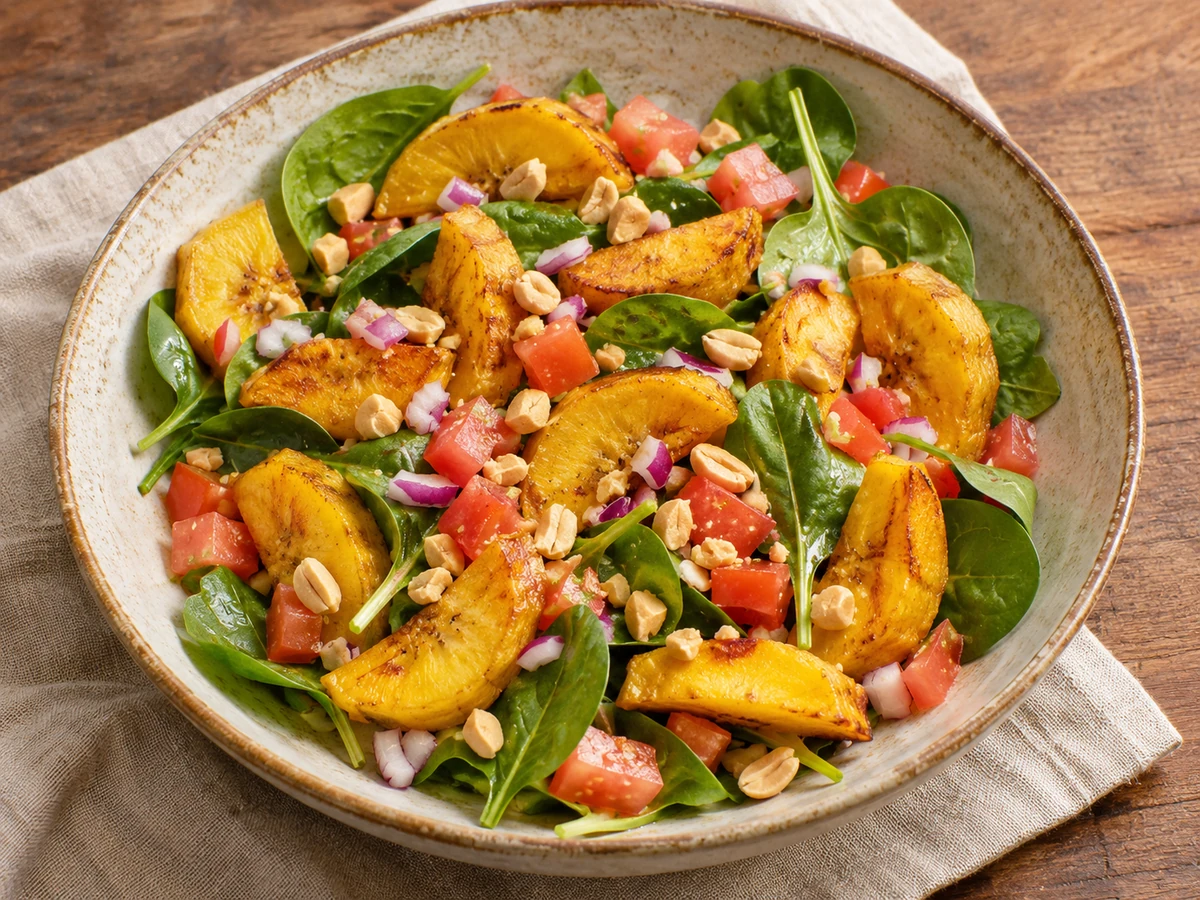
Ingredients
- 600 g raw yellow plantain flesh, without skin
- 120 g raw baby spinach, sorted and washed
- 200 g raw tomatoes, usable weight
- 60 g peeled red onion
- 40 g roasted unsalted shelled peanuts
- 20 g olive oil: 10 g for plantain and 10 g for dressing
- 30 g freshly squeezed lime juice
- 2 g salt: 1 g for plantain and 1 g for dressing
Preparation
Preheat the oven to 200 °C; peel and weigh 600 g plantain, then cut into 1.5 cm half-moons.
Coat plantain in 10 g oil and 1 g salt; spread in one layer on baking paper.
Bake 15 minutes, turn and continue 10–15 minutes until centres are tender and edges golden.
Sort, wash and dry 120 g baby spinach; dice 200 g tomatoes, chop 60 g onion and roughly chop 40 g unsalted peanuts.
Let the plantain lose its intense heat for about 10 minutes on a clean plate.
Whisk 10 g oil, 30 g lime juice and 1 g salt; dress spinach, tomatoes and onion.
Gently add plantain, scatter over peanuts and immediately divide into four portions.
Introduction
This salad combines a cooked, still slightly warm component with fresh leaves: plantain supplies sweet, substantial flesh, spinach a supple texture and peanuts a crunchy contrast. Lime balances the sweetness without becoming a marinade intended to preserve the vegetables. The plantain pieces remain visible; neither a purée nor dry chips are wanted. Oven cooking with a measured quantity of oil helps control this texture.
Choose yellow plantains, perhaps with a few brown marks, whose flesh remains firm after peeling. Very green fruit would be starchier and would require a different cooking adjustment; completely black, very soft fruit would be difficult to turn. The stated weights refer to the part actually used. The four portions are designed as generous starters or side dishes, with no additional food included in the nutritional calculation.
The recipe belongs to the contemporary creations in Angola à table. The presence of plantain and ginguba, a name associated with peanuts in the Angolan context, does not justify presenting this particular combination as an ancient national salad. Its identity is therefore described through its ingredients and preparation rather than a fabricated origin story.
Cultural context
This proposal brings plantain, fresh leaves and peanuts together in a contemporary editorial composition. It does not replace documented Angolan preparations or claim a specific local name. FAO resources in Angola provide institutional context on the country's agriculture and food systems: https://www.fao.org/angola. They do not certify this salad's origin or a particular historical use of spinach in this combination.
Tips
Dry spinach properly before weighing and dressing it.
Weigh the 600 g plantain after peeling; purchased weight will necessarily be higher.
Turn pieces with a wide spatula without crushing them with a fork.
Reserve exactly half the oil for dressing; an unmeasured extra drizzle is not included in the calculation.
Tell diners that the salad contains peanuts even when they appear only as small fragments.
Planning
Preheat a conventional oven to 200 °C and line a large tray with baking paper. Wash the plantains before peeling to avoid transferring dirt from skin to flesh. Trim the ends, slit the skin lengthwise without cutting deeply into the fruit, then remove it. Weigh 600 g flesh. Halve each plantain lengthwise, then cut into approximately 1.5 cm thick half-moons. Keep a uniform thickness instead of mixing tiny fragments and large chunks.
Toss the half-moons with 10 g oil and 1 g salt in a bowl, lifting them to coat. Spread on the tray in one layer with a little space between pieces. An overcrowded tray retains more steam and gives less golden surfaces. Bake for 15 minutes, turn gently with a spatula and continue for 10–15 minutes. The edges should be coloured and the centre tender when pierced with a knife point. If the fruit was less ripe, extend cooking in short intervals while checking the centre, rather than pursuing dark colour at any cost.
While it cooks, sort the baby spinach. Discard damaged leaves and remove particularly long or tough stems. Wash thoroughly in drinking water, then spin dry or dry on a clean cloth: dripping leaves would dilute the dressing and make plantain pieces slippery. Weigh 120 g after sorting. Use a clean board and utensils for all components eaten raw, separate from any meat or fish preparation being done at the same time.
Wash tomatoes, remove damaged parts and dice into approximately one-centimetre pieces. Retain the flesh and cutting juice within the stated 200 g, without adding a second unweighed tomato. Peel and very finely chop the red onion to avoid large sharp pieces. Coarsely chop peanuts with a knife: small fragments remain noticeable, whereas powder would absorb dressing and change the dish's appearance. Check the packaging to confirm they are unsalted.
After baking, transfer the plantain to a clean plate and allow its intense heat to subside for about 10 minutes. It may remain slightly warm but should no longer release abundant steam on contact with leaves. Whisk the remaining 10 g oil with 30 g lime juice and the last gram of salt. Pour dressing over spinach, tomatoes and onion, toss once and add plantain. Lift gently with two large spoons and add peanuts at the last moment.
Serving
Present on a wide platter rather than in a deep bowl that compresses the leaves. Divide golden pieces between four plates, then distribute spinach, tomato and peanut fragments. Slightly warm plantain and fresh vegetables give the intended contrast. Once dressed, leaves gradually lose their structure; finish tossing just before eating rather than leaving the dish waiting on a buffet.
Storage
If advance preparation is necessary, keep dry leaves, chopped vegetables, dressing and peanuts separate. Cool plantain promptly in a shallow container and refrigerate at no more than 4 °C within two hours of cooking. Assemble when serving and consume prepared components within 24 hours. Do not leave an assembled salad at room temperature for more than two hours. Lime juice does not replace refrigeration or make poor storage acceptable.
Variations
For subtler onion flavour, reduce its quantity during preparation; do not compensate with added sugar. Small-diameter plantain may be left as whole rounds, keeping the same thickness and weight. Replacing peanuts with another seed changes allergens and nutritional values; clearly identify that variation. A peanut-free version can be made, but it will not have the crunch or composition stated for this formula.
Nutrition notes
Plantain supplies a substantial share of carbohydrate, while peanuts and oil contribute to the portion's fat. Peanuts also contribute protein and the plant foods contribute fibre. Quantities are calculated for four equal portions, including all planned juice, oil and salt. A plate with more plantain and fewer leaves would not match a uniform quarter of the preparation exactly. These are dietary estimates without medical promises.
Conclusion
The salad depends on managing heat and moisture: tender golden plantain, thoroughly dried leaves, measured dressing and late assembly. Waiting a few minutes after baking avoids turning baby spinach into a cooked garnish. Keep peanuts for the end and distribute the pieces fairly. This editorial creation is offered as a formula to cook and is not represented as kitchen-tested.
Enjoy your meal
Enjoy your meal!