Chickpea soup with okra and tomato
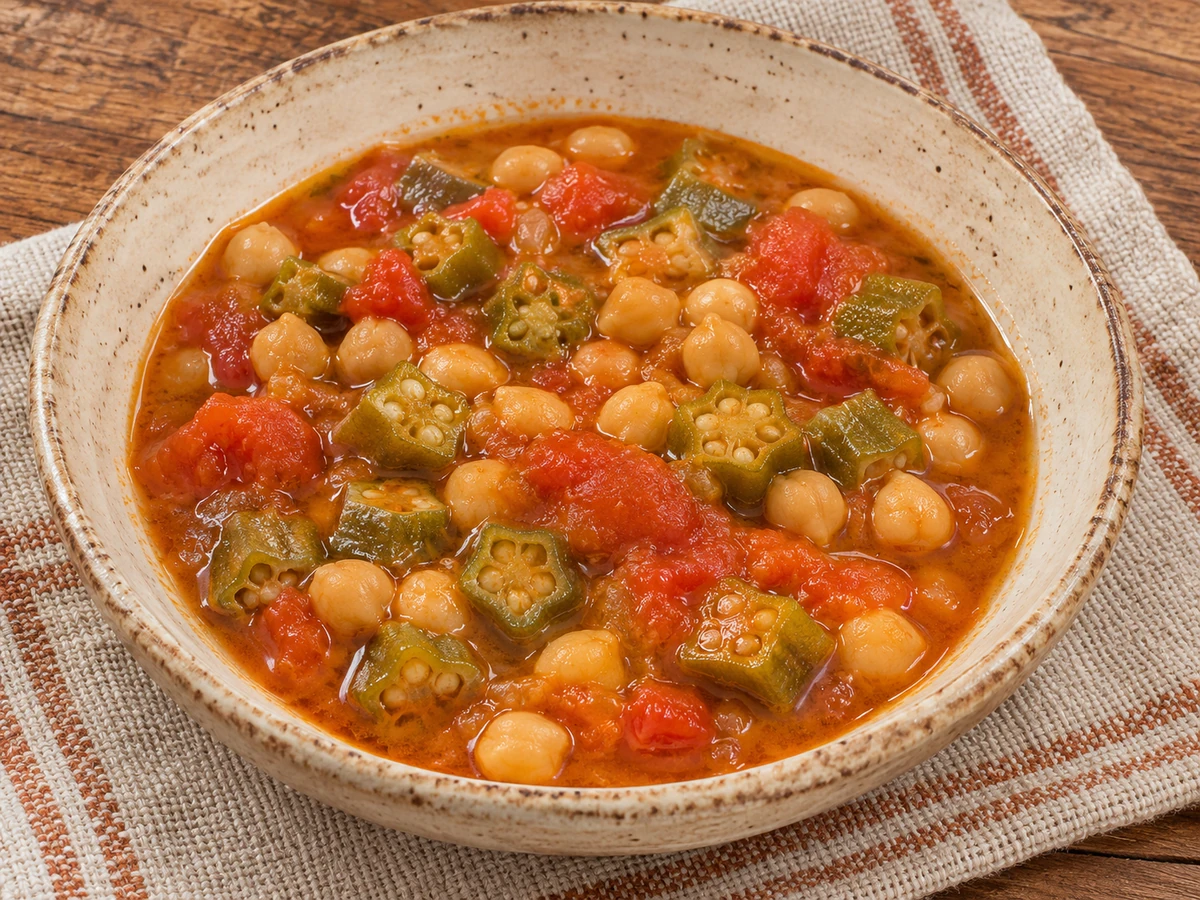
A chunky soup combining cooked chickpeas and okra rounds with tomato broth. A contemporary creation for Angola à table.
Ingredients
- 500 g chickpeas boiled without salt, drained
- 300 g okra cooked without salt, drained
- 400 g raw tomatoes
- 120 g peeled onion
- 8 g peeled garlic
- 20 g olive oil
- 900 ml drinking water
- 2 g salt
Preparation
Check and drain 500 g chickpeas already cooked without salt; cut 300 g okra already cooked without salt into 1 cm rounds.
Dice 400 g tomatoes, retaining their juice; separately chop 120 g onion and 8 g garlic.
Soften onion in 20 g oil for 7 minutes, then add garlic for 1 minute.
Add tomatoes and juice; cook over medium-low heat for 8 minutes, keeping the base moist.
Add a total of 900 ml water and 2 g salt; simmer partly covered for 8 minutes.
Add chickpeas and okra; gently heat for 6 minutes until chickpeas are hot at their centres.
Rest off the heat for 5 minutes, stir gently and divide into four portions.
Introduction
This soup aims for an enveloping consistency without becoming a purée. Chickpeas remain whole, okra supplies tender rounds and tomato gives the liquid an orange-red colour. The slight thickening produced by okra is part of the intended result: there is no need to add flour or a second fat to thicken it. A spoon should collect broth, a few chickpeas and a piece of vegetable together.
The formula makes four portions using chickpeas and okra that are already cooked, unsalted and properly stored. Their preliminary cooking is not included in the stated times. This keeps the final cooking short and lets attention focus on tomato and the distribution of textures. It is a contemporary creation for the Angola à table collection, not a reproduction of an identified traditional Angolan soup. Its name describes the ingredients without inventing a regional designation.
Cultural context
Okra and pulses offer many culinary possibilities, but their presence together does not by itself establish a specific national recipe. This proposal chooses whole chickpeas and a tomato base to create a contemporary soup within a collection devoted to Angola. It therefore receives no invented local name and is not presented as documented family heritage.
For the country's agricultural and food context, the FAO representation in Angola provides an institutional resource: https://www.fao.org/angola. This reference illuminates general context; it certifies neither the proposed formula nor its age. Transparency about that distinction allows ingredients to be explored while respecting genuinely documented traditional preparations.
Tips
Weigh both cooked bases after draining, not together with cooking water.
Cut okra without reducing it to tiny fragments, retaining recognisable rounds.
Take any water needed for the tomato base from the measured 900 ml.
Use a broad spoon and limit movement after adding okra.
For a large gathering, increase saucepan size and check heat at chickpea centres rather than mechanically doubling cooking times.
Planning
Begin by checking the two already-cooked ingredients. Chickpeas should squash easily between a fork and a plate while retaining their outline in the colander. A chalky centre indicates insufficient preliminary cooking; soften them separately instead of relying on this soup's few minutes. Weigh 500 g after draining. Salted canned chickpeas do not match the stated nutritional formula: choose preparation without added salt or indicate that the salt values will differ.
Use plain cooked, drained okra. Weigh 300 g usable pods, remove hard stalk ends if still present, and cut into rounds approximately one centimetre thick. Very soft okra may fall apart; handle it with a broad spoon and retain some longer pieces rather than finely chopping it. If preparing these two bases the day before, cool them promptly and keep at no more than 4 °C. Do not use a pan of pulses left unrefrigerated overnight.
Wash the tomatoes, remove only the hard stem attachment and dice the flesh, retaining skin and all juice. Weigh 400 g usable tomato before cooking. Finely chop the onion and keep garlic separate. Crush or chop the garlic finely enough to avoid large raw fragments when eating. Measure the 900 ml water in a jug as well; measuring distinguishes an intentionally light soup from uncontrolled dilution.
Heat the oil over medium heat in a saucepan holding at least three litres. Add onion and soften for seven minutes, stirring regularly. It should neither stick nor turn dark. Add garlic for one minute, then tomatoes and their juice. Cook for eight minutes over medium-low heat. Crush only the largest tomato pieces with the back of the spoon. Keep the mixture moist; if the base dries, take a spoonful of water from the amount already measured.
Add remaining water and two grams of salt. Bring to a simmer and maintain it for eight minutes with the lid partly open. This integrates the tomato base into the liquid before the fragile ingredients arrive. Add chickpeas and okra rounds. Stir once from bottom to top, then heat gently for six minutes until chickpeas are hot in their centres. Avoid a rolling boil: it would damage the chickpeas and unnecessarily break down the okra.
Taste a cooled spoonful containing a little of everything, not broth alone. Check a chickpea's heat and a thick okra round's tenderness. If the soup seems too dense, add a little hot water, knowing that this changes volume but not the saucepan's total nutrients. Do not automatically add salt. Turn off the heat and rest for five minutes. This short rest makes serving easier and reveals the final consistency, slightly thicker than during boiling.
Serving
Serve in four deep bowls, dividing chickpeas and okra first and then adding broth. This avoids serving mostly liquid to the first diners and nearly all the solids to the last. Do not conceal okra's slight thickening with excessive garnish. The recipe includes no bread, rice or additional chilli; any accompaniment is served separately and is not included in the stated values.
Storage
If the soup contains chickpeas and okra cooked earlier and reheated here, preferably prepare the amount to be eaten immediately and avoid repeated cooling and reheating cycles. For soup made with freshly cooked bases, promptly divide leftovers into shallow containers, refrigerate at no more than 4 °C within two hours and consume within 48 hours. Reheat only the required portion until evenly hot, stirring. Refrigeration does not make a lengthy wait at room temperature acceptable.
Variations
For a slightly thicker soup, mash a small ladleful of the chickpeas already specified before adding okra, then return that ladleful to the saucepan. Do not add a second quantity of pulses without adjusting proportions. Riper tomatoes produce a softer base; firm tomatoes may need a few more minutes before adding the already-cooked ingredients. Variations change texture and sometimes the calculation; they do not represent results declared identically tested.
Nutrition notes
Chickpeas contribute protein and fibre, while okra and tomato contribute to the soup's vegetable composition. Respect cooked, drained weights when interpreting estimates. All oil and added salt are counted; broth does not make them disappear from the total. The figures describe a portion equal to one quarter of the saucepan, without accompaniments, and make no health promise.
Conclusion
Success mainly depends on properly cooked bases, tomatoes sufficiently softened before liquid is added, and a gentle final cooking stage. Chickpeas should remain identifiable and okra tender, with lightly thickened broth. Dividing solids as carefully as liquid volume produces four consistent portions. This editorial formula is offered to be cooked; it is not represented as kitchen-tested.
Enjoy your meal
Enjoy your meal!