Green lentil soup with sweet potato and ginger
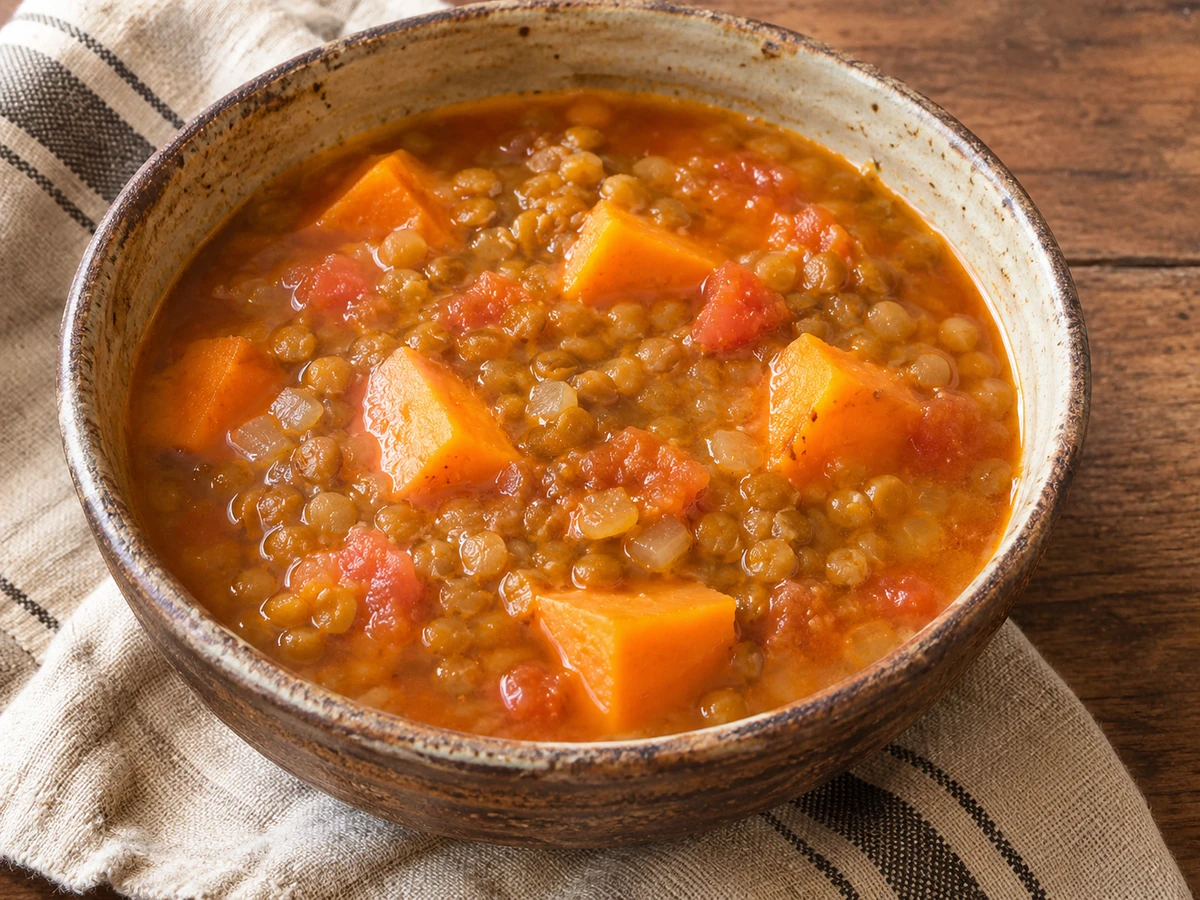
An unblended green lentil, sweet potato and tomato soup with fresh ginger. A contemporary creation for Angola à table.
Ingredients
- 200 g dried green lentils
- 500 g raw sweet potato, peeled weight
- 300 g raw tomatoes
- 150 g peeled onion
- 15 g peeled fresh ginger
- 20 g olive oil
- 1,200 ml drinking water, plus a little hot water if needed
- 3 g salt
Preparation
Sort and rinse 200 g dried lentils; cut 500 g sweet potato into 1.5 cm cubes, dice the tomatoes and finely chop the onion.
Soften the onion in 20 g oil for 6–8 minutes; add 15 g chopped ginger for 30 seconds.
Add the lentils and 1,200 ml water; bring to the boil, then simmer partly covered for 15 minutes.
Add the sweet potato, tomatoes and their juice, and 3 g salt. Simmer for another 15–20 minutes.
Check several lentils and a large cube. If necessary, remove cubes that are already tender and continue cooking the lentils with a little hot water.
Reunite everything, rest off the heat for 5 minutes and divide between four bowls, sharing the solids before adding broth.
Introduction
This soup combines lentils that retain their shape with sweet potato cubes tender enough to cut with a spoon. Ginger infuses a light tomato broth; it should not become an aggressive paste that masks the other ingredients. The dish relies on the contrast between grain, tender vegetable and liquid rather than a fully blended texture. A sufficiently wide saucepan lets you stir without crushing the cubes.
The recipe is a contemporary creation for the Angola à table collection, rather than a transcription of a documented regional speciality. It offers a practical way to cook vegetables and pulses without inventing a traditional history. Green lentils are chosen for their ability to hold their shape. Red split lentils break down more readily and would not give the same result with these timings. The quantities make four generous bowls, with no bread, rice or other accompaniment included in the calculation.
Cultural context
This combination of sweet potato, tomato and ginger belongs to a contemporary approach inspired by a collection devoted to Angola. It does not establish that green lentils or this precise combination belong to a national tradition. The descriptive name therefore identifies ingredients and technique, without a fabricated local name or unverifiable origin story.
The FAO representation in Angola provides an institutional starting point for understanding the country's agricultural and food context: https://www.fao.org/angola. This resource documents general context; it does not certify the recipe or its age. When exploring Angolan cuisine, it is useful to distinguish documented preparations from the editorial creations offered here.
Tips
Weigh sweet potato after peeling to maintain the proportion to lentils.
Keep a steady simmer rather than a rolling boil that breaks the pieces.
Keep hot water available to adjust the broth gradually.
Check several lentils for tenderness; one grain does not represent the whole saucepan.
To double the quantities, use a larger pan and check that simmering resumes; do not automatically double the time.
Planning
Spread the lentils on a light-coloured plate and remove any small debris. Rinse in a fine sieve until the water runs clean. This version does not require soaking. If the package specifies particular preparation, follow it and adjust the cooking time by checking actual tenderness. Weigh the lentils dry: 200 g of cooked lentils cannot replace the stated quantity, since they contain substantial absorbed water.
Wash the vegetables before cutting. Peel the sweet potato, weigh 500 g of flesh and cut into approximately 1.5 cm cubes. Uniform size matters more than decorative cutting: small fragments would disappear while large pieces remained firm. Dice the tomatoes and retain all their juice. Finely chop the onion. Grate or very finely chop the ginger, removing particularly tough fibres rather than leaving long strips in the bowl.
Pour the oil into a saucepan holding at least three litres. Add the onion and cook over medium heat for six to eight minutes, stirring, until softened. The aim is not caramelisation. Add the ginger and stir for thirty seconds, then add the lentils and 1,200 ml water. Bring to the boil, immediately reduce the heat and simmer for fifteen minutes with the lid slightly ajar. Keep the tomatoes for the second stage so that the lentils begin softening in water that has not been acidified.
Add the sweet potato cubes, tomatoes with their juice and three grams of salt. Return to a simmer and cook for another fifteen to twenty minutes. Stir occasionally along the bottom without working the mixture into a purée. The times are guides: older lentils may need longer. Taste a few grains cooled on a clean spoon; their centres should no longer be dry or hard. Pierce a large sweet potato cube as well.
If the cubes are tender while the lentils remain firm, temporarily lift the cubes out with a slotted spoon and continue cooking the lentils before reuniting everything. Add small amounts of hot water if the liquid runs low. The finished soup should flow, with visible grains and pieces. Do not correct excessive evaporation with oil. Turn off the heat once both components are tender, then rest for five minutes before dividing into portions.
Serving
Serve hot in bowls deep enough to hold broth and pieces. Gently stir from bottom to top just before serving. Divide the lentils and cubes first, then add liquid, avoiding a nearly clear first portion and an overly dense last one. An extra garnish may be served separately, but it is not included in the formula or nutrition. The sweet potato provides sufficient sweetness; no sugar is added.
Storage
To keep leftovers, promptly divide them between several shallow containers. Refrigerate at no more than 4 °C within two hours of cooking and consume within forty-eight hours. Do not wait for the large pan to become completely cold on the table. Reheat only the amount needed until hot throughout, stirring. The soup thickens as it stands; loosen with a little drinking water rather than another unmeasured drizzle of oil.
Variations
For a slightly thicker texture, mash one small ladleful of the ingredients already included and return it to the saucepan; leave the remainder whole. For less ginger flavour, use less at the start instead of trying to remove its flavour by cooking longer and breaking down the cubes. Another lentil variety requires reassessing liquid and timing. These adaptations are variations on the formula, not substitutions whose identical results have been verified.
Nutrition notes
Lentils provide some of the protein and fibre; sweet potato contributes particularly to the portion's carbohydrates. All oil is counted. Water quantity changes concentration in the bowl, but not the total energy of the saucepan when everything is divided into four equal portions. A smaller serving does not have the values of a quarter of the recipe. The figures remain composition estimates without therapeutic claims.
Conclusion
The main guide is the cooking of two ingredients that behave differently: tender but recognisable lentils and soft sweet potato that has not completely dispersed. Adjusting the water and, if necessary, temporarily removing cubes that are already cooked provides more control than indiscriminately extending the cooking of the entire pan. Serve after a short rest, carefully dividing the solids. This editorial formula is not represented as kitchen-tested.
Enjoy your meal
Enjoy your meal!