Roasted aubergines with sweet potato mash and ginguba
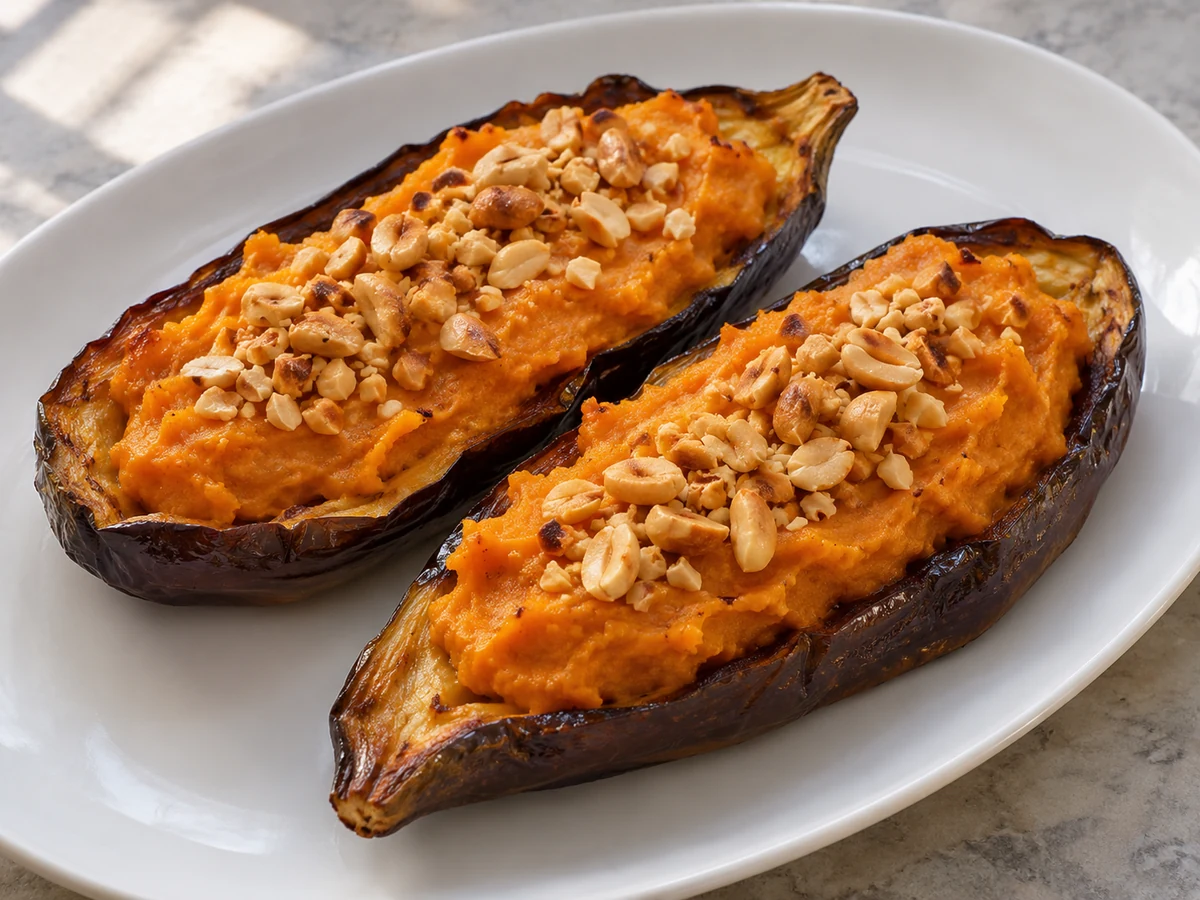
Tender aubergine halves filled with sweet potato mash and finished with crunchy roasted ginguba.
Ingredients
- 800 g raw aubergines, weighed after removing the stalks
- 700 g raw sweet potato, peeled weight
- 60 g unsalted roasted ginguba, meaning shelled peanuts
- 8 g peeled garlic
- 25 g lime juice
- 30 g olive oil, including 20 g for the aubergines and 10 g for the mash
- 100 ml hot drinking water reserved for the mash
- 4 g salt, divided into 2 g and 2 g
Preparation
Preheat the oven to 200 °C. Wash and halve the aubergines, then score their flesh without piercing the skins.
Distribute 20 g oil and 2 g salt over the cut sides. Roast on a tray for 35 to 45 minutes, until the flesh is very tender.
Steam the 700 g cubed sweet potato and 8 g garlic for 18 to 22 minutes. Allow steam to escape for 2 minutes.
Mash with 10 g oil and 2 g salt. Gradually add the hot water needed, starting with 30 ml, then the 25 g lime juice.
Chop the 60 g roasted ginguba. Press the aubergine flesh down slightly without removing any.
Fill with all the mash and all the ginguba. Rest for 5 minutes and divide into four servings.
Introduction
The soft aubergine flesh forms an edible shell for fairly firm sweet potato mash. Roasted ginguba brings a dry, crunchy contrast, while lime stops the combination from seeming too sweet. The garlic is cooked with the sweet potato so it blends into the mash instead of giving a sharp sensation. This construction relies on simple ingredients and straightforward cooking, with no cheese, cream or added sauce.
Choose aubergines of similar size, ideally four vegetables giving eight halves. Usable weight matters more than the number, however: the 800 g is weighed after removing the stalks. A serving is one quarter of all the ingredients, which might mean two small halves or one large half. This recipe is a contemporary proposal, and its descriptive title makes no claim to an attested regional speciality.
Cultural context
Ginguba here means the roasted peanuts that contrast with the two soft vegetables. This aubergine topping is a contemporary composition, with no claim to reproduce an old Angolan dish. The country’s FAO profile supplies general agricultural context, not evidence for this recipe: https://www.fao.org/angola.
Tips
Use firm, glossy aubergines; wrinkled skin may signal less pleasant, drier flesh.
Measure the oil before brushing: aubergine absorbs it quickly, and pouring by eye would greatly change the result.
The mash should stay dense enough to sit on the flesh; first adjust with a little water rather than a long, drying cooking period.
Choose a potato masher or fork rather than prolonged blending, which makes texture less immediately controllable.
Slide the spatula under the full length of the skin to avoid tearing the filled aubergine.
Planning
Preheat a conventional oven to 200 °C. Wash the aubergines and dry them before cutting lengthways. Score the flesh in a criss-cross pattern with the tip of a small knife without piercing the skin. The cuts help heat and oil penetrate; they should not detach cubes that would fall out when serving. Place the halves on a baking-paper-lined tray, cut sides facing up.
Brush on the 20 g oil intended for the aubergines, then distribute 2 g salt over all the cut surfaces. Bake for 35 to 45 minutes. The flesh should yield readily to a spoon while the skin remains strong enough to move. If the surface colours before the centre is tender, cover loosely with a sheet of baking paper. The size of the vegetables matters more than the timer alone.
Meanwhile, wash and peel the sweet potatoes. Weigh 700 g flesh and cut into 2 cm cubes. Steam with the 8 g garlic for 18 to 22 minutes, until a knife passes through without resistance. Do not immerse them in water for this method: extra moisture would make the filling harder to contain. Allow steam to escape for 2 minutes, away from the heat source.
Mash the still-hot sweet potato and garlic with the remaining 10 g oil and reserved 2 g salt. Start with 30 ml of the 100 ml hot water, then add only what is needed for a smooth, thick mash. A spoonful should hold its shape without being dry or crumbly. Any unused water is simply discarded; it does not alter the nutrient calculation. Stir in the 25 g lime juice after mashing.
Chop the 60 g ginguba with a knife or crush in a mortar without turning it into a paste. The peanuts are already roasted, so there is no need to heat them again and risk burning them. Check their smell and do not use nuts that are rancid, mouldy or unusually damp. Leave some larger pieces for contrasting sensations when chewing.
When the aubergines leave the oven, press the centre of each half down gently with the back of a spoon, without removing the flesh. Divide all the mash between the halves and scatter over all the ginguba. Do not hollow them out and discard part of the aubergine: all the weighed flesh belongs in the recipe and estimate. Rest for 5 minutes to make handling easier, then transfer carefully with a wide spatula.
Serving
Lift the aubergines with a wide spatula and distribute mash and ginguba evenly between four servings. Serve while the filling is still warm, warning that the flesh can retain heat. No bread, extra drizzle of oil or sauce is included in the nutritional estimate.
Storage
Put leftovers in shallow containers and refrigerate at no more than 4 °C within 2 hours. Eat within 48 hours. If preparing ahead, keep the ginguba separate and add it when serving so it retains its crunch. Reheat the aubergines and mash until hot in the centre. Do not repeatedly alternate cooling and reheating.
Variations
A white-fleshed sweet potato will make a less orange and sometimes drier filling; adjust the water gradually rather than pouring in the entire reserve at once. For a peanut-free version, rethink the crunchy topping using a product compatible with diners’ needs and recalculate nutrition. Simply omitting the peanuts is possible, but the result loses their texture and the displayed values no longer describe that variation.
Nutrition notes
Sweet potato contributes carbohydrates and peanuts provide fats and protein, among other components. Oil and ginguba are energy-dense ingredients, so their weighed quantities matter in the per-serving estimate. All the aubergine flesh is eaten. The values describe neither a reduced-calorie dish nor nutritional treatment and include no accompaniments.
Conclusion
Truly tender aubergine, mash that holds its shape and ginguba chopped at the last moment create the three intended textures. Keeping all the flesh and dividing the topping precisely makes serving consistent.
Enjoy your meal
Enjoy your meal!