Rice with cowpeas, cabbage and lemon
Separate-grained rice with tender cowpeas and soft cabbage, finished with lemon after cooking.
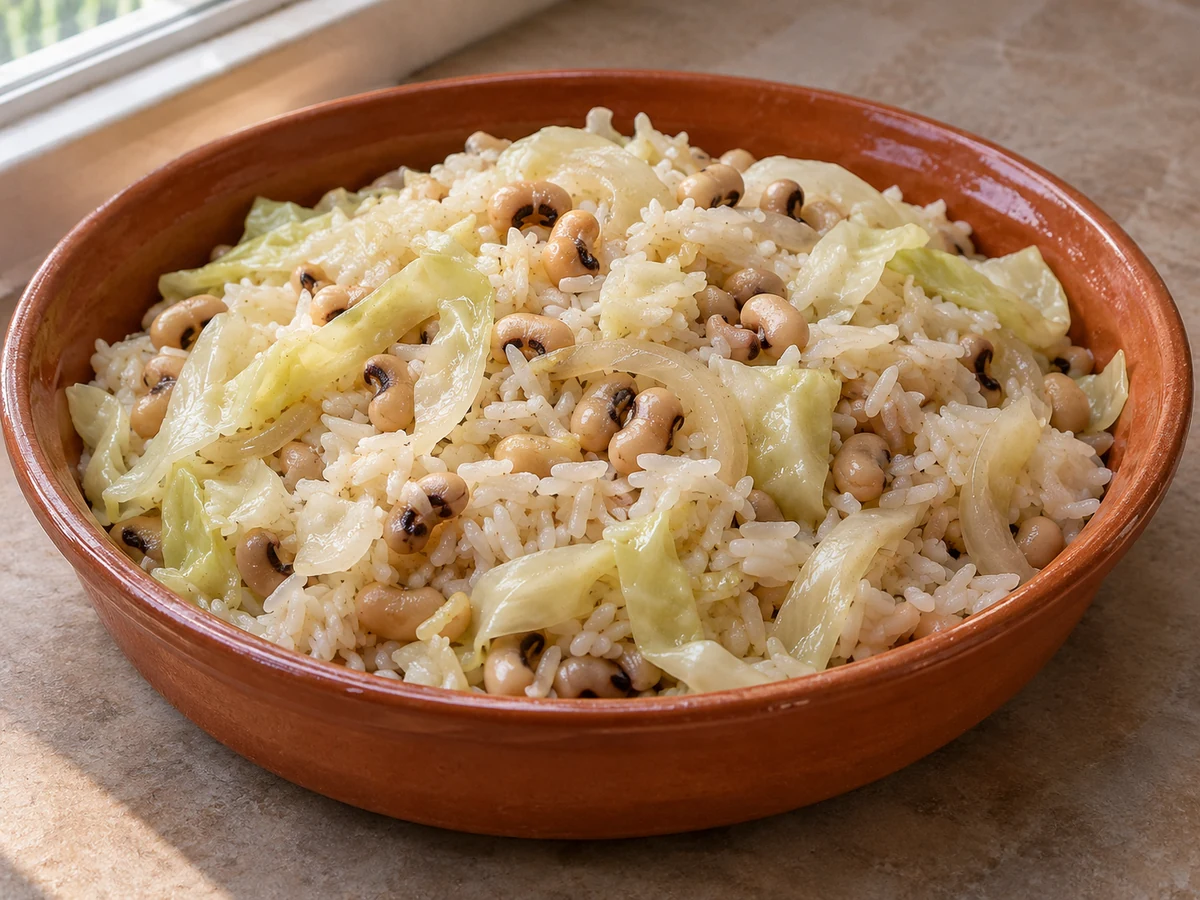
Ingredients
- 240 g raw long-grain white rice
- 400 g cowpeas already cooked without salt and drained
- 500 g raw white cabbage, core removed
- 150 g peeled onion
- 10 g peeled garlic
- 35 g lemon juice
- 25 g olive oil, including 10 g for the rice and 15 g for the vegetables
- 600 ml drinking water, including 450 ml for the rice and 150 ml for the cabbage
- 4 g salt, divided into 2 g and 2 g
Preparation
Prepare the 400 g already cooked, drained cowpeas; cut the cabbage into ribbons, slice the onion and chop the garlic.
Rinse and drain the rice. Stir it for 1 minute in 10 g oil, add 450 ml water and 2 g salt, then cook covered over low heat for 12 to 15 minutes.
In the remaining 15 g oil, soften the onion for 6 minutes, then the garlic for 1 minute. Add the cabbage, 150 ml water and 2 g salt.
Cook the cabbage covered for 8 minutes, then uncovered for 5 to 7 minutes, until the bottom is almost dry.
Add the cowpeas to the cabbage and heat for 5 minutes. Rest the cooked rice covered, off the heat, for 10 minutes.
Separate the grains, combine both preparations off the heat and stir in the 35 g lemon juice. Divide into four servings and serve.
Introduction
This dish combines three textures rather than cooking all the ingredients together: separate rice grains, tender cowpeas and soft ribbons of cabbage. Lemon gives a clean finish without turning the rice into an acidic salad. Onion supplies the aromatic base while garlic stays in the background. The quantities make four servings of a vegetarian main dish, with no extra sauce or bread included in the nutritional estimate.
Cooking the rice and cabbage separately makes moisture easier to control. Very fresh cabbage can release plenty of water; cooked rice should not soak up so much of this liquid that it becomes mushy. The cowpeas are weighed after cooking and draining. Do not therefore put 400 g of dried peas in the pan: their volume, cooking time and behaviour would be completely different.
Cultural context
Cowpeas, rice and cabbage are brought together here in a contemporary creation, without attribution to an Angolan region or a claim to ancient transmission. Separate cooking is a practical choice for this recipe. For Angola’s general agricultural context: FAO, https://www.fao.org/angola ; this source does not attest the dish’s origin.
Tips
Choose an appropriately sized saucepan: too wide a surface speeds evaporation and can leave rice firm even though the bottom is dry.
Drain the cowpeas thoroughly before weighing; their cooking water is not part of the measured 600 ml.
Save the lemon for finishing: its freshness is clearer and the acidity is easier to control.
Keep the cowpeas warm while the rice rests rather than continuing to stir them and crushing them.
Weigh the lemon juice before combining the ingredients; individual fruits do not all give the same amount of juice.
Planning
Use cowpeas cooked without salt, either homemade or sold ready to use. If starting with dried peas, cook them completely according to the packet instructions before beginning this recipe, then weigh out 400 g drained. This preliminary cooking time is not included in the stated 35 minutes. The peas should crush under gentle pressure while still retaining their skins. Set aside any that remain firm in the centre.
Remove damaged outer cabbage leaves and the hard core. Wash the leaves, drain them and weigh out 500 g. Cut into ribbons about 5 mm wide for even cooking. Finely slice the onion and chop the garlic. Measure the lemon juice into a separate container so it can be added without seeds or pieces of bitter peel. The juice is used only after cooking.
Rinse the rice briefly in a fine sieve and drain thoroughly. Heat 10 g oil in a lidded saucepan. Stir the rice for 1 minute, pour in 450 ml water and add 2 g salt. Bring to a gentle simmer, cover and cook over very low heat for 12 to 15 minutes, depending on the rice. Do not keep stirring: this would release more starch and break the grains.
Meanwhile, heat the remaining 15 g oil in a fairly wide sauté pan. Soften the onion for 6 minutes, add the garlic for 1 minute, then the cabbage. Stir, add the 150 ml water and remaining 2 g salt. Cover for 8 minutes, then uncover and continue for 5 to 7 minutes. The cabbage should be tender and the bottom of the pan almost dry. If considerable liquid remains, cook briefly uncovered before adding the rice.
Add the cowpeas to the cabbage and heat them through for 5 minutes, stirring gently. Check that their centres are hot. Remove the rice from the heat once its liquid is absorbed and the grains are tender, then rest for 10 minutes with the lid on. Resting finishes the redistribution of moisture. Separate the grains with a fork afterwards.
Combine both preparations in the sauté pan, off the heat, using a wide spatula. Add the 35 g lemon juice in two additions to distribute it without crushing the cowpeas. Taste a mouthful containing all three elements. The intended texture is soft and slightly moist, with no puddle on the plate. If the chosen rice needs longer than expected, continue cooking it with a little extra measured water and record the adjustment.
Serving
Present the rice in a shallow dish and distribute the cowpeas evenly so each serving contains all three elements. Serve promptly while the cabbage is warm and soft. One quarter of the preparation is a serving; extra sauce, oil or bread falls outside the stated estimate.
Storage
Rice needs rapid cooling. Divide leftovers between shallow containers and refrigerate at no more than 4 °C within one hour of preparation; do not leave the entire sauté pan cooling on the worktop. Eat within 24 hours. Reheat once only until steaming hot throughout, adding a little water if needed. Do not keep reheated leftovers for another meal.
Variations
For a different texture, replace the cowpeas with the same weight of cooked, drained kidney beans. This substitution produces a different result and changes the nutritional values. The cabbage can also be cut a little more finely for a softer version without changing quantities. Some lemon juice can be saved for serving, but the planned 35 g remains included in the calculation if all of it is consumed.
Nutrition notes
Rice supplies most of the carbohydrates, while cowpeas add protein and fibre. Their World Agroforestry P0008 reference describes soaked, boiled peas: https://apps.worldagroforestry.org/products/nutrition/index.php/food/food_item_details/P0008. Sodium is not reported, so the cowpeas’ intrinsic salt is not quantified in the estimated total. The 4 g added salt is counted, without sauce or accompaniments.
Conclusion
Success depends on tender cabbage without excess juice, intact cowpeas and separate rice grains. Adding lemon off the heat and mixing gently keeps these contrasting textures until serving.
Enjoy your meal
Enjoy your meal!