Sweet potato and sweetcorn frittata
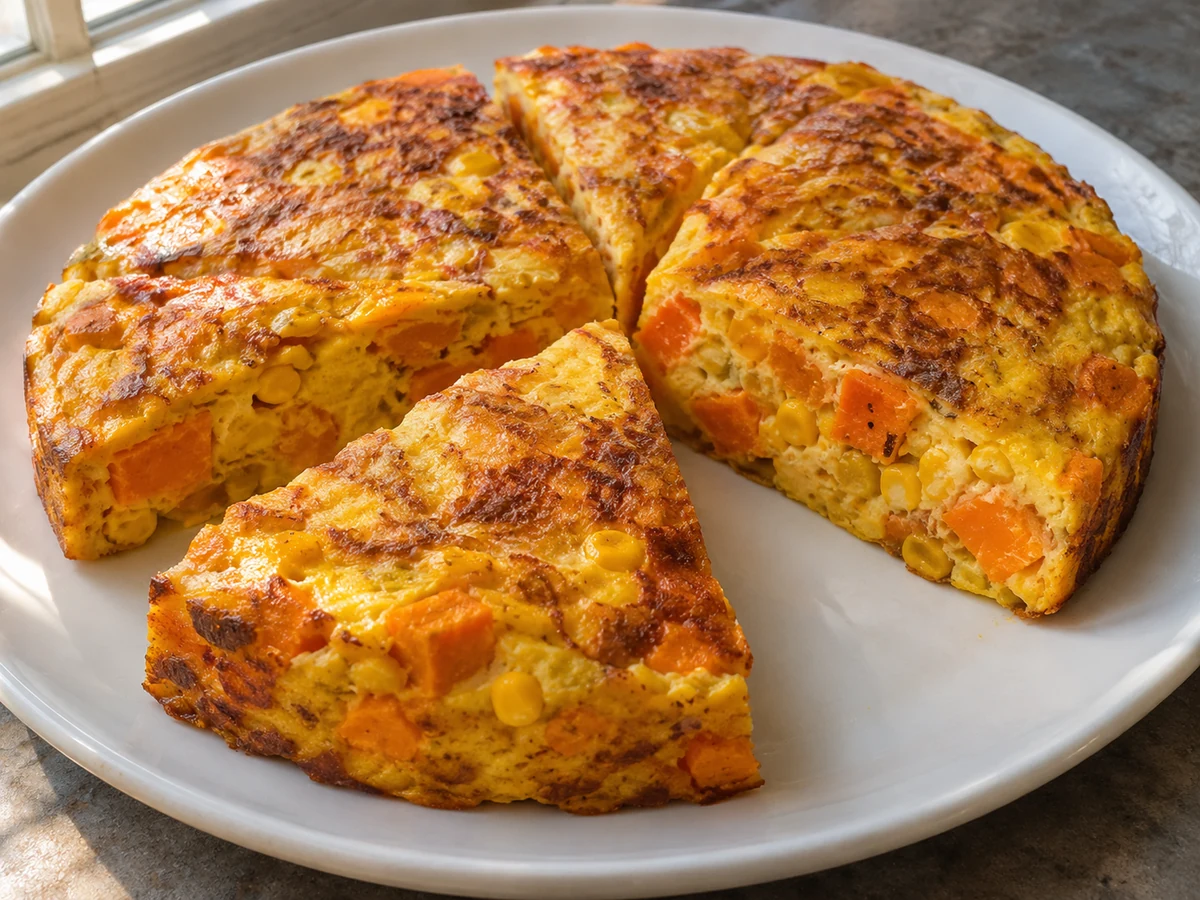
A thick oven-baked omelette combines pre-softened sweet potato cubes, sweetcorn and a small amount of coconut milk.
Ingredients
- 400 g raw egg without shells, approximately eight eggs depending on size
- 600 g peeled raw sweet potato
- 250 g canned sweetcorn, drained weight
- 150 g peeled onion
- 100 g well-mixed coconut milk
- 8 g peeled garlic
- 20 g olive oil
- 80 ml drinking water
- 3 g salt
Preparation
Preheat to 170 °C and prepare a 26 cm ovenproof frying pan.
Weigh prepared vegetables and cut sweet potato into 1 cm cubes. Drain sweetcorn.
Sweat onion in 20 g oil for 5 minutes; add garlic for 1 minute, then sweet potato for 2 minutes.
Pour in 80 ml water, cover and cook gently for 12 to 15 minutes. Uncover, evaporate for 2 to 3 minutes and add sweetcorn for 2 minutes.
Beat 400 g egg with 100 g coconut milk and 3 g salt. Pour over evenly distributed vegetables.
Bake for 18 to 25 minutes, until the centre is set and at least 74 °C. Rest for 5 minutes before cutting four portions.
Introduction
Frittata is used here as a method: vegetables cook before being bound with eggs, then the whole dish sets gently in the oven. No claim is made that this is a traditional Angolan speciality. Sweet potato provides tender pieces, sweetcorn keeps a distinct texture and coconut milk softens the egg mixture without becoming the dominant ingredient. The result cuts into four thick portions, with a lightly golden surface and a set centre.
This contemporary creation needs no pastry, flour or cheese. Eggs provide the structure; too much liquid would prevent neat portions from forming. The 400 g weight means raw eggs without shells, approximately eight medium eggs depending on their actual size. Weighing rather than only counting improves reproducibility and consistency of nutrients. The recipe is not described as kitchen-tested.
Cultural context
This recipe belongs to a contemporary collection devoted to Angola. It brings together ingredients found in different culinary repertoires without claiming to reproduce a documented family or regional speciality. The FAO country profile provides an institutional starting point for Angola’s agricultural and food environment; it is not historical evidence for this formula. The proportions and method are editorial choices. Context source: https://www.fao.org/angola
Tips
Weigh 400 g egg without shells rather than only counting eggs.
Cut sweet potato into 1 cm cubes and soften before adding egg mixture.
Evaporate free water to avoid a watery base.
Check that the handle and every part of the container are oven-safe.
Check at least 74 °C at the centre and rest for 5 minutes before slicing.
Planning
Preheat the oven to 170 °C, conventional heat. Choose a 26 cm ovenproof frying pan, including its handle, or have a baking tin of equivalent volume ready for transferring. Do not put a plastic handle in the oven. Have a lid for the first cooking stage and a clean thermometer for checking the centre. A smaller pan makes a thicker frittata that needs longer monitoring; a very wide one dries eggs faster.
Peel sweet potato and weigh 600 g usable flesh. Cut into 1 cm cubes as evenly as possible. Large pieces would stay firm when the eggs were already set. Finely slice onion and chop garlic. Drain sweetcorn, then weigh 250 g; do not add the canning liquid. Mix coconut milk before measuring 100 g so its fat is evenly distributed in the portion.
Heat 20 g oil in the pan over medium heat. Sweat onion for 5 minutes without seeking a dark brown colour. Add garlic for 1 minute, then sweet potato cubes. Stir for 2 minutes to coat, pour in 80 ml water and cover. Cook gently for 12 to 15 minutes, stirring once, until the cubes are almost completely tender to a knife point.
Remove the lid and let remaining liquid evaporate for 2 to 3 minutes. This matters: free water must not form a puddle before the eggs are added. If cubes stick slightly, lift with a spatula instead of adding more oil. Stir in sweetcorn and warm for 2 minutes. Spread vegetables evenly in the pan, or transfer to the prepared tin, recovering all the measured oil.
Crack eggs one at a time into a small container, then collect 400 g without shells in a bowl. Do not use an egg cracked before purchase or of doubtful appearance. Beat with coconut milk and 3 g salt until strands of white disappear, without making a large amount of foam. Pour over the hot vegetables. Gently slide a spatula between some cubes to distribute the mixture into the spaces without crushing sweet potato.
Bake for 18 to 25 minutes. Start checking at 18 minutes: edges should hold and the centre must no longer be liquid. Measure in the middle, in the egg layer rather than only against a vegetable cube; reach at least 74 °C. If the top colours before the centre sets, place baking paper over it without touching the heating element and continue briefly. Remove, protect hands from the hot handle and wait 5 minutes before slicing.
Serving
Cut the frittata with a thin blade, then lift each quarter with a broad spatula to keep the cubes in place. Check that the four portions receive similar amounts of sweet potato and sweetcorn. Serve hot or briefly cooled, without leaving it on the table for several hours. A salad may accompany it, but its dressing and nutrients are separate. Inform people with relevant allergies that egg is present.
Storage
Quickly divide leftovers into small, shallow containers, without leaving them at room temperature for more than 2 hours. Refrigerate at 4 °C or below and eat within 48 hours. Take only the portion needed with a clean utensil. Reheat once only, to 74 °C in the centre, checking several places. Add a little water if necessary to prevent the food from drying out. Do not return leftovers from a partly eaten plate to the container. If the time spent out of refrigeration is unknown, do not rely on reheating to restore safety.
Variations
Another sweet potato variety may absorb or release different amounts of water; assess tenderness before pouring in eggs. Sweetcorn without added salt would slightly change total salt compared with the generic canned reference. Adding cheese or dairy milk creates a different formula requiring an adjusted calculation. For cooking entirely in a baking tin, first cook the vegetables as described: raw cubes would not soften sufficiently during the time eggs take to set.
Nutrition notes
The values are estimates per quarter of the preparation, without side dishes or additional garnish. They add up the weighed ingredients in their stated condition, including all the added oil and salt. Water supplies no macronutrients; evaporation changes the final weight but not the theoretical sum of nutrients. The amount actually eaten depends on how the pieces are divided and how much sauce remains in the dish. Food composition data are averages, not a laboratory analysis of this recipe. A different cut, brand or ingredient substitution requires a new calculation. The coconut milk reference is a generic composition for coconut milk or cream; it does not identify the brand used. A very diluted drink cannot be treated as equivalent.
Conclusion
Precision matters before the oven: even cubes, already tender vegetables and no free water. Eggs can then set without waiting through a long root-vegetable cooking time. Removing once the centre is sufficiently cooked preserves a soft texture rather than a dry, deeply browned omelette.
Enjoy your meal
Enjoy your meal!