Beef simmered with squash and coconut milk
A squash and tomato base with coconut milk receives quickly seared rump steak cubes near the end of cooking.
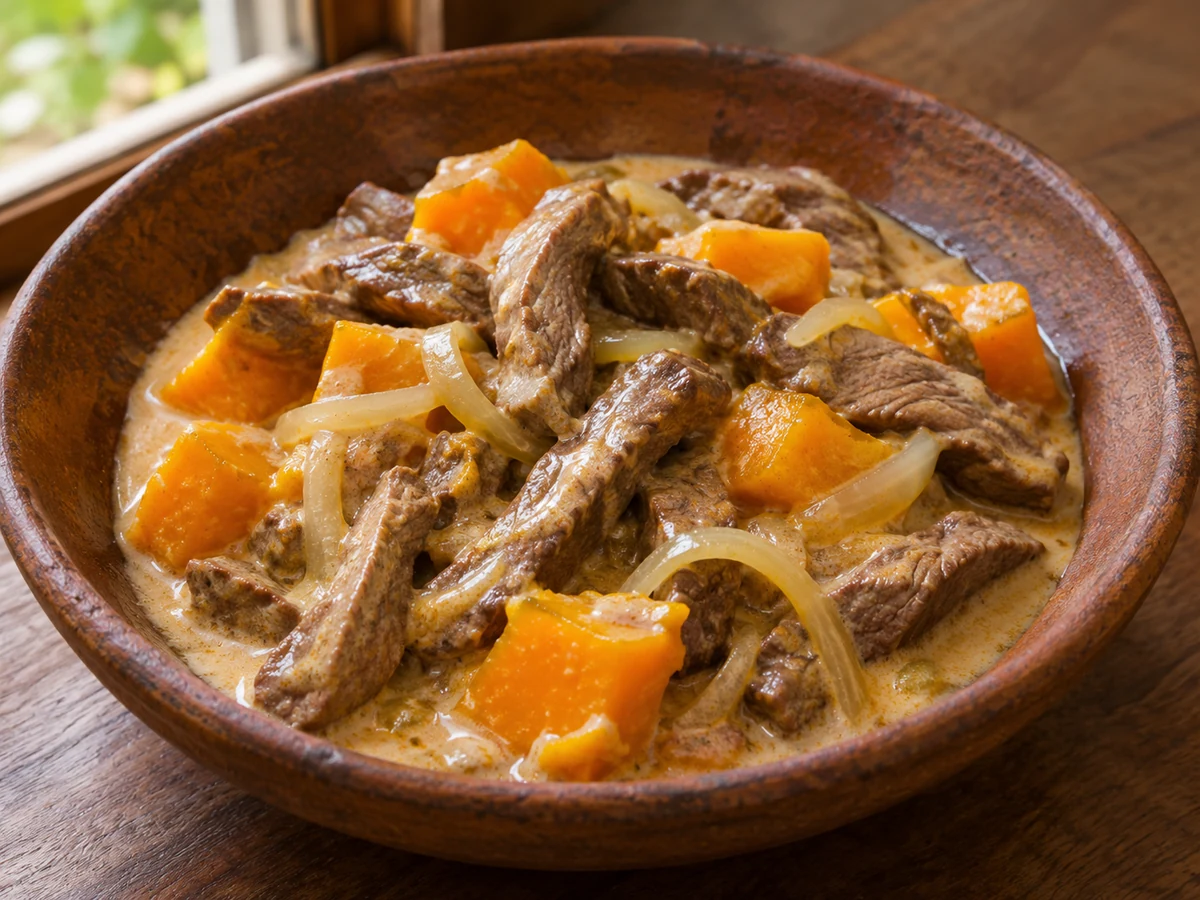
Ingredients
- 600 g raw beef rump steak, usable lean portion
- 700 g raw butternut squash flesh without skin or seeds
- 300 g raw tomato
- 160 g peeled onion
- 150 g well-mixed coconut milk
- 10 g peeled garlic
- 12 g usable fresh ginger
- 20 g sunflower oil
- 250 ml drinking water
- 4 g salt
Preparation
Trim and weigh rump steak, then cut into 2.5 cm cubes. Prepare squash in 2 cm cubes and the other vegetables.
Divide 20 g oil into two 10 g amounts. Sweat onion for 6 minutes in the casserole with the first amount.
Add garlic and ginger for 1 minute, then tomato and squash for 2 minutes. Pour in 250 ml water and add salt.
Simmer partially covered for 15 to 20 minutes. Stir in coconut milk and cook gently for 3 minutes.
Sear beef cubes in the second amount of oil for about 1 minute per broad face, then add them with their browned juices.
Finish for 3 to 6 minutes in the sauce; check at least 70 °C at the centre and hold for 2 minutes at that temperature. Remove from heat and divide into four portions.
Introduction
Simmered here describes the gentle cooking of the vegetable base, not prolonged cooking of rump steak. This relatively lean cut behaves differently from a collagen-rich braising cut: an hour in sauce would not necessarily make it more tender. Cook the squash first, sear the meat separately, then combine them only long enough to finish cooking the centre.
Coconut milk brings the juices together without turning the dish into a thick cream. Tomato adds a little acidity and ginger remains discreet. Four portions include the meat and all vegetables, without rice or another added starch. This formula is a contemporary creation inspired by a set of ingredients; it claims neither attested family origins, traditional status nor a completed kitchen trial.
Cultural context
This recipe belongs to a contemporary collection devoted to Angola. It brings together ingredients found in different culinary repertoires without claiming to reproduce a documented family or regional speciality. The FAO country profile provides an institutional starting point for Angola’s agricultural and food environment; it is not historical evidence for this formula. The proportions and method are editorial choices. Context source: https://www.fao.org/angola
Tips
Choose a quick-cooking cut, not braising beef.
Weigh coconut milk after mixing it evenly.
Reserve half the oil for searing beef.
Cook vegetables before adding meat to protect its texture.
Check 70 °C at the centre, hold for 2 minutes and serve without a long wait.
Planning
Choose rump steak suitable for quick cooking, without a large tendon running through it. Remove thick membranes, then weigh 600 g usable meat. Cut into even cubes about 2.5 cm across and pat dry. Refrigerate while preparing the base. Purchase weight may be higher if trimming is needed. Braising beef cannot directly replace this rump steak: it needs a different cooking time and a new composition reference.
Peel squash, remove seeds and weigh 700 g flesh. Cut into 2 cm cubes. Some cubes may soften at the edges during cooking, but the aim is not a purée. Dice tomatoes finely, slice onion, chop garlic and grate ginger. Thoroughly mix coconut milk before weighing 150 g, since the fat can separate from the liquid in the package.
Have a medium casserole for the vegetables and a frying pan for searing meat at the end. Allocate 10 g of the 20 g oil to each pan. This avoids adding fat by eye. In the casserole, sweat onion for 6 minutes with the first half of the oil. Add garlic and ginger for 1 minute, then tomato and squash. Stir gently for 2 minutes to spread the aromatics without damaging the cubes.
Pour in 250 ml water and add 4 g salt. Bring to a gentle simmer, partially cover and cook for 15 to 20 minutes. Test squash with a knife point: it should be tender on the surface with slight resistance in the centre. Add coconut milk, stir with a broad spatula and continue for 3 minutes over gentle heat. Avoid a rolling boil, which would toss the pieces and separate the fat further.
Heat the frying pan with the remaining 10 g oil. Sear beef in two batches if needed, about 1 minute on each broad face, for light browning. It need not be fully cooked at this stage. Transfer the pieces and their juices to the casserole. Add a spoonful of sauce to the frying pan off the heat, lift the browned juices and return them to the dish without adding oil.
Let the meat finish cooking for 3 to 6 minutes in the simmering sauce, stirring only once. For this well-done version, check at least 70 °C in the centre of the thickest cubes, then hold at that temperature for 2 minutes. Remove from heat. Do not arbitrarily extend simmering: rump steak would lose its juices. If squash is already very tender, move meat with tongs rather than stirring the entire base.
Serving
Serve beef cubes as soon as cooking is complete, then share squash and coconut juices around them. Use a broad spoon to avoid mashing vegetables. If offering plain rice, place it in a separate dish: it is not included in the stated nutrients. Do not leave the casserole over a prolonged holding heat, since meat would continue cooking. Prefer preparing the vegetable base in advance and finishing beef at mealtime.
Storage
Quickly divide leftovers into small, shallow containers, without leaving them at room temperature for more than 2 hours. Refrigerate at 4 °C or below and eat within 48 hours. Take only the portion needed with a clean utensil. Reheat once only, to 74 °C in the centre, checking several places. Add a little water if necessary to prevent the food from drying out. Do not return leftovers from a partly eaten plate to the container. If the time spent out of refrigeration is unknown, do not rely on reheating to restore safety.
Variations
Pumpkin can replace butternut in another version, with cooking time watched and calculations adjusted. Very concentrated coconut milk is not equivalent to a diluted drink: consult the label and recalculate nutrients. A braising cut would need genuine long cooking, started before the vegetables, and does not follow this method. Do not simply prolong this recipe in the hope of turning rump steak into melting stew meat.
Nutrition notes
The values are estimates per quarter of the preparation, without side dishes or additional garnish. They add up the weighed ingredients in their stated condition, including all the added oil and salt. Water supplies no macronutrients; evaporation changes the final weight but not the theoretical sum of nutrients. The amount actually eaten depends on how the pieces are divided and how much sauce remains in the dish. Food composition data are averages, not a laboratory analysis of this recipe. A different cut, brand or ingredient substitution requires a new calculation. The coconut milk reference is a generic composition for coconut milk or cream; it does not identify the brand used. A very diluted drink cannot be treated as equivalent.
Conclusion
The method clearly separates the time squash needs from that needed by rump steak. The aim is well-done meat without prolonged simmering, recognisable vegetables and a fluid coconut sauce. Times remain guides; the thermometer and actual state of the pieces determine when to stop.
Enjoy your meal
Enjoy your meal!