Roast chicken with pineapple and ginguba
Boneless thigh pieces roast with fresh pineapple; roasted peanuts provide a crunchy contrast to the short cooking juices.
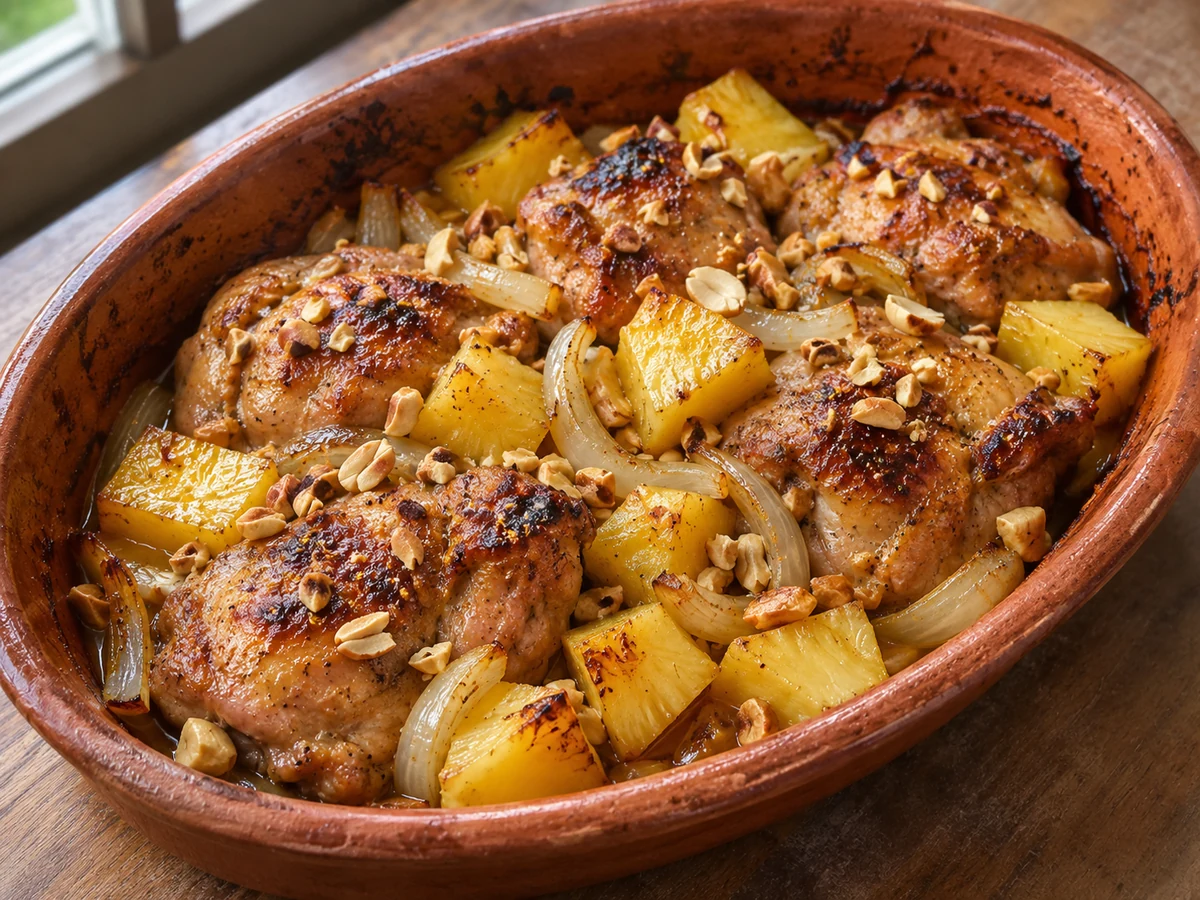
Ingredients
- 650 g raw boneless, skinless chicken thigh meat
- 500 g fresh pineapple flesh, without skin or tough core
- 180 g peeled onion
- 10 g peeled garlic
- 12 g usable fresh ginger
- 50 g roasted peanuts with no added salt
- 20 g peanut oil
- 30 g lime juice
- 120 ml drinking water
- 4 g salt
Preparation
Preheat to 200 °C and prepare a dish about 30 cm wide. Weigh all usable ingredients.
Cut chicken into 5 cm pieces, pineapple into 3 cm pieces and onion into thin wedges. Chop garlic, grate ginger and chop peanuts.
Mix oil, garlic, ginger, salt and 15 g lime juice. Coat chicken and onion; add pineapple and 120 ml water.
Bake immediately for 20 minutes. Turn the meat and gently move the fruit.
Continue for 12 to 18 minutes; add peanuts for the last 5 minutes. Check at least 74 °C in the centre of the thick pieces.
Rest out of the oven for 5 minutes, add the remaining 15 g juice and divide into four portions.
Introduction
The aim is golden chicken, pineapple that remains recognisable and peanuts added late enough to retain their crunch. The fruit is not meant to hide the meat beneath a sweet glaze. No sugar, honey or concentrated stock is needed: ripe pineapple, onion and lightly reduced juices are enough. The four portions include the meat, fruit and cooking juices, but no starch accompaniment.
Ginguba here means roasted peanuts with no added salt, coarsely chopped. Grinding them into powder would thicken the sauce and change the result. This is a contemporary creation, offered as a cooking proposal rather than an attested Angolan tradition. It is not described as kitchen-tested. Texture cues and internal temperature allow the cooking to be adjusted to a domestic oven.
Cultural context
This recipe belongs to a contemporary collection devoted to Angola. It brings together ingredients found in different culinary repertoires without claiming to reproduce a documented family or regional speciality. The FAO country profile provides an institutional starting point for Angola’s agricultural and food environment; it is not historical evidence for this formula. The proportions and method are editorial choices. Context source: https://www.fao.org/angola
Tips
Weigh the 650 g chicken after boning and removing skin.
Do not marinate the meat for a long time in fresh pineapple.
Use a dish wide enough to prevent steam from collecting.
Add ginguba for the last 5 minutes to limit browning.
Check 74 °C at the centre and share the juices between four portions.
Planning
Preheat the oven to 200 °C, conventional heat, with a rack at mid-height. Choose a baking dish about 30 cm wide, large enough for a single layer without spreading the ingredients too far apart. A very large dish would lose its juices before the meat was cooked; a narrow one would collect steam and prevent browning. Have a clean thermometer and a separate utensil ready for handling cooked poultry.
Weigh the chicken after removing skin, bones and cartilage. Cut into 5 cm pieces, then pat dry without washing under the tap. Keep refrigerated while preparing the vegetables. Clean the board and knife immediately after handling chicken. Boneless meat cooks faster than whole thighs: do not apply the same time to bone-in pieces without checking temperature again.
Carefully remove the pineapple skin and fibrous core. Then weigh 500 g of flesh and cut into 3 cm pieces. Very soft fruit would release a lot of water and break down quickly; very firm fruit may remain sharply acidic. Cut the onion into thin wedges, chop the garlic and grate the ginger. Chop the peanuts with a knife, leaving some pieces about the size of a small lentil.
In the dish, mix the 20 g oil, garlic, ginger, 4 g salt and 15 g of the lime juice. Add chicken and onion and turn to coat. Arrange pineapple between them and pour the 120 ml water into the bottom without washing seasoning off the surface. Put straight into the oven: prolonged contact with fresh pineapple can damage the meat’s texture.
Cook for 20 minutes, turn the chicken with tongs and move the fruit gently. Continue for 12 to 18 minutes, checking the chicken from the earlier limit. Measure in the thickest pieces without touching the dish: the centre must reach at least 74 °C. The colour of the juices is no substitute for this measurement. If the surface browns too quickly, cover loosely with oven-safe baking paper.
Scatter the peanuts over the dish for the last 5 minutes, after checking that the bottom remains moist. Add a small amount of hot water if necessary; do not compensate with more oil. Remove as soon as the chicken reaches the required temperature. Rest for 5 minutes, add the remaining 15 g lime juice and stir only the juices. The peanuts should remain visible and the fruit should keep soft edges.
Serving
First divide the meat into four portions, then share out the pineapple, onions and peanuts. Finally pour over the cooking juices after stirring them to distribute the aromatics. Plain rice or steamed vegetables may be offered separately; they are not included in the nutrition calculation. Serve promptly to preserve the contrast between tender fruit and crunchy ginguba. Clearly inform diners that peanuts are present: they remain an allergen after cooking.
Storage
Quickly divide leftovers into small, shallow containers, without leaving them at room temperature for more than 2 hours. Refrigerate at 4 °C or below and eat within 48 hours. Take only the portion needed with a clean utensil. Reheat once only, to 74 °C in the centre, checking several places. Add a little water if necessary to prevent the food from drying out. Do not return leftovers from a partly eaten plate to the container. If the time spent out of refrigeration is unknown, do not rely on reheating to restore safety.
Variations
Drained canned pineapple could make a different version, but its drained weight and composition must be used in a new calculation. Salted peanuts require the salt to be reconsidered; they are not equivalent to the product chosen here. Replacing thighs with breast calls for earlier temperature checks to limit dryness. A peanut-free version must use another oil as well as omit the peanuts; it is a different formula with altered flavour and nutrients.
Nutrition notes
The values are estimates per quarter of the preparation, without side dishes or additional garnish. They add up the weighed ingredients in their stated condition, including all the added oil and salt. Water supplies no macronutrients; evaporation changes the final weight but not the theoretical sum of nutrients. The amount actually eaten depends on how the pieces are divided and how much sauce remains in the dish. Food composition data are averages, not a laboratory analysis of this recipe. A different cut, brand or ingredient substitution requires a new calculation.
Conclusion
The dish is ready when the chicken is cooked through, pineapple remains in pieces and the juices are reduced but not dry. The final lime should freshen the whole dish, not make each mouthful sour. Success depends more on dish choice and temperature checks than on automatically extending the roasting time.
Enjoy your meal
Enjoy your meal!