Shrimp with spinach and ginguba
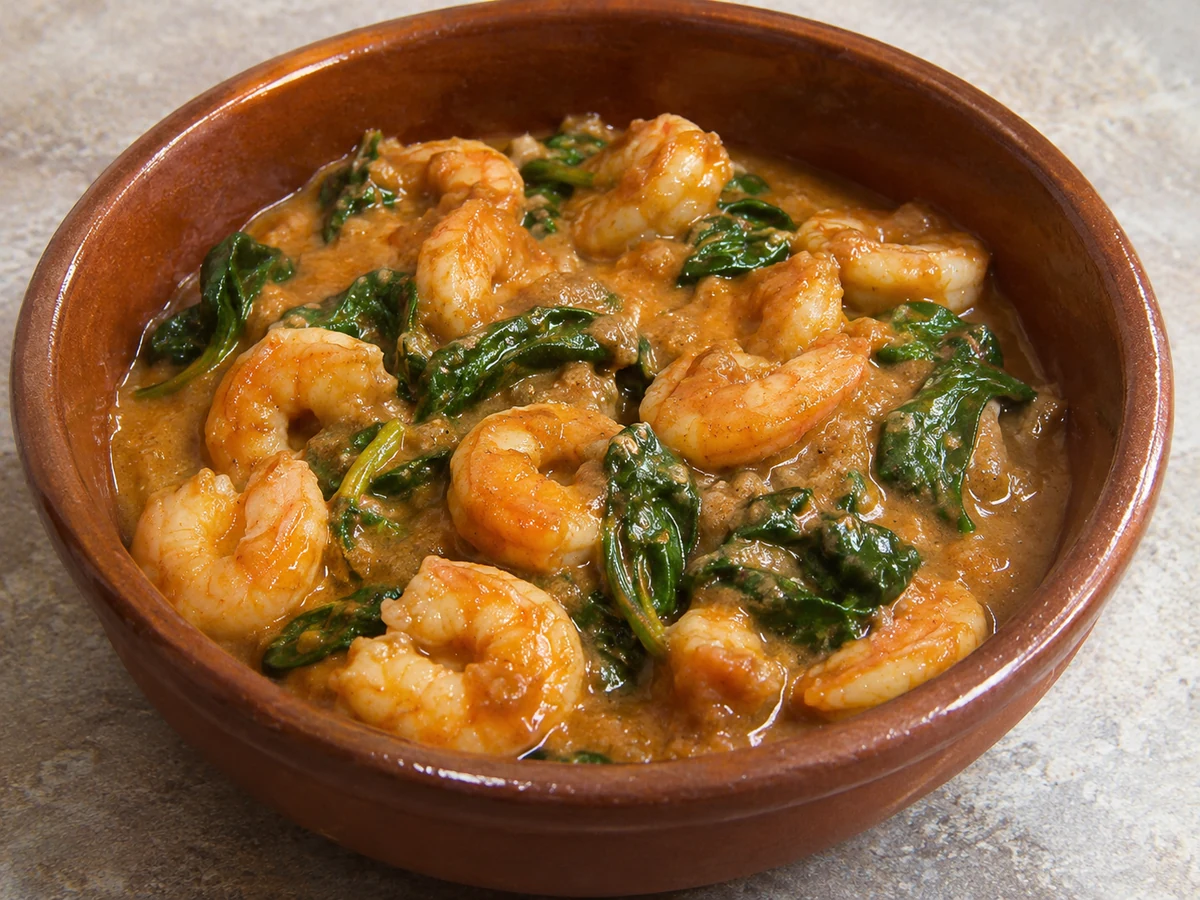
Peeled shrimp join a tomato sauce thickened with ground roasted peanuts, with spinach added towards the end of preparation.
Ingredients
- 600 g raw peeled, deveined shrimp
- 500 g cleaned raw spinach
- 400 g raw tomatoes
- 80 g unsalted roasted peanuts
- 150 g peeled raw onion
- 10 g peeled raw garlic
- 10 g prepared fresh ginger
- 20 g olive oil
- 20 g lime juice
- 200 ml drinking water
- 3 g salt
Preparation
Prepare 600 g trimmed shrimp and keep chilled.
Wash and dry spinach; grind peanuts and mix with 200 ml water.
Soften onion in oil for 5 minutes; add garlic and ginger for 1 minute.
Add tomatoes and salt; cook uncovered for 8 to 10 minutes.
Pour in peanut mixture and simmer for 3 minutes, stirring.
Add spinach in two batches and cook for 3 to 4 minutes.
Add shrimp and cook covered for 3 to 5 minutes, until flesh is opaque and at least 63 °C in the centre.
Stir in lime off the heat and serve in 4 portions.
Introduction
Roasted peanuts, known as ginguba in Angolan culinary vocabulary, thicken a tomato sauce here without cream. They are ground just before use to give a fine texture and avoid large pieces among the leaves. Spinach is not merely a decoration: there is enough to form a substantial vegetable component of the dish. It cooks before the shrimp, whose flesh needs little time.
This contemporary creation is prepared in a sauté pan. The intended contrast brings together reddish-brown sauce, green leaves and pink shrimp without unnecessarily prolonging cooking. Preparing everything before turning on the heat makes the last few minutes easier. The 4 portions provide 150 g trimmed raw shrimp per person, with all the sauce and vegetables divided evenly.
Cultural context
The word ginguba puts peanuts at the centre of the title, but this tomato sauce with spinach and shrimp is a new composition for volume 2. It should not be confused with an old recipe bearing a similar name. Here peanuts are powdered rather than used as salted peanut butter; this choice explains the consistency and the precise ingredient list.
The FAO institutional page for Angola provides access to the country’s agricultural and food context: https://www.fao.org/angola. It supports cultural reading without certifying this particular mixture. Using a local term does not remove the need to state clearly that the proposed combination and method are contemporary.
Tips
This dish contains crustaceans and peanuts.
Do not confuse unsalted roasted peanuts with salted peanut butter.
Start cooking shrimp only once the leaves have wilted.
Drying the leaves thoroughly prevents wash water from diluting the sauce.
Grinding in pulses helps produce a powder rather than peanut butter.
Planning
Choose raw shrimp, not already cooked ones. Peel them and remove the intestinal thread, then weigh 600 g of trimmed flesh. If frozen, thaw in the refrigerator in a covered container and drain thoroughly. Keep chilled, separate from the vegetables ready for cooking. Clean hands, knife and board after this preparation to avoid transferring raw juices to the leaves.
Wash spinach in several changes of water if necessary to remove sand and soil, then spin dry. Remove large tough stalks before weighing 500 g. Cut large leaves into wide strips. Grind peanuts to a fine powder using short pulses: stop before they turn into an oily paste. Mix with the 200 ml water, crushing small lumps with a spoon. Dice tomatoes finely; slice onion, chop garlic and grate ginger.
Heat the oil over medium heat in a 28 cm sauté pan. Soften onion for 5 minutes, then add garlic and ginger for 1 minute. Stir in tomatoes and the 3 g salt. Cook uncovered for 8 to 10 minutes until the dice collapse and the juice loses its watery appearance. Pour in the water and peanut mixture, stir and simmer for 3 minutes. Scrape the base to prevent peanut particles from sticking.
Add spinach in two batches, waiting for the first half to wilt. Cook for 3 to 4 minutes, then distribute shrimp through the sauce. Cover and cook gently for 3 to 5 minutes depending on size, turning once. Their flesh must be opaque in the centre and firm without becoming dry; a suitable probe should read at least 63 °C in the centre of a large shrimp. Add a spoonful of water if the sauce becomes too thick before cooking finishes. Remove from the heat, stir in lime juice and serve. Do not continue cooking to obtain a darker sauce: that would toughen the shrimp.
Serving
Stir very gently one last time to distribute the shrimp through the spinach. With a slotted spoon, first share the solids among the plates; then spoon over the ginguba sauce. The peanuts have been finely ground to thicken that sauce: extra whole peanuts are not intended as a topping.
The leaves should remain visible rather than forming a dry bed beneath the shellfish. Collect sauce from the bottom of the pan too, where it may be thicker. Serve immediately after adding lime, without keeping the shrimp on the heat for long. If rice is chosen as an accompaniment, present it separately and explain that it is not included in the nutritional values. Tell diners about the peanuts and crustaceans before serving.
Storage
Preferably prepare only the quantity that will be eaten at the same meal: reheating changes the texture of fish and seafood. If leftovers need to be kept, promptly divide them among clean, shallow containers. Refrigerate at no more than 4 °C within 2 hours of the end of cooking; do not leave the whole pan cooling on the worktop. Eat within 24 hours.
Reheat only the portion needed in a small covered saucepan, with a little water to protect the sauce. The food must be thoroughly hot in the centre; stir gently to distribute the heat. Reheat only once and discard leftovers from that portion. Do not rely on smell alone to judge whether food is safe. These storage instructions assume fresh ingredients, complete cooking and an uninterrupted cold chain.
Variations
Chard leaves can replace spinach after removing the thick stalks and adjusting the cooking time. This change requires a new nutritional calculation. Removing peanuts changes the sauce: do not present that adaptation as identical or use a substitute without checking diners’ allergies.
Nutrition notes
Ginguba is more than an aromatic: the 80 g roasted peanuts contribute fat and protein in particular and are fully included. Shrimp is another protein source. Spinach and tomatoes contribute plant foods and fibre; the calculation uses their actual quantity, not a token decoration.
Estimated salt includes that in the reference foods, especially shrimp, plus the 3 g added. Salted peanuts or already seasoned shrimp would change that result. Shrimp weights exclude shells and removed parts; spinach weights exclude discarded thick stalks. All the sauce is assumed to be eaten and shared in 4 portions. Thoroughly drained wash water is not an additional ingredient. Values remain table-based estimates, without measuring every actual cooking loss.
Conclusion
Ginguba sauce connects the leaves and shrimp without hiding their textures. Organised preparation lets the vegetables cook before the shellfish finish quickly. Serving as soon as the shrimp are cooked preserves the intended contrast.
Enjoy your meal
Enjoy your meal!