Aubergine soup with tomato and ginguba
A smooth aubergine and tomato soup thickened with unsalted roasted peanuts, with no added cream.
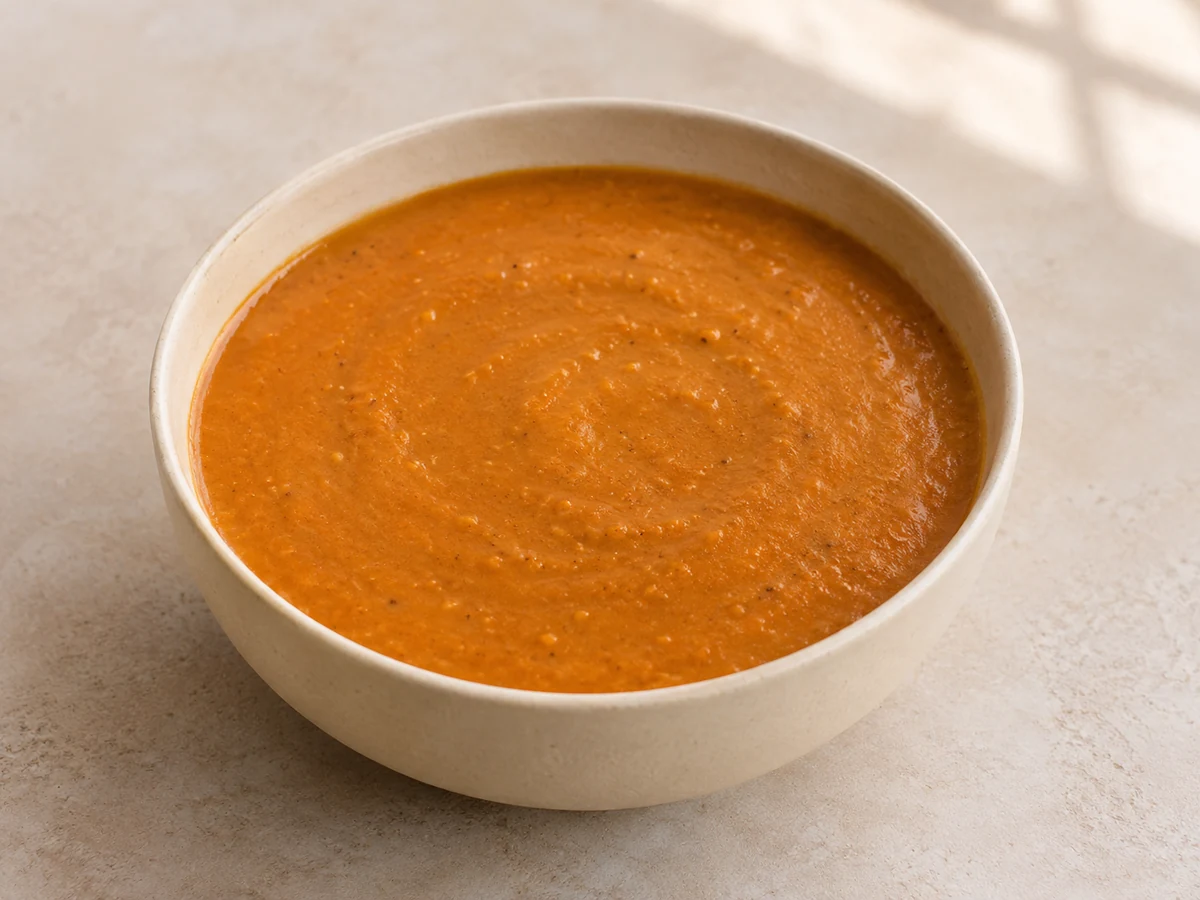
Ingredients
- 700 g raw aubergine with skin, stalk removed
- 400 g raw tomato
- 150 g raw peeled onion
- 10 g raw peeled garlic
- 60 g roasted peanuts with no added salt
- 20 g olive oil
- 25 g lemon juice
- 850 ml drinking water, including 150 ml reserved
- 3 g salt
Preparation
Wash and cut the vegetables; finely grind the 60 g peanuts.
Soften the onion in the oil for 6 minutes; add the garlic for 1 minute.
Add the aubergine for 3 minutes, then the tomato, 700 ml water and salt.
Simmer partly covered for 25 minutes, until completely tender.
Loosen the peanuts in a ladleful of liquid, return to the pan and cook for 5 minutes, stirring.
Off the heat, blend carefully; add the lemon and adjust with the reserved water. Serve 4 portions.
Introduction
Aubergine supplies tender flesh here, blended with tomato and a small quantity of ginguba, meaning peanuts. These ingredients provide the thickening, without cream or flour. The result should remain light enough to flow into the bowl while retaining the vegetable’s flavour. Very oily aubergine would feel heavy, so the oil is limited to the weighed amount and cooking finishes in water.
The recipe makes 4 starter portions. The peanuts are not merely decoration: they are blended in and included in the nutritional calculation. They need to be finely ground to avoid a grainy base. This preparation is identified as a contemporary creation; its texture and combination are not presented as those of a documented traditional speciality.
Cultural context
Ginguba has a precise function here: ground peanuts thicken the aubergine and tomato mixture. This use does not automatically make the smooth soup an Angolan heritage dish. The recipe chooses fine blending, cooking in water after a short phase in oil and a lemon finish; this combination is proposed as a contemporary creation in the Angola à table collection.
For a broader setting, the FAO’s agricultural and food profile of Angola is an institutional resource: https://www.fao.org/angola. It does not validate the formula or its name. In the title, ‘ginguba’ helps identify the peanut used; the rest simply describes the two main vegetables and intended texture. Cultural attribution thus remains distinct from the personal cooking method.
Tips
Weigh the aubergine with its skin after removing the stalk rather than counting a variable number of fruits.
Aubergine absorbing the oil does not need a second dose: the liquid added afterwards continues cooking it.
Loosening the ground peanuts before adding them limits clumps and the risk of catching.
A grainy texture needs finer blending, not more oil; stop the appliance before checking it.
Keep the stick blender head below the surface and switch off the motor before lifting it.
Planning
Choose firm aubergines without large soft patches. Wash, remove the stalks and weigh 700 g flesh with skin. Cut into 2 cm cubes. The skin adds small dark flecks to the soup; this is normal, not a blending fault. Wash the tomatoes, remove the hard stem attachment and dice, keeping the juice. Slice the onion and chop the garlic.
Check that the peanuts are roasted, have no added salt and do not smell rancid. Grind them finely using short pulses. Stop before making an oily paste stuck to the sides. If the small processor struggles with 60 g, use a mortar, then sieve out large pieces and grind them again. Do not top up with salted peanuts, which would alter the seasoning and salt estimate.
Heat the 20 g oil in a 3-litre saucepan. Soften the onion over medium heat for 6 minutes, then add the garlic for 1 minute. Add the aubergine cubes and stir for 3 minutes. They absorb fat quickly: do not add more to restore a shiny pan base. Stir in the tomato, then pour in 700 ml water and the 3 g salt.
Partly cover and simmer for 25 minutes. Stir several times to distribute the heat. The aubergine flesh should yield to a spoon without resistance; if still spongy, cook for a few more minutes. Take a ladleful of hot liquid to loosen the ground peanuts in a bowl, then return this mixture to the saucepan. Cook gently for another 5 minutes, stirring.
Remove from the heat before blending. With a stick blender, keep the head submerged to limit splashes. With a jug blender, work in small quantities and follow the manufacturer’s precautions for hot liquids; never trap steam under an airtight lid. Add the lemon, then gradually add the reserved 150 ml water according to the texture. The whole reserve need not be used. Taste and serve without boiling again for a long time.
Serving
Pour into shallow bowls so that the soup does not stay scalding in the centre. Stir the pan before each ladleful: a blended preparation may separate slightly while standing. Do not add a handful of peanuts to each bowl without noting it, since this garnish would change the nutrient intake. If offering bread, place it alongside and count it separately. Tell the people eating that the soup contains peanuts.
Storage
Transfer leftovers to shallow containers and refrigerate at a maximum of 4 °C within 2 hours of cooking. Eat within 48 hours. Reheat while stirring because the peanut-thickened base can catch. Add a little water if necessary and check that the whole preparation is thoroughly hot. Do not rely only on the first bubbles at the edge. Reheat only the quantity to be served, without repeated cooling cycles.
Variations
For a more rustic texture, blend briefly and retain small aubergine pieces without leaving large peanut fragments. For a peanut-free version, this is not simply a matter of removing a garnish: it changes the ingredient that thickens the soup, its flavour and its nutritional values. The recipe must therefore be revised and the stated figures should not be retained. Replacing some water with salted stock also requires recalculating the seasoning.
Nutrition notes
The 60 g peanuts genuinely contribute to the soup’s composition: their protein, fat and fibre remain in the blended soup. Replacing them with a handful scattered over bowls would not produce the same distribution. Aubergine and tomato supply water and fibre, but their presence does not offset freely adding oil. The weighed amount remains the calculation’s reference point.
The total is divided into 4 portions and includes all the peanuts, including the powder loosened beforehand. Mixture left on the sides of the small processor reduces what actually reaches the pan; scraping it out carefully improves fidelity to the recipe. Peanut salt content depends on the product chosen: the reference is for a roasted version with no added salt. The figures include neither bread nor extra garnish.
Conclusion
Before serving, look for a smooth soup flowing from the ladle, without resistant aubergine skin or peanut fragments. Adjusting with reserved water affects texture; adding oil would unnecessarily change the formula. Stop the blender before tasting and tell diners that peanuts are present. Care in grinding and sharing between 4 bowls maintains consistency between the prepared soup, its description and its estimated nutritional values.
Enjoy your meal
Enjoy your meal!