Black-eyed pea soup with cabbage and lemon
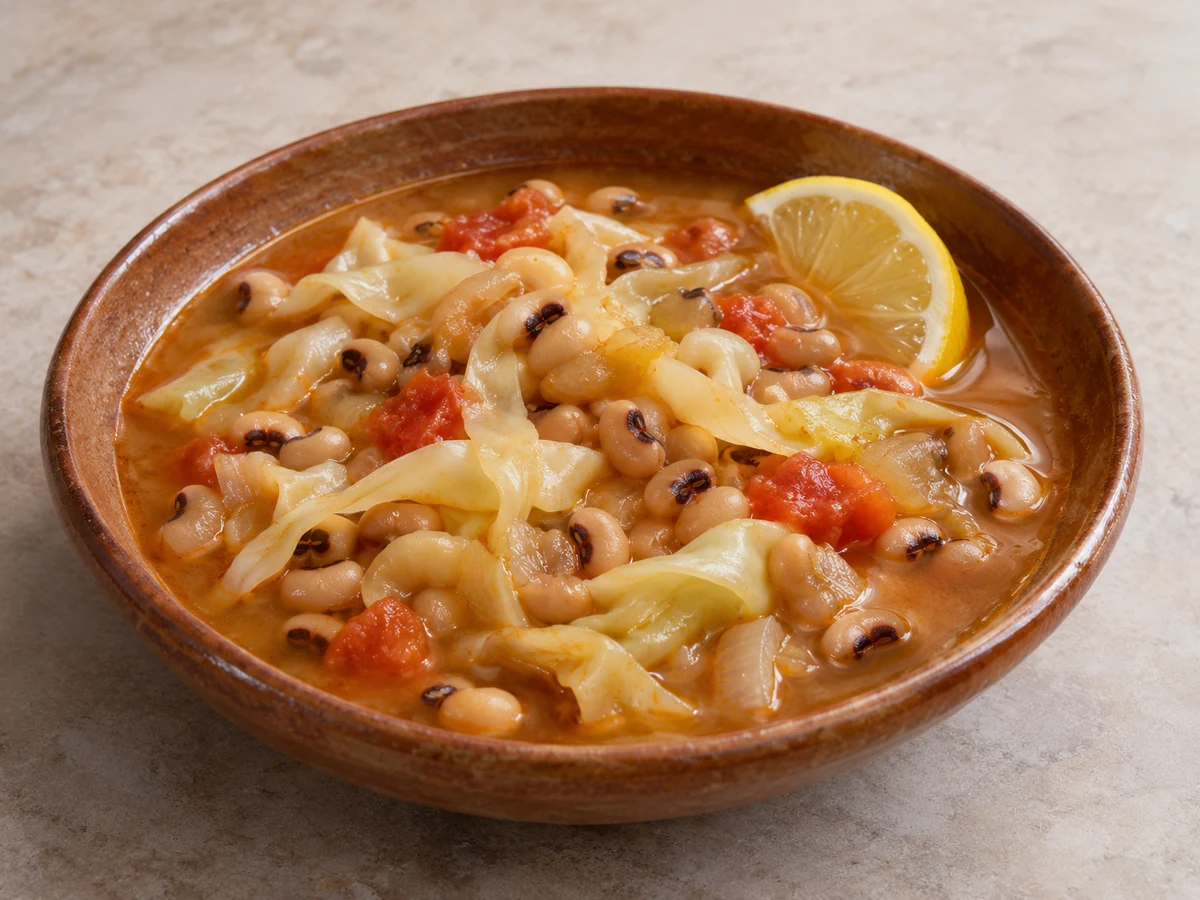
An unblended soup of cooked black-eyed peas and white cabbage, with a tomato base and a lemon finish.
Ingredients
- 500 g cooked unsalted black-eyed peas, drained
- 350 g raw white cabbage, core removed
- 300 g raw tomato
- 150 g raw peeled onion
- 10 g raw peeled garlic
- 20 g olive oil
- 30 g lemon juice
- 1 000 ml drinking water
- 3 g salt
Preparation
Prepare and weigh the cooked black-eyed peas; cut the cabbage into 5 mm strips and chop the other vegetables.
Soften the onion in the oil for 6 minutes, then add the garlic for 1 minute.
Add the tomato and its juice and cook for 5 minutes, stirring.
Add the cabbage, water and salt; simmer partly covered for 15 minutes.
Add the black-eyed peas and cook for another 8 minutes, until the cabbage is tender.
Off the heat, add the lemon, distribute the solids and serve 4 portions.
Introduction
Black-eyed peas give this soup a tender bite, while the cabbage retains recognisable thin strips. The tomato should not form a thick sauce: it colours the broth and brings the vegetables together. Lemon adds brightness after cooking. This recipe uses already cooked black-eyed peas, weighed after draining, to separate their cooking from that of the vegetables and make the stated time more predictable.
The intended result is a generous soup that is still fluid. A spoon should pick up a few peas and some cabbage, with enough liquid to keep the mixture easy to serve. It is neither a blended soup nor a compact stew. The quantities make 4 portions, with no bread or other accompaniment included in the calculation.
Cultural context
In this proposal for Angola à table, black-eyed peas are presented as whole peas rather than turned into a purée. The cabbage is cut finely enough to share a spoonful with them. This presentation belongs to the proposed recipe; it does not establish a regional Angolan origin or a particular family transmission. The French word ‘cornille’ here means the black-eyed cowpea used in the quantities, not another bean variety chosen at random.
The FAO Angola profile places the reading in a national agricultural context: https://www.fao.org/angola. It does not document this cabbage and lemon soup. The acidic finish, water rather than prepared stock and late addition of peas are contemporary composition choices. Presenting them as such leaves proper space for the history of genuinely documented dishes.
Tips
Taste the black-eyed peas before cooking: a mealy exterior and hard centre call for additional separate cooking.
Keep the simmer gentle to preserve the peas and limit unnecessary evaporation.
Soup thickened during standing loosens with hot water added gradually, not with oil.
Weigh the cabbage after removing the core; purchased weight is not the weight actually eaten.
Do not extend cooking after adding lemon to try to soften undercooked black-eyed peas: prepare them properly before starting.
Planning
Rinse the black-eyed peas briefly if they come from an earlier cooking session, then leave them to drain. They must be tender throughout before starting the soup. A pea that is still hard will not necessarily soften during the short cooking time with the cabbage. If starting with dried peas, cook them separately for as long as they need, then weigh 500 g cooked; that operation is not included in the recipe’s cooking time.
Wash the cabbage, remove damaged leaves and the core, then weigh 350 g usable leaves. Cut into 5 mm strips. Avoid very long strips, which would make the soup awkward to eat. Wash and finely dice the tomatoes, keeping their juice. Chop the onion and garlic separately: they do not go into the pan at the same time.
Use a saucepan holding at least 3 litres. Heat the 20 g oil over medium heat, add the onion and soften for 6 minutes, stirring. Add the garlic for 1 minute. Pour in the tomato and its juice and cook for 5 minutes, until the dice begin to collapse. Do not let the base dry out; take a spoonful of the measured water if necessary.
Add the cabbage, remaining water and 3 g salt. Bring to a simmer, partly cover and cook for 15 minutes. Stir in the black-eyed peas and simmer gently for another 8 minutes. Adding them late preserves the peas. Check a thick cabbage strip for tenderness; extend cooking slightly if it is still resistant, without boiling the soup vigorously.
Turn off the heat and stir in the 30 g lemon juice. Stir gently from the bottom to distribute the peas. Taste a spoonful containing broth and vegetables rather than liquid alone. If the soup has reduced too far, add a little boiling water: this dilutes the preparation but does not remove nutrients already in the pan. Do not automatically add salt.
Serving
Warm the bowls with hot water, then empty them before serving. Ladle out the black-eyed peas and cabbage first, then add broth to avoid an almost liquid first portion and an overly dense last one. Serve hot without aiming for a scalding temperature that would mask the lemon. An accompaniment may be offered separately; its quantity is not part of this recipe or its nutritional values.
Storage
Do not leave the pan cooling on the worktop all evening. Quickly divide leftovers into small shallow containers and refrigerate at a maximum of 4 °C within 2 hours of cooking. Eat within 48 hours. Reheat only the amount needed, stirring until it is thoroughly hot. The cabbage will be softer after reheating; there is no point trying to restore its original texture through prolonged cooking.
Variations
For a more cohesive soup, mash a small ladleful of the measured black-eyed peas before returning them to the broth; do not add a second quantity of pulses. For a less acidic version, reserve some lemon and add it gradually at serving. This slightly changes the calculated formula. If replacing cabbage with another vegetable, adjust the time to its firmness and keep the same weighing rules. The variation no longer has exactly the stated composition.
Nutrition notes
Black-eyed peas contribute plant protein and fibre to this soup; cabbage and tomato add vegetables without being counted as nutritional substitutes for pulses. Water mainly determines concentration in the bowl: a diluted soup does not contain fewer nutrients in total if all the pan’s portions are eaten. Distributing the peas evenly is therefore as important as sharing the liquid volume.
The calculation uses cooked, drained black-eyed peas with no added salt, not their dry weight. The reference used does not report their intrinsic sodium: that contribution to salt remains unquantified, not assumed to be zero. The displayed salt may therefore underestimate the actual total. It includes added salt and known contributions from the other ingredients. Salted canned peas would not match this assumption.
Conclusion
To finish this soup, check three things in the same spoonful: a tender pea, a supple strip of cabbage and broth that still flows. Lemon should remain a finishing touch, without leading to another long boil. Stir from bottom to surface before sharing into 4 portions, then top up with liquid. This care in sharing preserves the soup’s character and makes the per-portion estimates more useful, with the explicitly stated limitation for the peas’ sodium.
Enjoy your meal
Enjoy your meal!