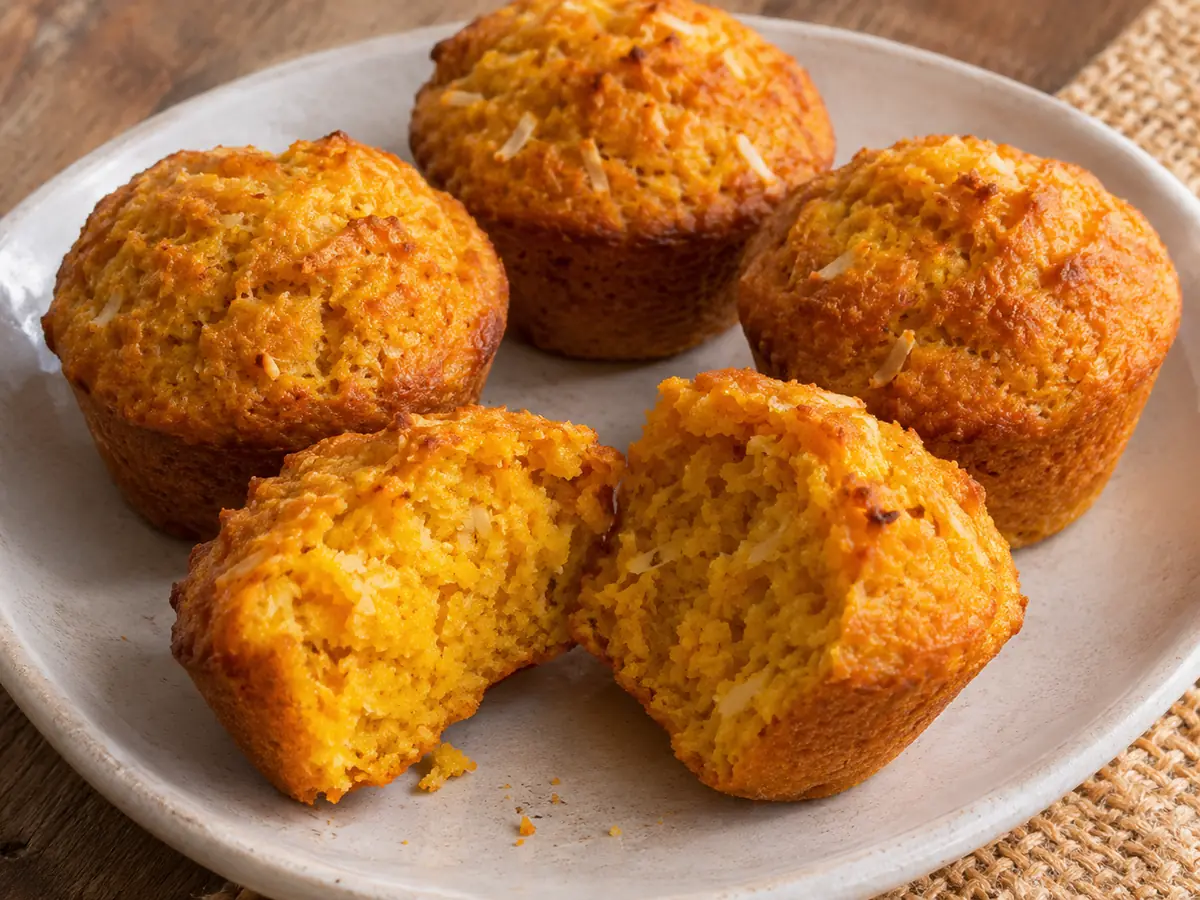
Pumpkin muffins with maize flour and coconut
Eight muffins with finely grated raw pumpkin, maize and wheat flours and coconut, giving two muffins per serving.
Ingredients
- 250 g raw pumpkin flesh, peeled and deseeded
- 80 g fine maize flour, not starch
- 100 g T55 wheat flour
- 100 g raw egg without shell, about 2 medium eggs
- 55 g white sugar
- 45 g sunflower oil
- 30 g unsweetened dried desiccated coconut
- 60 ml water
- 6 g baking powder
- 1 g salt
Preparation
Preheat a conventional oven to 180 °C. Place eight oven-suitable paper cases in a rigid muffin tin; all the measured oil will go into the batter.
Weigh 250 g prepared pumpkin flesh and grate finely. Do not squeeze it: flesh and juice remain in the mixture. Weigh the eggs without shells to obtain 100 g.
In a bowl mix the 80 g maize flour, 100 g wheat flour, 30 g coconut, 6 g baking powder and gram of salt. Break up clumps with a dry whisk.
In another container briefly whisk the eggs with the 55 g sugar. Stir in the 45 g oil, 60 ml water and grated pumpkin with its juice.
Combine the two mixtures with a spatula just until pockets of dry flour disappear. Divide immediately into eight equal amounts, filling the cases no more than three-quarters full.
Bake for about 30–35 minutes, beginning checks around 28 minutes. The top should be set and a skewer inserted in the centre should emerge without wet raw batter. Continue for a few minutes if needed.
Rest for 5 minutes in the tin, then place the muffins on a rack. Serve when no longer burning hot. Cool the remaining muffins rapidly, refrigerate at 4 °C or below and eat within 48 hours.
Introduction
Finely grated pumpkin makes these muffins soft without requiring a separately prepared purée. Its flesh spreads through a batter combining maize and wheat flours; dried coconut adds small points of texture. The intended colour is golden, with a set but still-soft crumb, not a molten centre. Sugar remains a measured dessert ingredient even when pumpkin naturally tastes sweet.
The mixture makes eight muffins, divided into four servings of two. This contemporary creation is offered in the Angola collection to explore a combination of ingredients, without claiming the name of an attested traditional pastry. It contains wheat flour and eggs: maize therefore does not make it gluten-free. It is not presented as a kitchen-tested formula; the texture cues guide monitored baking.
Cultural context
The FAO/WFP report of 6 August 2004 on Angola describes cereal production and the importance of maize among food crops. It supplies historical agricultural context, not evidence of pumpkin and coconut muffins. Combining wheat with maize, dividing the batter into eight small cakes and baking in paper cases are contemporary editorial choices. No specific provincial origin is assigned to this pastry. Source: https://www.fao.org/4/j2771p/j2771p00.htm
Tips
Weigh pumpkin after peeling and removing seeds.
Keep the grated pumpkin juice in the batter.
Use maize flour, not starch.
Divide into eight muffins to match the stated size.
Check the central crumb before removing the tin.
Planning
Choose a firm-fleshed, edible culinary pumpkin or squash. Avoid decorative gourds and any abnormally bitter flesh; do not try to cover bitterness with sugar. The required weight is flesh after removing skin, seeds and fibrous central parts. A small whole pumpkin provides more than the two hundred and fifty grams needed: reserve the rest for another use. Grate the flesh on the small holes of a clean grater so that the strands cook in the same time as the batter, without leaving large hard pieces.
Do not press the grated pumpkin in a cloth or replace its raw flesh with the same weight of very wet purée. The vegetable juice is part of the batter's balance. A noticeably wetter or drier variety can change consistency, making baking checks particularly useful. The raw pumpkin nutritional reference approximates the chosen squash without claiming to describe every variety exactly. Removed peel and seed weights are excluded from the calculation.
Use fine maize flour, not maize starch or coarse maize meal. Wheat flour supplies additional structure here; removing it requires a different formula. Mix both flours, baking powder, salt and coconut before adding liquid. Baking powder concentrated in one area can cause uneven rising and an unpleasant taste. The coconut must be dry, grated and unsweetened; wet fresh coconut or very thick flakes would change water distribution and crumb texture.
Break the eggs into a small container separate from the bowl of dry ingredients. If needed, remove a shell fragment with a clean utensil, then weigh one hundred grams of edible egg. Two eggs is only a guide because sizes vary. Keep any surplus refrigerated for an appropriate use rather than adding it automatically. Briefly whisking eggs with sugar is enough; a large foam is not wanted. Add the measured oil and water, then pumpkin strands and any juice on the board or in the bowl.
When wet ingredients meet the dry mixture, use a spatula rather than prolonged electric beating. Scrape the base to remove dry pockets, then stop once the batter is evenly mixed. Orange streaks of pumpkin are normal. Continued mixing after wheat flour hydrates can make the crumb firmer. Divide straight away so that the baking powder does not start acting during a long wait in the bowl. Weigh portions if you want comparable muffins: make eight, rather than four oversized cakes requiring different baking.
The paper cases need support from a muffin tin and must be large enough to hold the batter without exceeding three-quarters of their height. Unsupported papers on a flat tray can open and leak. The oven must have reached one hundred and eighty degrees before baking. Place the tin centrally, away from a heating element. Do not repeatedly open the door early in baking; later, check a central muffin because surface colour alone does not reveal enough about the moist interior.
From around twenty-eight minutes, check whether the top is firm, then use a clean skewer. A few tender crumbs are acceptable, but a trace of sticky batter requires more baking. Eggs and flours must cook through to the centre: do not taste raw batter to check seasoning or aim for a molten middle. Very moist pumpkin or a deeper case may need more time. Rest the muffins in the tin for five minutes, just long enough to handle, then transfer to a rack so that steam does not soak their bases.
Serving
Allow two muffins per serving and offer them warm or cold, without promising the same crumb as a cake made only with wheat flour. Maize and coconut remain noticeable. Remove paper when eating rather than tearing away a burning-hot base. Fresh fruit or a drink may accompany the dessert but are not included in its calculation. When sharing, clearly state the presence of egg, wheat and coconut; a little maize does not neutralise any allergen.
Storage
The muffins contain a substantial amount of moist vegetable. After rapid cooling on a rack, put remaining muffins in a clean, closed container in the refrigerator at 4 °C or below and eat within 48 hours. Do not shut a whole very hot batch in a deep box where steam would condense heavily. Take out only the muffins needed, using clean hands or utensils. This recipe does not provide for prolonged room-temperature storage or repeated reheating. Do not serve affected muffins if mould appears or storage conditions are doubtful.
Variations
Another firm squash may be used with the same prepared flesh weight, while monitoring its actual moisture. For a less sweet batch next time, reduce sugar by a measured amount and revise the nutrition; colour and softness may also change. Replacing wheat with a gluten-free flour is not an equivalent change and needs another formulation trial. Added raisins, chocolate chips or seeds must be weighed and declared because they change yield, possible allergens and nutrition per serving.
Nutrition notes
Estimates are for one quarter of the recipe, or two of eight muffins, without accompaniments. They use uncooked edible weights and count all oil, sugar, eggs, baking powder and salt. Raw pumpkin approximates the chosen squash; the flours really are maize and wheat flours, not interchangeable starches. Water supplies no macronutrients. Varieties, brands and oven water loss change values per served weight. No laboratory analysis after baking or particular health property is claimed. Source: Anses. 2020. Ciqual French food composition table.
Conclusion
Fine strands, brief mixing and a check at the centre are the guideposts for this proposal. Keeping the crumb soft never means leaving batter raw. This Angola collection creation is presented as contemporary, without a claim of traditional attestation or kitchen testing.
Enjoy your meal
Enjoy your meal!