Oven-baked cowpea and spinach patties
Already cooked cowpeas, well-drained spinach and an egg-and-flour binder make twelve oven-browned patties.
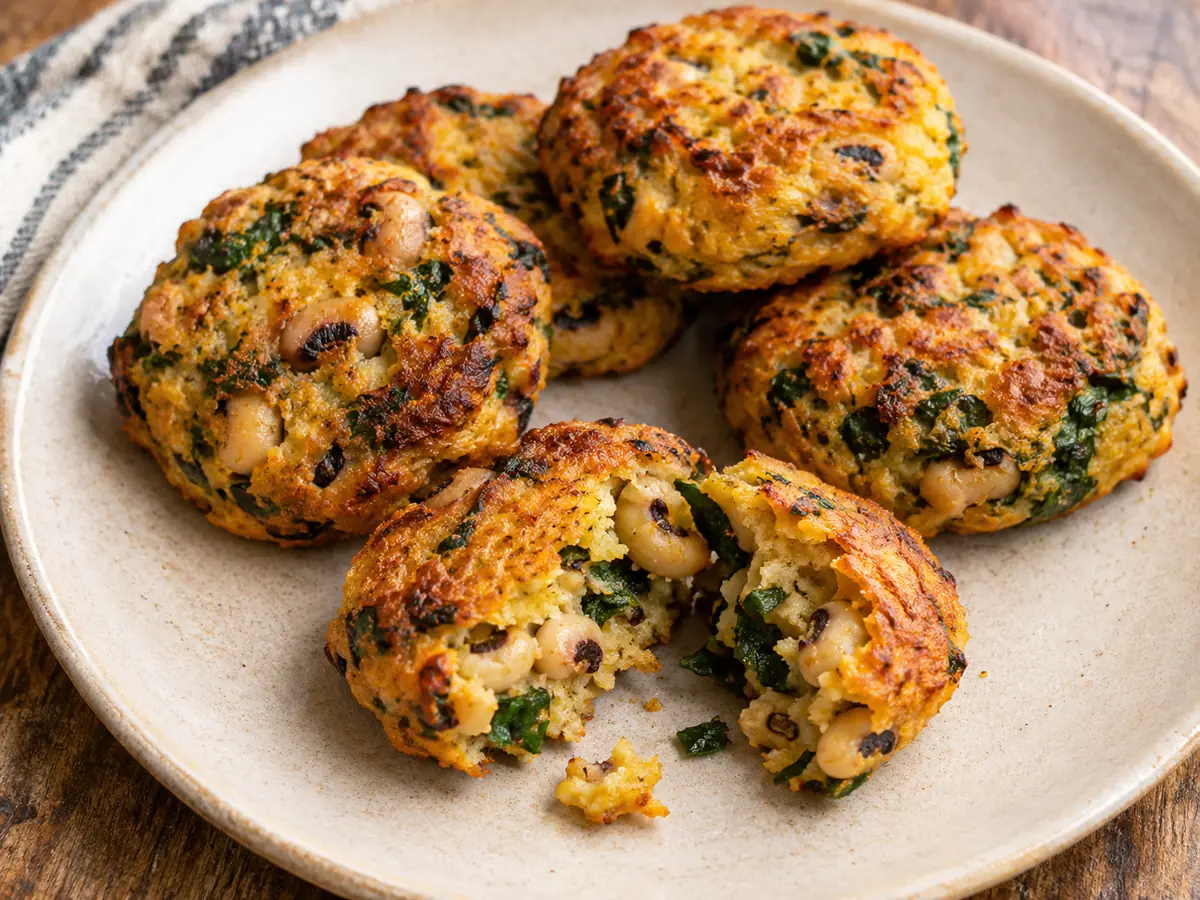
Ingredients
- 500 g fully cooked cowpeas, drained and cooled
- 300 g fresh spinach, usable weight before cooking
- 100 g peeled onion
- 8 g peeled garlic
- 100 g raw egg without shells, about 2 medium eggs adjusted by weighing
- 80 g T55 wheat flour
- 20 g olive oil: 10 g for the vegetables and 10 g for both sides of the patties
- 20 g lime juice
- 3 g salt
Preparation
Drain and weigh 500 g fully cooked, cold cowpeas. Sort, wash and weigh 300 g usable spinach. Chop 100 g onion and 8 g garlic.
Sweat onion 5 minutes in 10 g oil, add garlic 1 minute and spinach 3–4 minutes. Drain, cool rapidly, press lightly and chop.
Mash about two-thirds of the cowpeas. Add cold vegetables,20 g lime juice and 3 g salt. Incorporate 100 g shelled egg and 80 g wheat flour.
Mix until no dry flour remains and rest 10 minutes in the refrigerator. Heat the oven to 200 °C and prepare a tray lined with suitable baking paper.
Divide into 12 equal portions and shape 1.5 cm-thick patties. Space apart and brush the first sides with 5 g oil.
Bake about 12 minutes, turn with a wide spatula, brush with the remaining 5 g oil and continue 10–13 minutes.
Check fully set centres and a core temperature of at least 71 °C using a clean thermometer. Wait 2–3 minutes on the tray before serving 3 patties per portion.
Rapidly cool leftovers in a shallow container, refrigerate at 4 °C or below and use within 24 hours. Reheat only the required amount once until thoroughly hot throughout.
Introduction
These patties combine tender cowpeas with finely chopped spinach without aiming for a perfectly smooth purée. Some legumes remain in small pieces to provide texture. Wheat flour and egg bind the mixture; the patties bake in the oven rather than deep-fry. Lime juice goes into the cooled mixture and gives a bright note without becoming a separate sauce.
The quantities make twelve patties: three per person for four portions. Use cowpeas that are already completely cooked and properly stored, not dried beans or beans that have merely been soaked. This is a contemporary creation inspired by products used in African cuisines, including Angola's. It is not presented as a collected traditional speciality or a kitchen-tested recipe. The firmness and cooking checkpoints remain essential.
Cultural context
The FAO/WFP report of 6 August 2004 on Angola describes food production and food needs during that period. This historical agricultural context helps place the importance of plant resources, but it does not attest these cowpea patties, their oven baking or their combination with spinach. Shaping twelve discs, binding with egg and flour and seasoning with lime are contemporary editorial choices here, without invented provincial attribution or family lineage. Context source: https://www.fao.org/4/j2771p/j2771p00.htm
Tips
Weigh cowpeas after cooking and draining.
Remove free water from spinach before mixing.
Leave some beans in pieces.
Measure cooking oil and surface oil separately.
Check the centres, not just the colour of the edges.
Planning
Drain the cowpeas in a sieve for several minutes. The 500 g refers to cooked beans without their liquid. If canned, check that they are ready to eat, rinse if necessary and then drain. Home-cooked cowpeas must have been cooked thoroughly and cooled correctly. A bean that is still hard will not become properly tender during the patties' brief cooking. Reject any product whose storage is uncertain.
Sort the spinach, remove damaged parts and overly fibrous stems, then wash and drain thoroughly. Weigh 300 g of usable leaves before cooking. Chop onion and garlic separately. Heat 10 g oil in a wide frying pan and sweat onion for 5 minutes. Add garlic for 1 minute, then spinach for 3–4 minutes, just until wilted. Stir so that bottom leaves do not burn while those above remain raw.
Transfer the vegetables to a sieve over a bowl. Briefly allow steam to escape, then cool rapidly in a shallow container. Press cooled spinach with a spoon to remove free liquid without trying to dry it completely. Finely chop this mixture. Water trapped among leaves is the main cause of soft patties; endlessly adding flour to absorb it would make a heavy dough and change the recipe.
Put cold cowpeas in a mixing bowl. Mash about two-thirds with a fork, leaving the remainder in pieces. Add cooled vegetables, lime juice and salt. Crack eggs separately, check their appearance and weigh 100 g without shells. Incorporate egg and 80 g flour. Mix with a spatula until no patches of dry flour remain. A spoonful should hold together while remaining supple and slightly sticky.
Rest for 10 minutes in the refrigerator so the flour hydrates. This short rest does not replace cooking the egg and flour. Preheat the oven to 200 °C and line a baking tray with paper suitable for that temperature. Divide the mixture into twelve equal portions and shape discs about 1.5 cm thick. Slightly damp hands make shaping easier without additional flour. Leave space between patties for air to circulate.
Measure the 10 g oil reserved for the surfaces. Use 5 g to brush the first sides. Bake for about 12 minutes before turning carefully with a wide spatula. Brush the other sides with the remaining 5 g. Continue for 10–13 minutes until edges are lightly golden and centres set. Thick patties may take longer: browning alone is not enough to judge the inside.
Check that patties are cooked throughout, without wet egg-and-flour batter inside. A clean thermometer inserted into the centre should reach at least 71 °C. Do not taste the raw mixture to check salt after adding egg and flour. Let patties firm up on the tray for 2–3 minutes, then move without stacking while still steaming. A surface that is slightly delicate immediately after baking does not necessarily need more cooking.
Serving
Serve three patties per person without immediately covering them: a lid would soften the surface. The centres should remain moist with visible beans rather than resemble dry biscuits. Lime juice is already included, so no extra sauce is needed for the promised tang. A salad or another accompaniment can be offered separately, with its ingredients and nutrition counted in addition. The patties contain wheat and egg: do not present them as gluten-free or vegan.
Storage
Rapidly cool remaining patties in a shallow container and refrigerate at 4 °C or below. Use within 24 hours, or sooner if the remaining shelf life of the cowpeas requires it. Baking does not extend the storage life of legumes that are already old. Reheat only the required portion once until very hot at the centre. Avoid enclosing a stack of still-hot patties in a deep box for a long time.
Variations
Other leaves do not automatically replace spinach. Their identification, preparation, any required preliminary cooking and the water they release must be known. Do not use raw cassava leaves in this formula. Gluten-free flour behaves differently and needs a real adaptation of the binder; simply changing the name is insufficient. For smaller patties, keep thickness even and check that the centres set rather than blindly following the same timing.
Nutrition notes
Values are estimates for a portion of three patties, excluding accompaniments. Cowpeas use World Agroforestry record P0008 for mature beans soaked and boiled, not dried beans; other ingredients use edible weights and Ciqual references. All egg, flour, oil and added salt are counted. Intrinsic cowpea salt is not quantified in the reference and is excluded from the estimate: this therefore does not measure all their possible sodium. Brands and draining can alter results. This is not an analysis of the cooked dish.
Conclusion
Already tender cowpeas, spinach without free water and evenly thick discs are the three checkpoints. Waiting until the centres set keeps the patties moist without leaving raw egg inside. This contemporary creation remains distinct from an attested traditional speciality and is not presented as a kitchen-tested recipe.
Enjoy your meal
Enjoy your meal!