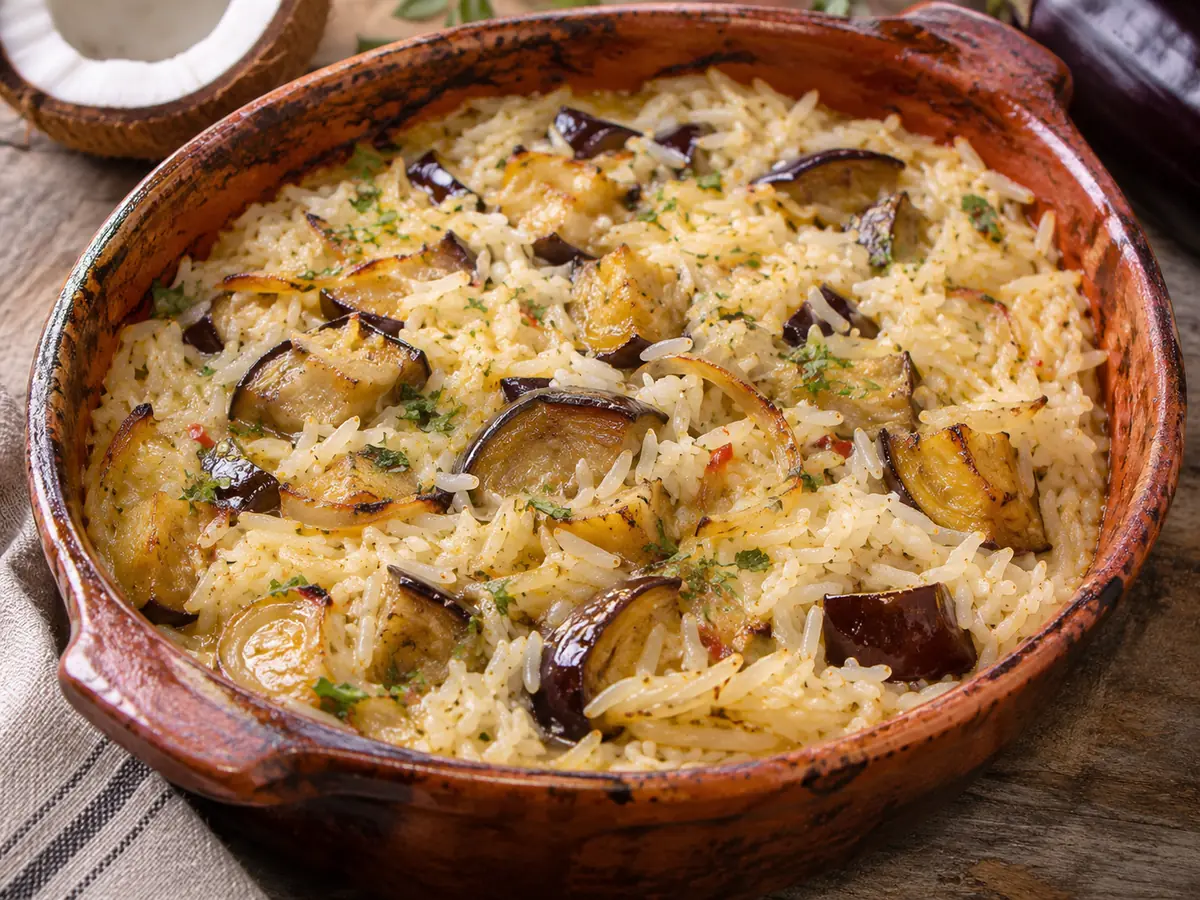
Oven-baked rice with aubergines and coconut milk
Long-grain rice cooked by absorption beneath roasted aubergines, in a measured coconut and tomato liquid.
Ingredients
- 280 g raw long-grain white rice
- 600 g aubergines, usable weight
- 150 g peeled onion
- 200 g tomatoes, including juice
- 10 g peeled garlic
- 200 g plain coconut milk
- 25 g olive oil, divided into 15 g and 10 g
- 400 ml water: 350 ml for the initial cooking and 50 ml reserved
- 4 g salt
Preparation
Preheat the oven to 200 °C. Wash and weigh 600 g usable aubergines and cut into 2 cm cubes. Prepare onion, garlic and tomatoes.
Toss aubergines with 15 g oil. Spread in one layer and roast for about 25 minutes, turning halfway through.
Sweat onion 7 minutes in the remaining 10 g oil. Add garlic 1 minute, then tomatoes 8 minutes to concentrate their juice. Use a separate saucepan if the dish cannot take direct heat.
Rinse 280 g raw rice and drain 5 minutes. Combine with the tomato base in a lidded ovenproof dish. Separately heat 200 g coconut milk,350 ml water and 4 g salt; reserve 50 ml water.
Reduce the oven to 180 °C. Pour the very hot liquid over the rice, distribute aubergines on top and cover carefully. Bake 30–35 minutes without opening during the first 30 minutes.
Taste grains from the centre. If firm and dry, add the reserved 50 ml hot water and cook 5 minutes longer covered. If firm but moist, continue without water; if tender and too wet, finish uncovered for a few minutes.
Rest covered outside the oven for 10 minutes, then fluff with a fork. Divide vegetables and rice evenly among 4 portions.
Serve hot. Rapidly cool leftovers in small shallow containers, refrigerate at 4 °C or below and use within 24 hours. Reheat only the required portion once until thoroughly hot throughout.
Introduction
The rice enters this dish raw and finishes cooking in a covered ovenproof vessel. The aubergines first go onto a baking tray: this initial roasting concentrates their flesh and limits the water they subsequently release among the grains. Coconut milk softens the tomato base without turning the dish into savoury rice pudding. The aim is tender grains that separate with a fork, with a lightly creamy base and recognisable pieces of vegetable.
The quantities make four portions. Long-grain white rice suits this method better than brown or parboiled rice, which need different amounts of water and cooking times. This contemporary creation takes inspiration from products used in various cuisines, including Angola's; it does not reproduce an attested traditional speciality. It is an editorial formula and is not presented as having been tested in a kitchen. Keep the texture checkpoints and cautiously adapt the final stage to your oven and the rice you actually bought.
Cultural context
The FAO/WFP report of 6 August 2004 on Angola describes food crops and food needs at that time, particularly cereals and cassava. It offers historical agricultural context; it documents neither this aubergine rice, this coconut cooking method nor the proposed proportions. Roasting vegetables before oven absorption is a contemporary editorial choice here. No particular provincial origin or family transmission is claimed. Context source: https://www.fao.org/4/j2771p/j2771p00.htm
Tips
Weigh dry rice before rinsing.
Roast aubergines in a single layer.
Concentrate tomato juice before adding rice.
Keep the lid shut during the first 30 minutes.
Decide on extra water after tasting grains from the centre.
Planning
Choose firm, shiny aubergines without soft patches. Wash, remove the stalks and weigh 600 g of usable flesh with the skin. Cut into even cubes about 2 cm across. Tiny pieces would fall apart during the second cooking, while very large cubes would retain tough skin. Pat dry with a clean cloth so that the oil coats them rather than slipping over washing water.
Heat the oven to 200 °C. Toss the aubergines with 15 g oil and spread over a sufficiently wide baking tray. The pieces should form one layer rather than a compact heap. Turn halfway through cooking and look for lightly coloured faces and flesh already supple after about 25 minutes. Do not pour in unmeasured oil as the flesh absorbs it: the planned quantity is deliberately measured. A tray that is too small requires two batches.
Meanwhile, slice the onion, chop the garlic and dice the tomatoes with their juice. Use a lidded ovenproof dish about 20 by 25 cm and deep enough for the expanded rice. If the dish cannot go over direct heat, make the base in a saucepan and transfer it. This avoids putting a ceramic vessel designed only for the oven directly onto a hob.
Sweat the onion in the remaining 10 g oil for 7 minutes over medium heat. Add garlic for 1 minute, then tomatoes for about 8 minutes. Stir and evaporate some of their juice: the base should remain moist but should no longer resemble soup. Very watery tomatoes may need a few more minutes. Concentrating them first makes the liquid volume more predictable and keeps the rice from sitting in additional unmeasured water.
Rinse the raw rice in a fine sieve, then drain for 5 minutes. Weigh the rice before rinsing: 280 g refers to dry grain, not cooked rice. Gently combine the drained rice with the tomato base. Separately heat coconut milk with 350 ml water and salt until very hot. Keep 50 ml water in reserve rather than automatically pouring it in.
Reduce the oven to 180 °C. Pour the hot liquid over the rice and distribute the grains evenly. Arrange the roasted aubergines on top without compacting them. Close the lid carefully: absorption relies on steam remaining inside. A very wide or poorly covered dish loses more water, so the same cooking time would not give the same result. Avoid repeatedly opening the lid during the first 30 minutes.
After 30 minutes, briefly lift the lid with your face turned away from the steam. Taste a few grains from the centre, not merely the edge. If they are still firm and the bottom is dry, add the reserved hot water, cover again and cook 5 minutes longer. If firm but surrounded by liquid, continue without adding water. If tender but slightly too wet, finish uncovered for a few minutes. These decisions depend on observation, not automatic additions at every opening.
Remove when the grains are tender and almost no free liquid remains. Rest covered outside the oven for 10 minutes. This redistributes moisture; it is not a way to keep rice lukewarm for hours. Fluff with a fork by lifting rather than crushing the aubergines. Taste before adding any more salt. Serve the four portions promptly and immediately organise cooling for any leftovers.
Serving
Lift rice from the bottom to distribute the tomato base, then put some aubergine on each portion. The colour will not be uniformly white: tomato and coconut give a gentle tint and light creaminess. Serve on warm but safely handled plates. The dish can accompany a separately served protein preparation, which must be added to the nutritional calculation. Do not claim that this rice alone is a balanced meal for everyone. Quantities are a serving starting point, adjustable to appetite and its place in the menu.
Storage
Cooked rice needs particular attention when cooling. Quickly divide leftovers into small shallow containers and refrigerate at 4 °C or below rather than leaving the large dish lukewarm for hours. Use within 24 hours. Reheat only the required portion once, adding a little water if dry, until thoroughly hot in the centre. Do not save a portion again after it has been reheated.
Variations
Another long-grain white rice may work, with earlier or later checking according to its packet. Brown, parboiled or already cooked rice cannot directly replace the raw grains: they need a different process and liquid calculation. Very thick coconut cream changes richness and absorption; preferably choose plain, homogenised coconut milk. Do not replace roasted aubergines with raw vegetables without reassessing the water they release.
Nutrition notes
Values are estimates per portion, without accompaniments, calculated from edible ingredient weights. Rice is referenced raw and vegetables at their prepared weights before cooking; all added oil and salt are counted. The generic “coconut milk or coconut cream” entry is an explicit proxy for the chosen coconut milk, whose composition varies by brand. Water contributes no nutrients. Water losses, cooking and actual yield may change observed intake; no analysis of the cooked dish is claimed.
Conclusion
The desired result rests on three observations: aubergines already supple before assembly, a lid that retains steam, and grains checked in the centre before resting. These checkpoints let you adjust the final cooking without flooding the rice. This contemporary creation is not presented as an attested traditional recipe or a kitchen-tested formula.
Enjoy your meal
Enjoy your meal!