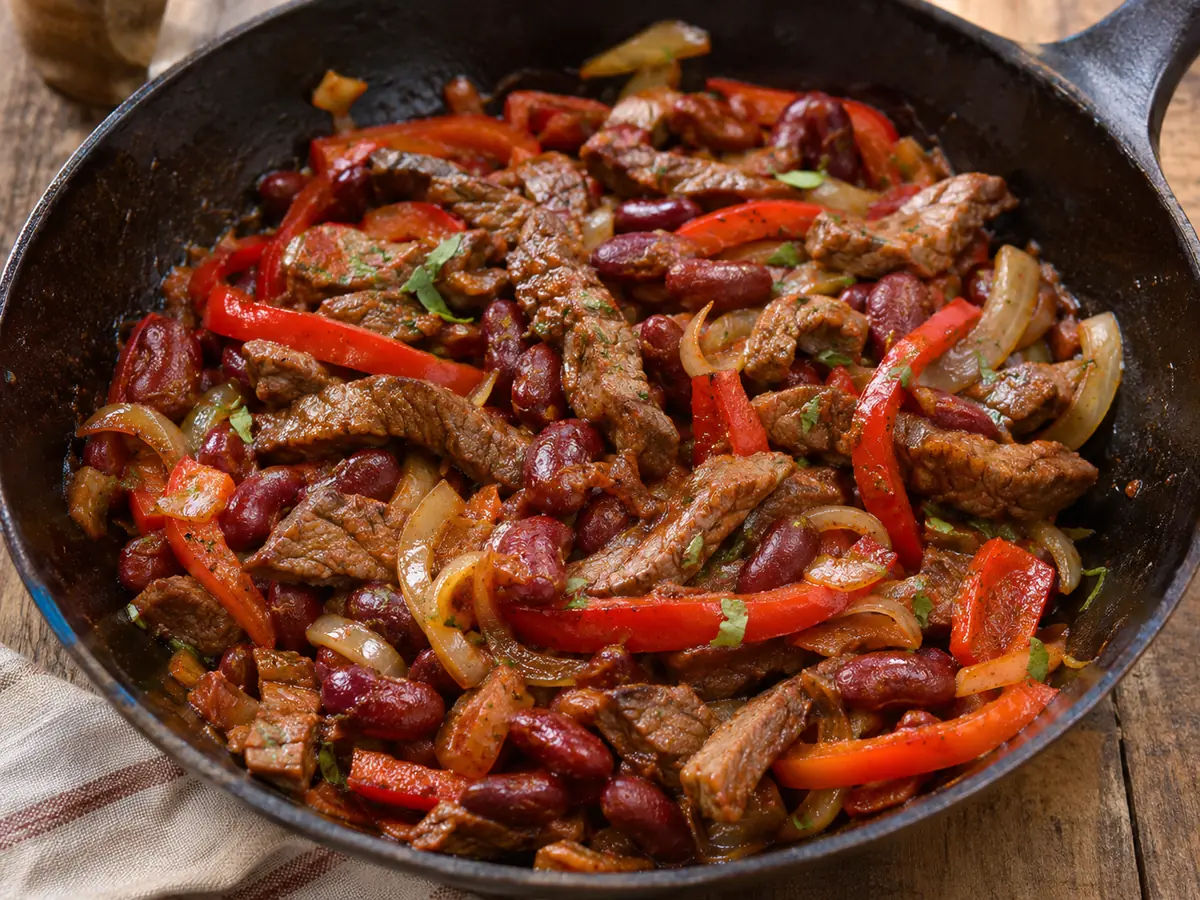
Beef skillet with red kidney beans and red pepper
Quickly seared strips of rump steak join already cooked red kidney beans and red pepper strips in a light tomato base.
Ingredients
- 600 g raw beef rump steak, trimmed weight, to cut into strips
- 500 g already cooked canned red kidney beans, drained weight
- 500 g raw red pepper, weight without stalks or seeds
- 200 g raw tomato
- 150 g peeled onion
- 10 g peeled garlic
- 10 g fresh ginger, usable weight
- 20 g pure lemon juice
- 20 g olive oil, divided into two 10 g portions
- 80 ml water
- 3 g salt: 2 g for the vegetables and 1 g for the meat
Preparation
Prepare and weigh all ingredients. Slice rump steak into strips 5 cm long, 2 cm wide and 1 cm thick, then keep chilled.
Drain 500 g already cooked red kidney beans. Prepare 500 g deseeded pepper in strips about 8 mm wide, and dice the tomato.
Cook onion in 10 g oil for 6 minutes. Add pepper for 8 minutes, garlic and ginger for 1 minute, then tomato for 4 minutes.
Pour in 80 ml water. Add beans and 2 g salt, then heat gently for 6 minutes. Keep the vegetables moist and beans whole; hold covered over very low heat.
Season beef with 1 g salt. Sear in another pan in 2 batches with the remaining 10 g oil, for about 1.5 minutes per side.
Check at least 63 °C at the centre of thick pieces with a clean probe; cook longer if necessary. Transfer to a clean plate and rest for 3 minutes.
Combine meat, resting juices and vegetables. Mix gently for 1 minute, then turn off the heat and stir in 20 g lemon juice.
Divide the strips among four plates, then add beans, peppers and cooking juices. Serve hot without a long wait.
Introduction
This skillet dish uses two cooking rhythms rather than simmering all the ingredients together. The vegetables and beans are brought to the right texture first, while the rump steak is seared separately and combined with the rest just before serving. The meat thus retains its clear-cut strip shape, while the beans stay whole. Tomato provides a moist base that brings the ingredients together without turning the dish into soup.
This is a contemporary creation inspired by ingredients used in Angolan kitchens, not a claimed ancient speciality. The proportions provide four main-course plates. Ginger and lemon add a gentle lift to the cooking juices. The beans are bought already cooked; this method is not a procedure for preparing dried red kidney beans, which require separate treatment before they can be eaten.
Cultural context
The FAO/WFP report of 6 August 2004 describes food-crop production and food needs in Angola in a particular historical situation. It provides agricultural context, not evidence of this skillet dish’s ancient existence. Quickly seared rump steak, already cooked beans and pepper strips are choices in a contemporary editorial proposal. Neither the proportions nor the procedure is attributed to a province or documented family transmission. Institutional context source: https://www.fao.org/4/j2771p/j2771p00.htm
Tips
Prepare the vegetables before taking beef out of the refrigerator.
Weigh beans after draining and use only beans that are already cooked.
Sear meat in batches to avoid cooling the whole pan.
Check temperature and resting time rather than inferring doneness from colour.
Combine at the last moment and add lemon off the heat.
Planning
Choose a whole piece of rump steak, remove thick membranes, then weigh six hundred grams. Identify the direction of the fibres and slice across them into strips roughly five centimetres long, two wide and one thick. Uniformity avoids drying out thin ribbons while other pieces remain insufficiently cooked. Keep the meat refrigerated while preparing the vegetables. Clean the knife and board after working with raw meat.
Drain the already cooked red kidney beans and weigh five hundred grams. If rinsed, let them drain again before the final weighing. Do not put dry beans directly into this recipe: the skillet cooking time is unsuitable for preparing them. Remove stalks, seeds and thick membranes from the peppers, then weigh the usable portion. Cut into strips about eight millimetres wide, broad enough to retain some texture.
Cook the sliced onion for six minutes in ten grams of oil in a wide sauté pan. Add peppers and stir for eight minutes over medium heat. Add chopped garlic and grated ginger for one minute, then diced tomatoes for four minutes. Pour in the eighty millilitres of water and add the beans and two grams of salt. Heat at a gentle simmer for six minutes, lifting the beans rather than crushing them with the spatula.
The mixture must stay moist but should not sit in a large amount of liquid. If the tomatoes release much water, reduce the base for a few minutes before dealing with the beef. Taste a pepper strip: it should be tender while holding its shape. Then keep the covered sauté pan over very low heat while searing the meat in another pan. This separation allows the beef’s surface to brown instead of cooking in the vegetables’ moisture.
Pat the beef strips dry and season them with the remaining gram of salt. Heat a wide frying pan and use the remaining ten grams of oil in two portions for two batches. Lay in the meat without crowding, sear for about one and a half minutes per side, then check the thickest pieces with a clean probe. For this unminced rump steak, aim for at least 63 °C at the centre, followed by three minutes’ rest on a clean plate. Sear longer if needed: thickness and heat output change the actual time.
Keep the resting juices on the plate, then bring beef and vegetables together at the last moment. Mix gently for one minute, just to distribute heat, and turn off the heat. Stir in the twenty grams of lemon juice. Prolonged cooking after this combination would toughen the meat without improving already cooked beans. If service is delayed, postpone searing rather than holding the strips in the sauté pan for a long time. Use serving tongs that have not touched raw meat.
Serving
Share the meat evenly between four plates first, then divide the beans and pepper strips. Spoon over the tomato base without flooding the portions. The preparation already contains beans and does not presume automatic addition of another starch. If serving rice or bread, present them separately and count them within the overall meal. Avoid lengthy presentation on a lukewarm platter: the strips are more pleasant served immediately after combining.
Storage
Quickly divide leftovers into shallow containers and refrigerate at 4 °C or below, without leaving them in the pan for hours. Eat within forty-eight hours. Reheat only the required quantity once, until everything is thoroughly hot at the centre, using 74 °C as a reference. Add a little water if the tomato has thickened. The strips become firmer on reheating; gentle cooking with their moist juices limits drying without guaranteeing the texture of the first serving.
Variations
Changing the pepper’s colour changes flavour and appearance; identify that variation and recalculate if precise figures are wanted. Do not replace rump steak with a stewing cut while retaining the same searing time. Minced meat also requires different cooking criteria. Bean brands vary, particularly in salt content and firmness. Drain carefully rather than correcting excess liquid by prolonged cooking of the entire mixture after adding the beef.
Nutrition notes
Values are estimates for one quarter of the recipe without extra accompaniments. Beef uses the raw rump-steak reference; peppers and other vegetables are weighed raw and usable, while beans are weighed already cooked and drained. The canned-bean reference represents a generic product: its salt content can differ from the actual can or after rinsing. All oil and the three grams of added salt are counted. Pure lemon juice serves as a composition reference. Evaporation and the amount of cooking juices eaten change actual contributions; no exact value for the finished dish is claimed.
Conclusion
Separate cooking allows the vegetables to be adjusted without needlessly extending the rump steak’s cooking. Bring everything together just before serving and keep the beans whole. This contemporary formula is not presented as kitchen-tested.
Enjoy your meal
Enjoy your meal!