Braised chicken with carrots and lemon
Pieces of boneless thigh simmer gently with thick carrots, and their cooking juices are brightened with lemon, without cream or commercial stock.
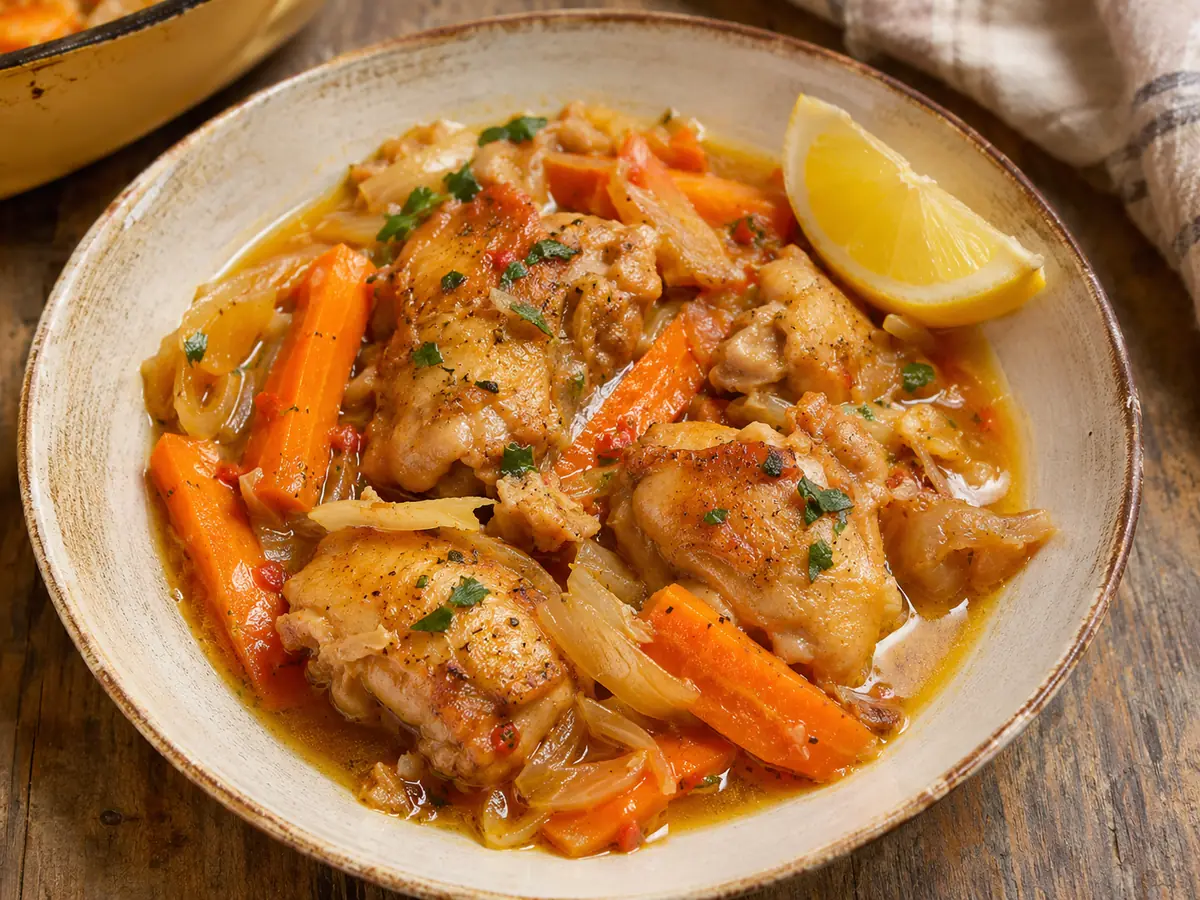
Ingredients
- 600 g raw boneless, skinless chicken thigh meat
- 600 g raw carrots, peeled weight
- 150 g peeled onion
- 8 g peeled garlic
- 10 g fresh ginger, usable weight
- 40 g pure lemon juice
- 20 g olive oil
- 300 ml water
- 4 g salt
Preparation
Prepare and weigh the chicken, carrots, onion, garlic and ginger. Cut the meat into 4 cm pieces and the carrots into 2 cm lengths.
Heat 20 g oil in a casserole. Brown the chicken for about 3 minutes on each side, in batches if necessary, then set aside.
Cook the onion for 6 minutes; add garlic and ginger for 1 minute, then carrots for 3 minutes. Loosen the cooking residue with part of the 300 ml water.
Return the chicken and its juices, pour in the remaining water and add 4 g salt. Cover at the first gentle simmer.
Cook gently for 25–30 minutes, turning halfway through. Check that the carrots are tender and every chicken piece reaches at least 74 °C at the centre.
If necessary, set aside the cooked meat and reduce the juices uncovered for a few minutes. Return the chicken without cooking it longer than needed.
Off the heat, add the 40 g lemon juice in two stages: 30 g, then 10 g after tasting. Divide meat, vegetables and juices among four plates.
Introduction
This dish relies on two stages: lightly colour the chicken, then tenderise it in a base of vegetables and water. The carrots remain recognisable pieces rather than dissolving into a uniform sauce. Most of the lemon is added after cooking to retain clear acidity. The resulting juices accompany the meat without aiming for a cream-like consistency or thick coating.
This is a contemporary creation inspired by ingredients found in Angolan kitchens. It is attributed neither to a province nor to a collected family tradition. Each of the four portions contains chicken, carrots and a share of the juices. Any rice or other accompaniment is prepared separately and belongs neither to the ingredient list nor to the nutritional calculation shown here.
Cultural context
The FAO/WFP report of 6 August 2004 describes food-crop production and Angola’s food needs within a specific historical context. It helps situate an agricultural environment but does not document this combination of chicken, carrots and lemon. The proportions, braising method and final addition of acidity are contemporary editorial decisions here. It would therefore be inaccurate to treat this as an old recipe authenticated by that report. Institutional context source: https://www.fao.org/4/j2771p/j2771p00.htm
Tips
Weigh the meat after removing bones, skin and cartilage.
Sear in batches to retain light browning.
Use only the measured water and oil to manage the pan residue.
Check the centre temperature, not just the colour of the juices.
Add lemon off the heat and taste it with the vegetables.
Planning
Choose thighs already boned and remove any remaining pieces of cartilage. The six hundred grams refer only to usable meat: thighs with skin and bone have a different yield. Cut into roughly four-centimetre pieces for easier division. Pat dry with disposable paper without washing the poultry under the tap. Keep the meat chilled until searing and clean the board after handling it.
Peel the carrots, then weigh six hundred grams. Cut into two-centimetre lengths, splitting the largest lengthwise to bring their thicknesses closer. Very thin carrots can remain in longer rounds. Uniformity matters more than decorative shape: tiny pieces would collapse while larger ones remained firm. Slice the onion, chop the garlic and finely grate the ginger before heating the casserole.
Use a casserole with a base wide enough to sear the meat without crowding. Heat the twenty grams of oil, working in two batches if necessary. Lightly colour each side without seeking a dark crust that would make the pan residue bitter. Reserve the chicken on a plate intended for food that is not yet fully cooked. Browning alone does not cook it through, and this plate must not be used directly for serving.
Cook the onion for six minutes in the same casserole, then add garlic and ginger for one minute. Add the carrots and stir for three minutes. If the cooking residue sticks, pour in a small part of the measured three hundred millilitres of water and loosen it with a spatula. Do not add unmeasured oil. Return the meat with the juices collected on its plate, add the remaining water and salt, and cover when gentle bubbling begins.
Maintain a steady simmer for twenty-five to thirty minutes, covered, gently turning the pieces halfway through. The liquid must neither boil violently nor disappear. Check a thick carrot with the tip of a knife: it should yield without collapsing. Check the centre of the chicken with a clean probe; every portion must reach at least 74 °C. Continue if needed: the stated times are guides, not a guarantee of doneness.
Remove the lid once the meat is cooked. If there is a great deal of liquid, temporarily lift out the chicken and reduce the juices uncovered for a few minutes without drying the carrots. Return the meat. Turn off the heat, add thirty grams of lemon juice first and taste with a piece of carrot. Add the remaining ten grams according to the balance wanted; the nutritional figures nevertheless assume that all forty grams are used. Serve without leaving the casserole lukewarm for a long time.
Serving
Divide the chicken among four plates first, followed by the carrots and finally the juices. Gently stir the bottom before pouring: the aromatics settle as the dish waits. Serve hot with a separate dish of rice or vegetables if wanted. Remember that an accompaniment changes the meal’s volume and nutrient contribution. Do not pour additional oil or lemon over the plates without counting it if following the stated quantities.
Storage
Quickly put leftovers in small shallow containers and refrigerate at 4 °C or below, without waiting several hours with the casserole on the cooker. Keep for no more than forty-eight hours. Reheat the required portion only once, until the chicken is again thoroughly hot at the centre, using 74 °C as a reference. Add a little water if the juices have concentrated. Use a clean spoon and never return leftovers from a partially eaten plate to the storage container.
Variations
Less sweet carrots may need less lemon; taste rather than compensating with sugar. For another bird or cut, review cooking time, safe temperature and nutritional references instead of retaining the figures unchanged. Skin-on thighs contribute a different amount of fat. A hotter variation can be developed separately, but it must neither obscure the cooking checks nor be presented as the formula described here.
Nutrition notes
The figures are estimates for one quarter of the preparation, without accompaniments. The calculation uses raw skinless thigh meat, usable weighed vegetables, pure lemon juice, and all added oil and salt. Actual values depend on the cut, juice brand, evaporation and the share of sauce eaten. Water supplies no macronutrients. The table’s pure lemon juice is the composition reference; freshly squeezed juice can vary. These data establish neither an exact vitamin content after cooking nor a therapeutic benefit.
Conclusion
The intended result combines thoroughly cooked chicken, tender carrots and lemony juices that remain fluid. Adjust using textures and the probe rather than automatically extending cooking. This editorial formula is not presented as kitchen-tested.
Enjoy your meal
Enjoy your meal!