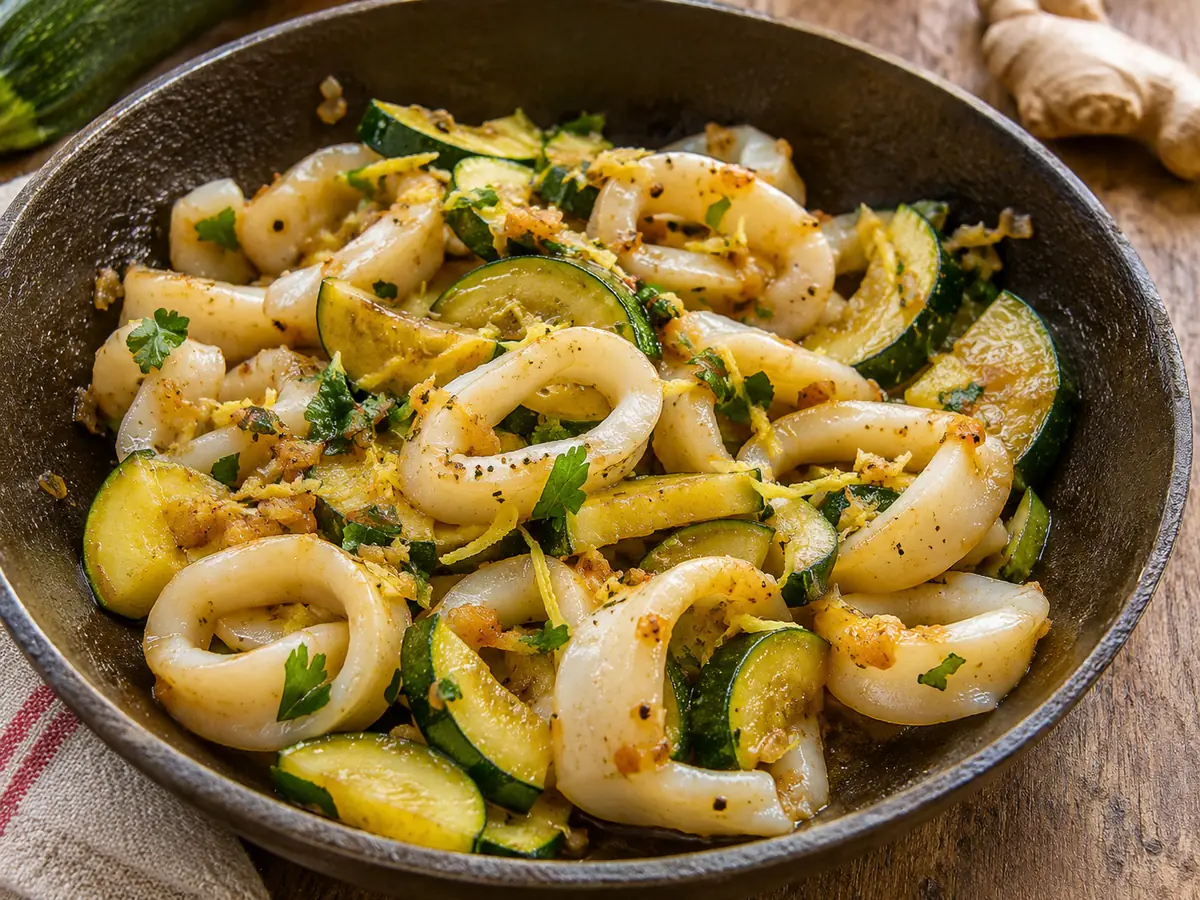
Pan-fried squid with zucchini and ginger
Squid rings and zucchini half-moons are seared separately, then combined with ginger, lime and parsley, without a thick sauce.
Ingredients
- 600 g cleaned raw squid tubes, net weight
- 800 g raw zucchini, ends removed
- 100 g peeled onion
- 8 g peeled garlic
- 15 g prepared fresh ginger
- 30 g olive oil: 20 g for vegetables and 10 g for squid
- 20 g lime juice
- 10 g fresh parsley, washed, dried and chopped
- 3 g salt: 2 g for vegetables and 1 g for squid
Preparation
Check and dry 600 g cleaned raw squid tubes; cut into 1 cm rings and refrigerate. Wash and cut 800 g zucchini into 8–10 mm half-moons.
Slice onion, chop garlic and grate 15 g ginger. Prepare 10 g chopped parsley and 20 g lime juice.
Soften onion in 10 g oil for 6 minutes; add garlic and ginger for 1 minute, then reserve in a clean dish.
Cook zucchini in two 400 g batches, each with 5 g oil, for about 8–10 minutes. Reserve and distribute the vegetables’ 2 g salt.
Sear squid in two 300 g batches, each with 5 g oil, initially about 2–3 minutes. Distribute 1 g salt and check for 63 °C at the centre of thick rings with a clean probe.
Remove cooked squid and briefly reduce their juices if necessary. Reheat zucchini and aromatics in the pan, then briefly combine with the rings.
Off the heat, add lime and parsley. Mix gently and serve immediately in four portions.
Introduction
A clear-cut sauté here depends on controlling water released by two moist ingredients. If zucchini and squid go together into an overcrowded pan, they may boil in their own juices. They are therefore cooked in small batches before being briefly combined at the last moment. Ginger flavours an onion and garlic base; it does not create a thickened sauce. Squid rings should remain visible among zucchini half-moons that are supple but recognisable.
This proposal is a contemporary creation inspired by combining products, rather than an attested traditional Angolan speciality. It uses already cleaned squid tubes weighed raw, and zucchini weighed after the ends have been removed. The quantities make four portions to divide fairly. Lime and parsley finish the dish after cooking. No thickener, cream or sweet sauce is planned, preserving the appearance of a genuine sauté.
Cultural context
The FAO/WFP report of 6 August 2004 presents Angola’s historical agricultural and food context. It does not document this squid sauté or its batch-cooking technique. Combining the products and finishing with ginger, lime and parsley belong to this contemporary creation. No provincial or family origin story is assigned to the formula. Context source: https://www.fao.org/4/j2771p/j2771p00.htm
Tips
Dry ingredients before searing.
Cook zucchini and squid in batches instead of overcrowding the pan.
Reserve aromatics before high-heat cooking.
Remove cooked rings as they are ready.
Finish with lime and parsley off the heat, then serve without waiting.
Planning
Check that the squid tubes contain no transparent quill, troublesome membrane or remaining innards. The 600 g refers only to clean usable tubes, without waste. Pat them thoroughly dry and cut into rings about 1 cm wide. For frozen squid, thaw in the refrigerator following the manufacturer’s instructions and drain before weighing. Keep the rings cold while preparing vegetables, rather than leaving them beside the hot stove.
Wash zucchini and remove only damaged or tough ends. Weigh 800 g, halve lengthwise and cut into 8–10 mm half-moons. Very thin slices break down quickly and release more water. Dry before cooking to limit splashes. Slice onion, chop garlic and grate the 15 g ginger. Wash and dry parsley, weighing the required 10 g before chopping. Measure lime juice separately.
Have a large 28–30 cm frying pan and a clean dish ready to hold cooked ingredients. Soften onion in 10 g oil for 6 minutes over medium heat. Add garlic and ginger for 1 minute, stirring without allowing garlic to brown. Transfer this mixture to the dish. It can flavour everything at the end without burning during successive searing stages. Do not place cooked ingredients in the container that held raw squid.
Cook zucchini in two batches of 400 g, using 5 g oil per batch. Heat the pan enough to hear a moderate sizzle, without making the oil smoke. Spread the half-moons out and turn after a few minutes to colour both sides. Allow about 8–10 minutes per batch according to thickness. Remove when a knife tip enters easily and pieces still hold their shape. Distribute the 2 g salt intended for vegetables after cooking.
Drain squid once more if it has released liquid while refrigerated. Cook in two 300 g batches with 5 g oil per batch, over fairly high heat, stirring regularly. A time of 2–3 minutes is a starting point, not a guarantee for every tube. Distribute the reserved 1 g salt and check for 63 °C at the centre of one of the thickest rings with a clean probe. The flesh should be opaque; appearance alone does not replace this check. Remove cooked rings without waiting for the others.
If a little liquid remains in the pan, reduce it briefly after removing the squid rather than prolonging their cooking. Return zucchini and the aromatic base to reheat, then add rings for a brief mixing. Turn off the heat, pour in lime juice and add chopped parsley. Turn with a broad spatula without crushing the vegetables. Divide immediately: leaving this sauté over residual heat would continue to toughen the squid and soften the zucchini.
Serving
Take both rings and zucchini for each serving instead of first serving everything from the top. Collect the light juices at the base and divide them without trying to create a thick sauce. Serve in warmed plates to prevent overly rapid cooling. Rice or another accompaniment may be offered separately and included in the calculation if required. Divide parsley among all four portions rather than concentrating the garnish in the centre of the dish.
Storage
Refrigerate leftovers promptly in shallow containers at 4 °C or below and eat within 24 hours. Avoid leaving the lukewarm pan on the stove. Reheat the desired portion only once until thoroughly hot at the centre. A little water can help loosen juices, but squid may toughen during this second heating. Do not mix leftovers that are still cold with a portion that has already been reheated.
Variations
Different-sized tubes need an adjusted cutting width and monitoring; do not blindly apply the suggested time. Yellow zucchini may complement green if the change is stated and a consistent composition reference used. Reducing ginger gives a quieter seasoning without requiring more garlic. Replacing squid with shrimp makes another recipe, with different weights and calculations. Any sauce added at the table must be identified separately and is not included here.
Nutrition notes
Values are estimates per portion based on raw edible weights, excluding accompaniments. All 30 g oil, 3 g salt and 10 g parsley are counted. The raw-squid reference is generic and may differ from the species purchased. Juices actually consumed, draining, brand and cooking affect the yield and intake. No precise post-cooking laboratory value or health property is claimed. Squid are molluscs, an allergen to identify to affected diners.
Conclusion
Separate cooking stages and space in the pan are the essential guides. Combining the elements only at the end keeps each recognisable and avoids turning the dish into a stew. This editorial creation is not presented as an attested tradition or a formula tested in a kitchen.
Enjoy your meal
Enjoy your meal!