Oven-baked shrimp with butternut squash and lime
Butternut cubes roast before the shrimp are added, then lime and parsley brighten the cooking juices without a thick sauce.
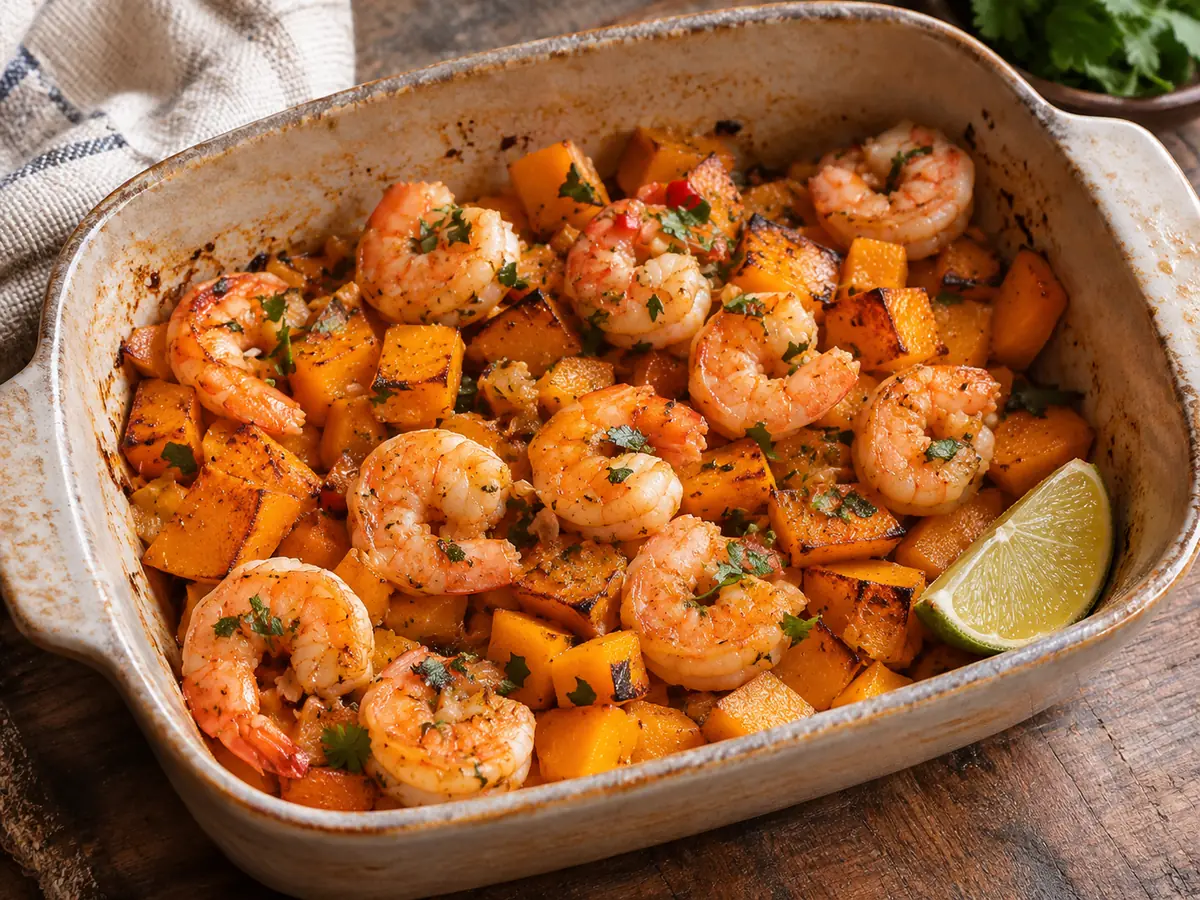
Ingredients
- 600 g raw shrimp, peeled and cleaned, net weight
- 800 g raw butternut squash, peeled and deseeded
- 150 g peeled onion
- 8 g peeled garlic
- 10 g prepared fresh ginger
- 25 g olive oil: 20 g for vegetables and 5 g for shrimp
- 30 g lime juice
- 10 g fresh parsley, washed, dried and chopped
- 3 g salt: 2 g for vegetables and 1 g for shrimp
- 60 ml water
Preparation
Peel and deseed squash, weigh 800 g flesh and cut into 2 cm cubes. Prepare and weigh 600 g raw peeled shrimp; refrigerate.
Cut onion, chop garlic and grate ginger. Wash, dry and chop 10 g parsley; measure 30 g lime juice.
Preheat the oven to 200 °C. Mix squash and onion with 20 g oil and 2 g salt in a broad dish; add 60 ml water to the base.
Roast for 25–30 minutes, turning after about 15 minutes. Continue if a large cube remains hard.
Mix shrimp with 5 g oil, garlic, ginger and 1 g salt. Distribute between the cubes without piling them up.
Bake for approximately another 8–12 minutes. Check for 63 °C at the centre of the largest shrimp with a clean probe.
Out of the oven, add lime and parsley. Divide vegetables, shrimp and juices among four plates and serve immediately.
Introduction
Squash and shrimp do not need the same cooking time. Putting them together from the start would often dry out the shellfish before the squash cubes become tender. This recipe therefore separates their time in the oven: vegetables begin alone, then shrimp join the dish for a brief, controlled cooking. Lime is mixed with the juices after the dish leaves the oven. The aim is a roasted dish with lightly browned surfaces and a moist base, rather than a stew drowned in sauce.
This is a contemporary creation inspired by combinations of products, without claiming the name of a traditional Angolan speciality. The squash chosen is specifically butternut, weighed raw after preparation. Shrimp are also weighed raw, but after removing shells and cleaning. These two details make shopping, portion division and calculations more consistent. Parsley is a measured edible garnish, not an addition forgotten from the list.
Cultural context
The FAO/WFP report of 6 August 2004 places Angola’s staple production in a historical agricultural context. It does not describe this combination of squash and shrimp or its proportions. Staggered cooking, the choice of butternut and the parsley finish belong to this contemporary editorial creation, without an invented family or provincial origin. Context source: https://www.fao.org/4/j2771p/j2771p00.htm
Tips
Weigh squash after removing skin and seeds.
Weigh raw shrimp after peeling and draining.
Finish softening squash before adding shellfish.
Distribute shrimp without stacking them.
Add lime and parsley after cooking and share out the juices too.
Planning
Choose a firm squash and first cut a small stable base. Peel carefully on a nonslip board, remove seeds and stringy material, then weigh 800 g usable flesh. Cut into cubes of about 2 cm. Regular size prevents small points from burning while large pieces remain firm. The purchased whole squash will weigh more than the required net amount; do not count skin and seeds as part of the portions.
Peel the shrimp and remove the intestinal vein where present. The 600 g means shrimp prepared in this way, not whole shrimp with heads and shells. If frozen, thaw in the refrigerator according to the manufacturer’s instructions, drain and then weigh. Keep the shrimp cold until they are added to the dish. Clean the board and utensils that touched raw shellfish before chopping the garnish intended for serving.
Cut the onion into fairly broad petals so that they do not dry out too quickly. Chop the garlic and grate the ginger. Wash parsley, dry it carefully and weigh 10 g before chopping. Measure the lime juice separately. It is not used for a prolonged marinade: its acidity does not replace cooking the shrimp and is not needed throughout the vegetables’ cooking. Set aside the 5 g oil and 1 g salt intended for the shellfish.
Preheat the oven to 200 °C. Use a dish wide enough to spread squash and onion in a shallow layer. Mix with 20 g oil and 2 g salt, then pour the 60 ml water into the base. Bake for 25–30 minutes, turning the cubes after about 15 minutes. The base may dry in places but must not blacken. At this point a knife tip should enter a large cube with little resistance.
If the squash is still distinctly hard, cook it longer before adding the shrimp. Their cooking must not make up for an inadequately prepared vegetable. Then mix shrimp with the remaining 5 g oil, garlic, ginger and the reserved 1 g salt. Distribute between the cubes, avoiding a thick layer. Return to the oven for about 8–12 minutes, according to shrimp size, starting temperature and the dish used. Do not decide by pink colour alone.
Check for 63 °C at the centre of the largest shrimp with a clean probe; their flesh should be opaque and firm without being rubbery. Remove the dish as soon as they are cooked. Add lime juice and chopped parsley, then gently turn a few pieces to distribute the juices. If the base has concentrated, a little hot water can loosen it; state the addition if the yield is being tracked precisely. Serve without keeping the dish warm for a long time in the switched-off oven.
Serving
Divide the shrimp fairly before filling out the plates with cubes and onion petals. Take the cooking juices from the base too: they connect the elements without making a heavy sauce. Use deep plates or warmed individual dishes. Plain rice may be offered separately, but is not included in the ingredients or nutritional calculation. Distribute parsley across all four portions; it should not remain mostly for the last plate.
Storage
Promptly place leftovers in shallow containers in the refrigerator at 4 °C or below and eat within 24 hours. Do not leave the large dish cooling slowly on the table. Reheat the required portion only once until thoroughly hot in the centre, adding a little water to protect the juices. Shrimp may become firmer during this second heating. Do not mix a reheated portion with leftovers that are still cold.
Variations
Another squash can be used if named and the calculation reference adjusted; its water content and roasting time may differ. Small shrimp cook faster and require earlier checking. Already cooked shrimp would need a different protocol and recipe: they do not silently replace raw shrimp here. Coriander can replace parsley at equal weight if identified and counted as such.
Nutrition notes
Values are estimated per portion from raw edible weights, excluding accompaniments. All 25 g oil, 3 g salt and 10 g parsley are counted. Water supplies no energy. The generic raw-shrimp reference does not necessarily describe the species or size purchased. Draining, brand, juice losses and cooking change the real yield. This is neither a laboratory analysis nor a health promise; shellfish must be identified to people concerned by this allergen.
Conclusion
The main guide is the cooking order: almost-tender squash receives still-raw shrimp for a short time in the oven. The fresh finish follows only afterwards. This contemporary proposal is not presented as an attested tradition or a formula tested in a kitchen.
Enjoy your meal
Enjoy your meal!