Fish parcels with cabbage and ginguba peanut sauce
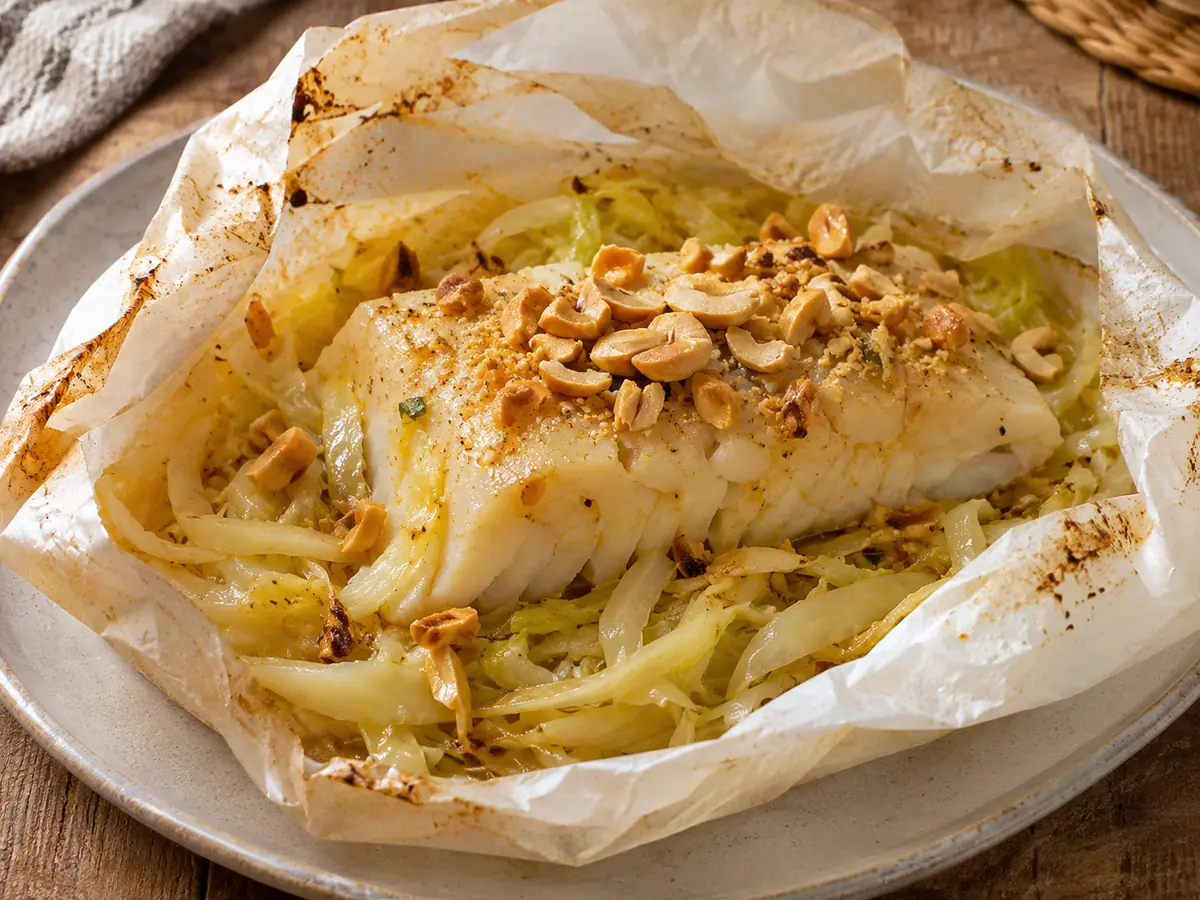
Cod rests on a bed of precooked cabbage in four paper parcels, with a loose peanut-paste and lime sauce.
Ingredients
- 600 g raw cod, skinless and boneless, net weight
- 400 g prepared white cabbage, core removed
- 100 g peeled onion
- 6 g peeled garlic
- 10 g prepared fresh ginger
- 50 g pure peanut paste with no added salt
- 20 g unsalted roasted peanuts, roughly crushed
- 15 g olive oil
- 20 g lime juice
- 3 g salt
- 170 ml water: 70 ml for cabbage and 100 ml for sauce
Preparation
Prepare four 150 g portions of cod, without skin or bones, and refrigerate. Wash and slice 400 g cabbage into 2–3 mm strips.
Soften onion in 15 g oil for 8 minutes; add garlic and ginger for 1 minute.
Add cabbage and 70 ml water. Cover and cook for 10–12 minutes, then uncover if the base is too wet. Let cool slightly for a short time.
Loosen 50 g peanut paste with 100 ml water; stir in 20 g lime juice and 3 g salt.
Preheat the oven to 200 °C. Divide cabbage, fish and sauce between four sheets of suitable baking parchment; seal with tight folds on a rimmed tray.
Bake for 18–22 minutes, then open carefully and check for 63 °C in the centre with a clean probe. Continue cooking if necessary.
Place each parcel on a plate while supporting its base. Open without exposing yourself to steam, divide the 20 g crushed peanuts between the four portions and serve immediately.
Introduction
A successful paper parcel does not depend only on its seal. The enclosed ingredients must be able to reach their final textures within compatible cooking times. Here the cabbage starts cooking in a pan; it becomes supple enough to form a thin bed beneath the fish. Peanut paste is loosened before being divided between the parcels, so that it does not remain a compact lump on the cod. When opened, the aim is moist fish, tender cabbage strips and a small amount of cohesive sauce at the bottom of the paper.
This is a contemporary creation inspired by combining fish, vegetables and peanuts. It does not claim to reproduce an attested traditional Angolan dish. Ginguba here refers to the peanut used as pure paste. No sugar, thickener or coconut milk is added to this version. The four individual portions make it easier to divide fish and cabbage evenly. Any accompaniment offered at the table remains separate from the recipe and its nutritional calculation.
Cultural context
The FAO/WFP report of 6 August 2004 examines Angola’s food production in a defined historical context. It does not document this paper-parcel cooking method or its seasoning. The cultural interest of this recipe lies in the proposed dialogue between products and contemporary techniques, without inventing a provincial or family origin. The bed of precooked cabbage and measured sauce are choices made for this creation. Context source: https://www.fao.org/4/j2771p/j2771p00.htm
Tips
Precook cabbage so that the fish does not need longer cooking.
Loosen peanut paste completely before filling the parcels.
Keep paper borders dry to make folding easier.
Place parcels on a rimmed tray.
Check the fish’s centre, not just whether the paper has puffed up.
Planning
Choose four pieces of cod weighing about 150 g each, as similar in shape as possible. Remove skin and bones before the final weighing. Pat the portions dry and return them to the refrigerator while the cabbage cooks. If the fish was frozen, thaw it in the refrigerator and catch its liquid in a separate container. Avoid enclosing a piece that is still frozen among warm vegetables: its cooking time would differ and checking the centre would be difficult.
Remove the cabbage core and weigh 400 g usable leaves. Wash, drain and cut into 2–3 mm strips. Consistent thickness matters more than identical length. Thick pieces of rib can be cut more finely so that they do not remain firm beneath the fish. Slice the onion, chop the garlic and grate the ginger. Keep the prepared vegetables in a clean container, away from the board and utensils used for raw fish.
Soften the onion in the 15 g oil for 8 minutes over medium heat. Add garlic and ginger for 1 minute, then cabbage and 70 ml water. Cover and cook for 10–12 minutes, stirring halfway through. The cabbage should bend easily without turning into a purée. Uncover briefly if liquid accumulates: a sodden filling would dilute the sauce in the parcels. Leave to cool slightly in a dish for a few minutes, without prolonging this wait at room temperature.
Loosen the peanut paste with the remaining 100 ml water, adding liquid gradually. It first forms a thick cream that becomes looser as mixing continues. Stir in the 20 g lime juice and the 3 g salt. Use pure unsalted paste, rather than a sweetened sandwich spread. If a layer of separated oil sits in the jar, mix the whole jar thoroughly before taking the 50 g; otherwise the composition of the spoonful varies considerably. Do not add any extra oil to the sauce. Reserve 20 g unsalted roasted peanuts, roughly crushed, for opening the parcels.
Preheat the oven to 200 °C. Cut four large sheets of baking parchment suitable for that temperature, checking the manufacturer’s instructions. Place each sheet in a small dish or on a rimmed tray to catch possible leaks. Divide cabbage into narrow beds, place fish on top and distribute the sauce. Leave a dry border wide enough to fold. Fold the paper over itself and seal the sides with several small tight folds, without compressing the portions.
Bake for approximately 18–22 minutes, according to fish thickness and oven. Open one parcel carefully, directing steam away from face and hands. Check for 63 °C at the centre of the thickest piece with a clean probe; the flesh should form opaque flakes. If necessary, close again and cook for a few more minutes. Do not judge doneness merely from puffed paper. Transfer parcels to plates with a broad spatula, supporting their bases and juices.
Serving
Warn diners about the trapped steam before presenting still-closed parcels. Alternatively, open them in the kitchen and slide their contents into deep plates. Distribute the juices at the bottom instead of leaving them in the paper. Scatter the reserved peanuts over the four portions just before serving to keep them crunchy. White rice prepared separately can receive this sauce, but is not included in the recipe’s ingredients or nutrition. Serve immediately after opening to preserve the fish’s moisture; a long wait in the oven would continue cooking it.
Storage
Remove leftovers from the paper and promptly place them in shallow containers in the refrigerator at 4 °C or below. Eat within 24 hours. Do not keep warm closed parcels on the tray. Reheat the required portion only once until thoroughly hot in the centre, adding a little water if the sauce has thickened. Discard the used paper and do not use it for another cooking session. Keep reheated portions separate from those still cold.
Variations
Another white fish cut into portions of equal thickness is possible, provided the name and nutritional reference are changed. Thinner fillets need earlier checking. For a milder version, reduce the ginger, but do not automatically increase garlic to compensate. Replacing peanut paste with another seed butter changes allergens, flavour and calculations: identify the new version clearly. Aluminium foil is not needed here; use baking parchment within its stated temperature limits.
Nutrition notes
Values are estimated per portion from raw edible weights, excluding accompaniments. All oil, peanut paste, crushed peanuts and the 3 g salt are counted; water supplies no energy. The peanut-paste reference remains generic and its composition may differ from the jar used. Cabbage draining, juice losses, brand and cooking change the real yield. Diners must be told about the peanuts; no therapeutic property or precise value after cooking is claimed.
Conclusion
Precooked cabbage and a thoroughly loosened sauce make it possible to assemble the parcels without waiting for a still-firm vegetable to cook. The intended result remains moist fish and a supple filling. This editorial creation is not presented as an attested tradition or a formula tested in a kitchen.
Enjoy your meal
Enjoy your meal!