Rice soup with spinach and tomato
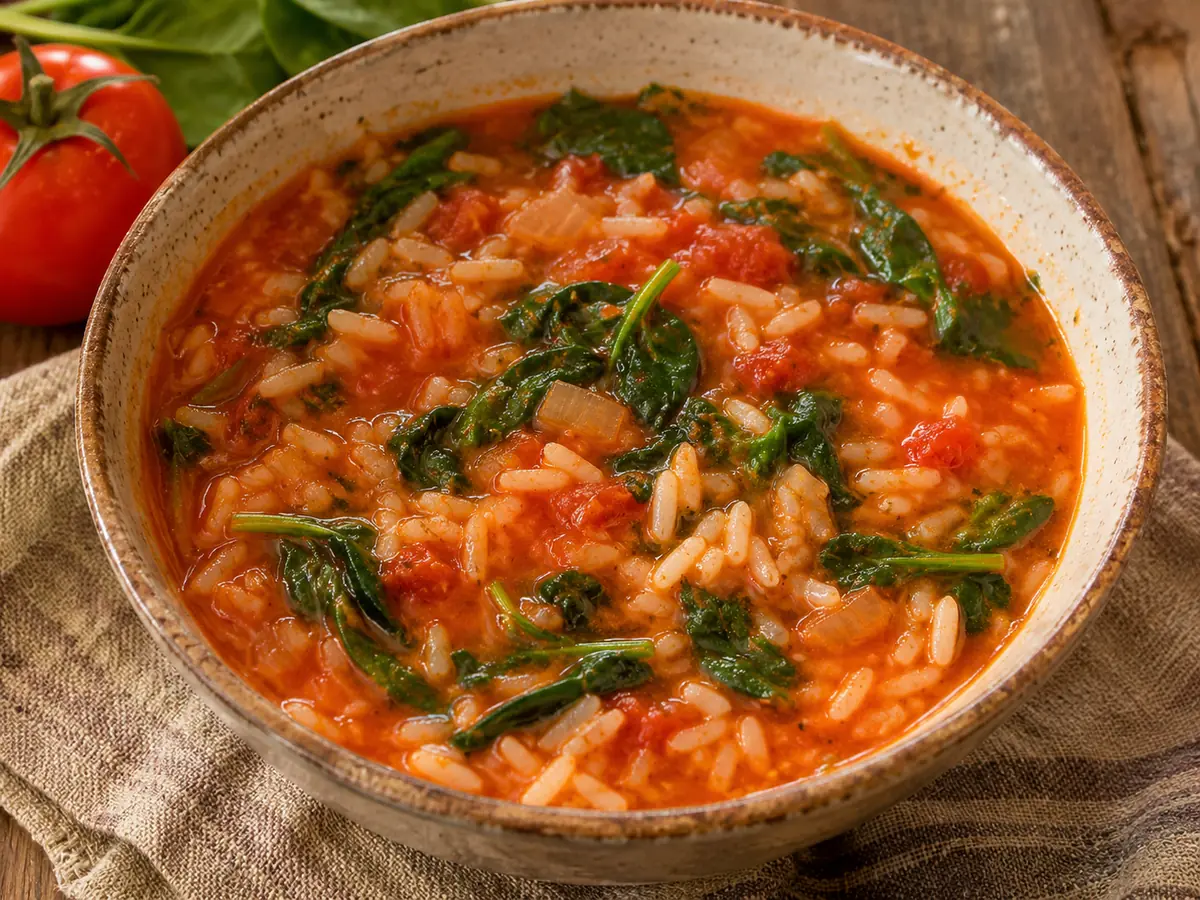
A tomato broth with white rice grains and spinach leaves added near the end of cooking, for a light soup with evenly distributed ingredients.
Ingredients
- 100 g raw long-grain white rice, dry weight before rinsing
- 300 g raw spinach, usable leaves
- 400 g raw tomatoes, edible part
- 150 g raw onion, peeled weight
- 10 g raw garlic, peeled weight
- 20 g olive oil
- 20 g lime juice
- 1 200 ml drinking water, including 100 ml reserved
- 3 g salt
Preparation
Weigh 100 g raw long-grain white rice, rinse briefly and drain. Sort, wash and drain 300 g usable spinach leaves.
Prepare 400 g diced tomato with its juice, 150 g thinly sliced onion and 10 g chopped garlic. Reserve 100 ml from the 1 200 ml water.
Heat 20 g oil in a 3-litre saucepan. Soften the onion for 8 minutes, then add garlic for 1 minute.
Add tomato and its juice; cook for 8 minutes, stirring without drying out the base. Pour in 1 100 ml water and add 3 g salt.
At a simmer, add the drained rice. Cook for 15 to 18 minutes, partially covered, stirring the bottom and checking a grain for doneness.
Add spinach and cook for 3 minutes. Adjust fluidity with the reserved water, then turn off the heat and incorporate 20 g lime juice.
Stir from the bottom and divide rice, leaves and broth equally among 4 bowls. Serve promptly.
Introduction
This soup keeps recognisable rice grains in a tomato broth, with soft spinach leaves added at the last moment. It sits between a clear soup and a rice dish: liquid remains visible in every bowl rather than being absorbed into a compact mass. Rice provides body while tomato builds a tangy base. Spinach does not need to cook as long as the grains; separating those two timings protects its texture and makes the result clearer.
The quantities make 4 soup portions, not 4 plates of dry rice. Plan another element alongside if a more filling lunch is wanted, and count it separately. This is a contemporary creation inspired by products present in Angolan food. It does not borrow the name of a documented local speciality and uses no commercial stock whose salt content would make seasoning less predictable.
Cultural context
The joint FAO/WFP report dated 6 August 2004 concerns agricultural production and food requirements in Angola at that time. It describes food crops and differences between production zones, among other matters. Here it provides historical context, not evidence that a family, province or community prepared this recipe. The combination of ingredients, proportions and cooking organisation belong to a contemporary editorial creation. A new recipe can engage with products used in Angola without being artificially given a traditional name. Context source: https://www.fao.org/4/j2771p/j2771p00.htm
Tips
Weigh raw rice before rinsing.
Wash spinach and then drain it to avoid uncontrolled dilution.
Taste a rice grain before adding the leaves.
Stir the bottom before each ladle to distribute the grains.
Cool leftovers quickly and consume within 24 hours.
Planning
Weigh the dry rice before rinsing it. Choose ordinary long-grain white rice, not brown, precooked or already cooked rice. Those products follow different timings and absorb different amounts of water. Rinse briefly in a fine sieve, then let it drain while the vegetables are prepared. The aim is not perfectly clear rinsing water but removal of dust and some excess surface starch.
Sort the spinach, remove damaged leaves and large tough stalks, then weigh 300 g usable leaves. Wash carefully in several changes of water if soil remains visible, and drain well. Cut only large leaves into broad ribbons; very small ones may remain whole. Cutting too finely would make them disappear in the broth, suggesting a green colouring rather than an identifiable vegetable.
Wash the tomatoes, remove the hard stalk attachment and dice them finely, retaining their juice. The 400 g means the edible portion actually added to the saucepan. Peel and thinly slice the onion; chop the garlic separately. Measure 1 200 ml water and reserve 100 ml. Prepare a saucepan holding at least 3 litres, a spoon that reaches the bottom and a ladle for distributing the grains when serving.
Soften the onion in the oil for 8 minutes over medium heat, without allowing it to blacken. Add garlic for 1 minute, then tomato and its juice. Cook this base for 8 minutes, stirring, until the pieces begin to break down. The tomato should not become a dry paste stuck to the bottom. If necessary, use a spoonful of the measured water to loosen the cooking juices; do not increase the oil without recording it.
Pour in the unreserved 1 100 ml water and add the 3 g salt, then bring to a simmer. Add the drained rice and stir immediately to free grains from the bottom. Cook at a gentle boil for 15 to 18 minutes, partially covered, stirring several times. Also consult the packet instructions and taste a grain: it should be cooked in the centre without becoming paste. Some brands may need a few extra minutes; watch the liquid instead of continuing until dry.
Add spinach only when the rice is almost ready. Push it into the broth and cook for 3 minutes, until softened and thoroughly hot. Add some or all of the reserved 100 ml if the broth is not fluid enough. Turn off the heat and incorporate the 20 g lime juice. Rice continues absorbing liquid while it waits: serve without leaving the saucepan simmering long after cooking, then allow a little extra water for any reheating.
Serving
Stir from the bottom with a spoon before filling each ladle: rice grains settle while the leaves tend to float. First divide a share of solids among the 4 bowls, then top up with broth. This gives comparable portions and prevents the first diner receiving almost only liquid. Serve hot without expecting the leaves to retain a raw colour. Toast, a portion of beans or another dish can complete the soup; they remain outside the ingredients and nutritional calculation of this preparation.
Storage
Leftovers containing rice require immediate organisation. Quickly divide into small shallow containers, cool without prolonged waiting and refrigerate at 4 °C or below no later than 2 hours after cooking finishes. Consume within 24 hours. Do not keep a lukewarm saucepan on the cooker for several hours. Reheat only the required portion once, until thoroughly hot in the centre, stirring and adding a little water if the rice has absorbed the broth. Reheating does not repair inappropriate storage.
Variations
Round-grain rice generally releases more starch and makes a more bound soup; choosing it requires different texture monitoring and its own cooking time. Frozen spinach can be considered as a variation, but follow the manufacturer's instructions and reconsider weight, water and nutritional reference. Do not add a large still-frozen mass at the last moment without checking that its centre becomes thoroughly hot. Canned tomatoes also alter water content and sometimes salt: they are not a silent substitute for the fresh tomato weighed here.
Nutrition notes
Values are estimates per portion, calculated for 4 equal portions from edible weights and the stated reference foods. All added oil and salt are counted; accompaniments are excluded. Brands, draining, water content and cooking losses alter the results. If a reference lacks energy, the calculation uses 4 kcal/g for protein and carbohydrate, 9 kcal/g for fat and 2 kcal/g for fibre. These figures do not represent an analysis of the actual dish served and support no health promise.
Conclusion
Observing the texture of the ingredients and tasting the whole dish before changing the seasoning keeps the preparation clear. Time guides help organise the work; the actual condition of the food determines the final decision. This contemporary creation is not presented as an attested traditional recipe or as a formula tested in a kitchen.
Enjoy your meal
Enjoy your meal!