Sweet potato soup with ginger and lime
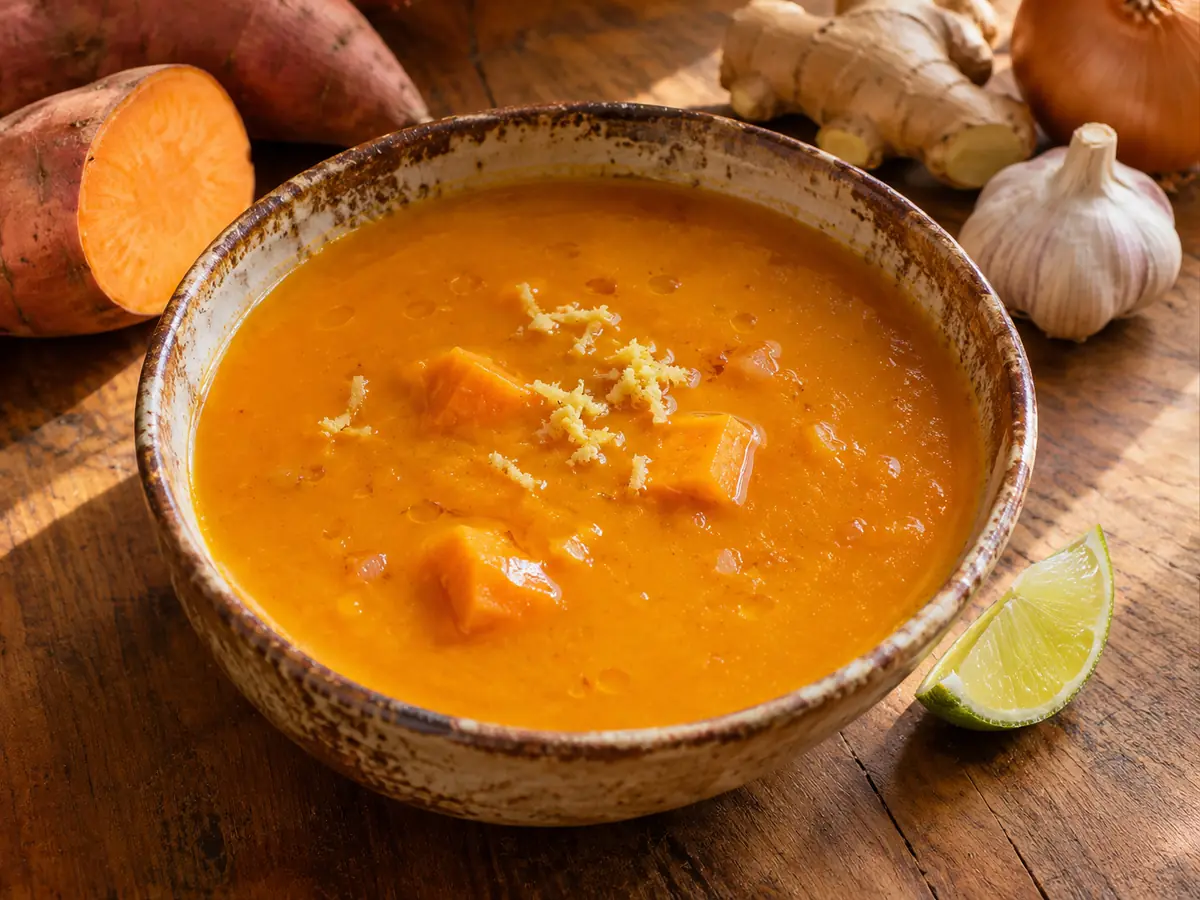
A blended sweet potato and carrot soup, lifted by fresh ginger and finished with lime away from the heat.
Ingredients
- 800 g raw sweet potato, peeled weight
- 250 g raw carrot, peeled weight
- 150 g raw onion, peeled weight
- 15 g fresh ginger, edible part
- 10 g raw garlic, peeled weight
- 20 g olive oil
- 30 g lime juice
- 1 000 ml drinking water, including 150 ml reserved
- 3 g salt
Preparation
Wash and prepare the vegetables. Weigh 800 g usable sweet potato, 250 g carrot and 150 g onion; cut the sweet potato into 2 cm cubes and the carrots into 5 mm slices.
Grate 15 g ginger, chop 10 g garlic and measure 30 g lime juice. Reserve 150 ml from the 1 000 ml water.
Heat 20 g oil in a 3-litre saucepan. Soften the onion for 6 minutes, then add garlic and ginger for 1 minute.
Add carrots and sweet potato; stir for 2 minutes. Pour in 850 ml water, add 3 g salt and bring to a simmer.
Cook for 25 to 30 minutes, partially covered. Check both vegetables for tenderness and stir the bottom halfway through.
Remove from the heat and blend with the precautions needed for hot liquids. Gradually add the water reserve to adjust the consistency.
Incorporate the lime juice away from the heat, stir, taste and divide equally among 4 bowls.
Introduction
Sweet potato gives this soup its body and sweetness; carrot supplies a clearer orange colour without turning the bowl into a solid vegetable purée. The ginger should be noticeable without concealing the flavour of the roots. Lime is added at the end, after cooking has stopped, to bring fresh acidity that can be adjusted by tasting. The quantities make 4 portions of thick soup, to be supplemented separately if a more substantial meal is wanted.
This contemporary creation favours a short ingredient list and a one-pot method. It needs neither cream nor prepared stock: water allows control of the salt and lets the vegetables build the flavour. The desired result pours from the ladle in a broad ribbon; it should not stand in a mound on the plate. The particular sweet potato, size of the pieces and actual evaporation explain the small water adjustments that may be needed.
Cultural context
The joint FAO/WFP report dated 6 August 2004 concerns agricultural production and food requirements in Angola at that time. It describes food crops and differences between production zones, among other matters. Here it provides historical context, not evidence that a family, province or community prepared this recipe. The combination of ingredients, proportions and cooking organisation belong to a contemporary editorial creation. A new recipe can engage with products used in Angola without being artificially given a traditional name. Context source: https://www.fao.org/4/j2771p/j2771p00.htm
Tips
Weigh roots after peeling, not before.
Cut carrot more thinly than sweet potato.
Test both vegetables before blending.
Keep the immersion blender submerged to avoid splashes.
Add lime away from the heat and taste a cooled spoonful.
Planning
Choose firm sweet potatoes without wet patches or an abnormal smell. Wash them before peeling to avoid carrying soil onto the flesh. Weigh 800 g after peeling and removing damaged parts. Cut into cubes of approximately 2 cm. Even size matters more than exact shape: large blocks would extend cooking while small pieces were already falling apart.
Wash, peel and weigh the carrots, then cut them more thinly than the sweet potatoes, into 5 mm slices. They generally remain more resistant to heat. Dice the onion finely and chop the garlic. Grate the ginger very finely after removing hard or damaged areas of skin. Weigh the flesh actually used; a whole 15 g root does not necessarily provide 15 g after preparation.
Measure the water and set 150 ml aside. This reserve is not an instruction to dilute everything: it allows the consistency to be corrected after blending. Use a saucepan holding at least 3 litres, wide enough to soften the onion. A narrow pan encourages steam to collect; a very wide frying pan would evaporate the liquid too quickly. Prepare the lime juice separately and remove the seeds.
Heat the oil over medium heat, add the onion and stir for 6 minutes. It should soften without blackened edges. Add the garlic and ginger for 1 minute, then the carrots and sweet potato. Stir for 2 minutes to distribute the aromatics. If the onion sticks, a small spoonful of the measured water is enough; do not pour in extra oil by eye, since the specified amount forms part of the nutritional calculation.
Pour in the unreserved 850 ml water, add the 3 g salt and bring to a simmer. Partially cover and cook for 25 to 30 minutes. Stir halfway through and check that a sweet potato cube crushes easily against the pan with a spoon. Pierce a carrot slice too: it must be tender, not merely hot. If the vegetables remain firm, cook for a few more minutes while watching the liquid level.
Remove from the heat before blending. With an immersion blender, keep the head submerged and start at low speed to limit scalding splashes. With a jug blender, follow its instructions for hot liquids, work in small quantities and allow appropriate steam release. Never seal very hot soup in a tightly closed container to shake it.
Gradually add the reserved water until the soup coats a spoon without becoming pasty. Stir before judging the texture, as the bottom may remain thicker than the top. Then incorporate the 30 g lime juice away from the heat. Taste a cooled spoonful: intense heat can mask acidity and encourage excessive adjustment. Serve without returning to a prolonged boil after this addition.
Serving
Divide the soup among 4 bowls of similar capacity so that the portions match the calculation. Stir the saucepan just before each serving. The soup is deliberately simple: bread, cooked beans or another preparation can be offered alongside, but these additions are not included in the stated values. Avoid a very sweet garnish that would unnecessarily reinforce the sweet potato's sweetness. For diners with different preferences, offer extra lime separately rather than making the entire pan sharply acidic.
Storage
Cool leftovers quickly by dividing them among shallow containers, then refrigerate at 4 °C or below. Consume within 48 hours. Do not leave the saucepan to cool slowly on the worktop throughout an evening. Reheat only the amount needed once, until thoroughly hot in the centre, stirring the bottom. The soup can thicken when cold: add a little water during reheating, then taste before adding salt or lime.
Variations
To alter the aromatic strength without changing the structure, start with less ginger and keep the remainder for another use; change the amount in the nutritional record if necessary. Replacing carrot with another root does not automatically give the same colour or cooking time. A coconut-milk finish would be a separate variation: it adds fat, changes the flavour and requires a new calculation. Do not replace lime juice with a large amount of zest, which has different bitterness and intensity.
Nutrition notes
Values are estimates per portion, calculated for 4 equal portions from edible weights and the stated reference foods. All added oil and salt are counted; accompaniments are excluded. Brands, draining, water content and cooking losses alter the results. If a reference lacks energy, the calculation uses 4 kcal/g for protein and carbohydrate, 9 kcal/g for fat and 2 kcal/g for fibre. These figures do not represent an analysis of the actual dish served and support no health promise.
Conclusion
Observing the texture of the ingredients and tasting the whole dish before changing the seasoning keeps the preparation clear. Time guides help organise the work; the actual condition of the food determines the final decision. This contemporary creation is not presented as an attested traditional recipe or as a formula tested in a kitchen.
Enjoy your meal
Enjoy your meal!