Soft pineapple and coconut cake
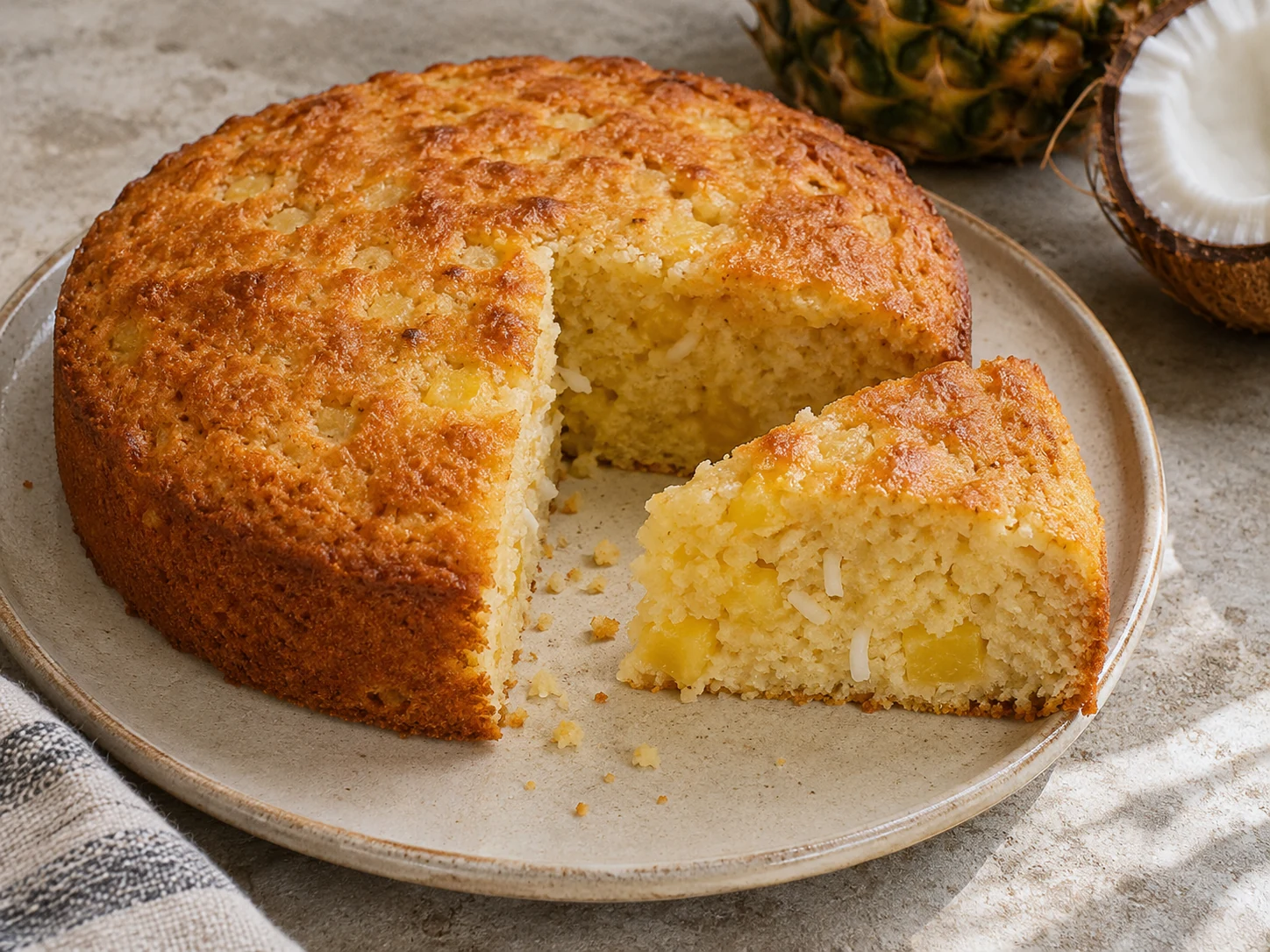
This cake combines thoroughly drained pineapple pieces and dried desiccated coconut in a soft oil-based batter.
Ingredients
- 250 g pineapple canned in juice, drained, liquid not added
- 50 g dried unsweetened desiccated coconut
- 180 g T55 wheat flour, including 15 g for fruit
- 150 g beaten eggs without shells, about 3 medium eggs
- 80 g sugar
- 60 g sunflower oil, including 5 g for tin
- 80 g unsweetened coconut milk
- 8 g baking powder
- 1 g salt
- 1 optional pinch vanilla powder, excluded from calculation
Preparation
Drain pineapple about 15 minutes, weigh 250 g and cut into 1 cm pieces. Do not add can juice.
Grease a 20 cm tin with 5 g oil and line base. Preheat oven to 170°C.
Whisk 150 g eggs with 80 g sugar. Incorporate 55 g oil then 80 g stirred coconut milk.
Take 15 g from the 180 g flour to coat fruit. Mix remainder with 50 g dried coconut, 8 g baking powder and 1 g salt.
Fold dry ingredients without prolonged mixing, then floured fruit. Pour into tin and level.
Bake 40–45 minutes on middle shelf. Check centre in two places: no raw batter or liquid wave; at least 75°C centrally if a probe is available. Continue if needed.
Wait 10 minutes, turn out and cool about 30 minutes on a rack before cutting eight slices.
Introduction
This cake combines thoroughly drained pineapple pieces and dried desiccated coconut in a soft oil-based batter. Eggs and flour provide structure, baking powder gives moderate rise, and coconut milk completes moisture without adding can juice. Cut into eight dessert slices. This is not a caramel upside-down cake: fruit is distributed through the crumb without a sugar layer underneath.
Choose pineapple canned in juice, not syrup, and weigh after draining. Coconut is grated, dry and unsweetened; very moist fresh flesh needs a new balance. This contemporary creation inspired by Angola is not an attested traditional speciality and is not presented as kitchen-tested. Success depends on controlling fruit water and fully cooking the centre.
Cultural context
The FAO/WFP report and embassy's official cultural presentation provide Angolan agricultural and cultural context. They do not establish this pineapple-coconut cake's history or proportions. The combination is devised here in contemporary editorial work without inventing an originating family or particular celebration. The title announces principal ingredients and soft cake technique, not a collected tradition. Context sources: https://www.fao.org/4/j2771p/j2771p00.htm ; https://www.embassyangolatr.org/tr/angola/cultura
Tips
Drain then weigh pineapple: gross can weight is not flesh used.
Take coating flour from the total without adding fifteen extra grams.
The five grams tin oil are part of the planned sixty.
Check skewer in two places to distinguish fruit from a raw-batter pocket.
Cool before judging crumb, without confusing resting with fixing insufficient cooking.
Planning
Prepare a round metal tin about twenty centimetres in diameter, high enough for rising. A narrow deep tin delays central cooking, while a large dish makes cake thinner and drier. Take five grams of oil from the stated sixty to grease base and sides. Put baking paper in the base. This oil is included in calculations and must not be replaced by unlisted butter.
Open pineapple and tip fruit into a sieve over a bowl. Drain about fifteen minutes, then weigh two hundred and fifty grams. Can liquid does not enter batter and is not counted as an added ingredient. Cut rings into roughly one-centimetre pieces. Gently blot if surfaces still drip, without squeezing flesh into dry fibres. Overlarge pieces make wet pockets that complicate checking doneness.
Weigh fifty grams dried desiccated coconut and check it is neither sweetened nor rancid. Unusual smell or a mouldy packet means discarding it. Stir coconut milk to homogenise fat and water before weighing eighty grams. Very dilute drink or concentrated cream are not precisely equivalent. Wheat and egg are present; check product labels for other possible allergens rather than assuming absence.
Crack eggs separately and weigh one hundred and fifty grams beaten, without shells. Three medium eggs guide purchasing, not universal measurement. Whisk with eighty grams sugar until homogeneous and a little paler, without seeking extremely voluminous foam. Incorporate the remaining fifty-five grams oil in a stream, then coconut milk. Do not add pineapple juice to thin a mixture that has not yet received all ingredients.
Reserve fifteen of the one hundred and eighty grams flour to lightly coat pineapple. Combine remaining one hundred and sixty-five grams with baking powder, salt and grated coconut. Preheat oven to one hundred and seventy degrees before combining wet and dry. Fold dry mixture in with a spatula just until dry traces disappear. Then add floured fruit and distribute gently. Prolonged mixing toughens wheat and crushes fruit.
Pour into tin, level without pressing heavily and put on middle shelf. Bake about forty to forty-five minutes. Do not open early to inspect colour because structure is not yet set. If top browns long before centre cooks, lightly protect with foil without touching a heating element. Coconut colour can darken before all the interior cooks; colour alone cannot decide removal.
Check centre with a skewer in two places, avoiding fruit pieces where possible. A juice trace is not the same as thick raw batter clinging to a skewer. Crumb must be set, without a liquid wave when tin moves gently. A clean probe reading at least 75°C centrally additionally checks egg cooking but does not replace texture inspection. Continue five minutes if needed, then check again.
Wait ten minutes out of the oven before turning out. Run a thin blade around edge if needed, support base and remove paper without tearing crumb. Cool about thirty more minutes on a rack. Immediate cutting can seem doughy because steam and structure have not stabilised. If centre is truly raw after cooling, do not serve it as an intentional melting texture. Record draining, diameter and timing to understand differences.
Serving
Cut eight slices with a clean knife once initial cooling is complete. Serve plain, warm or at room temperature, without extra syrup that would soak fruit pieces. A spoonful of yoghurt can accompany it but adds milk among other things and is outside calculations. For neat plates, wipe blade between slices. Coconut and pineapple should be distributed throughout crumb rather than concentrated centrally in one portion.
Storage
Cool leftovers promptly, then put in a clean box refrigerated at 4°C or below. Consume within forty-eight hours. Do not enclose cake piping hot: condensation would further moisten crumb around fruit. Use a clean blade each time and avoid lengthy exposure on a warm table. Freeze cooled slices if quick consumption is not planned. After thawing, coconut may seem less crisp and pineapple softer.
Variations
An optional pinch of vanilla powder can flavour batter; its tiny quantity is excluded from estimates. Fresh trimmed pineapple needs assessment of water content and another nutrition reference without guaranteeing identical cooking. Fresh coconut does not directly replace fifty grams dried coconut. An egg-free version requires reformulating the binder. Small individual tins cook faster and require new checks of timing and portions.
Nutrition notes
Estimate corresponds to one of eight slices and counts drained pineapple, not discarded can liquid. It includes all oil including greasing, eggs and dried coconut. Generic coconut milk remains a brand-dependent approximation. Accompaniments and optional vanilla are not included. Fruit does not remove added sugar or confer therapeutic benefits.
Conclusion
Cooked but soft crumb and evenly distributed pieces are intended. Draining fruit and checking centre matter more than very brown colour. This contemporary creation remains an editorial proposal not tested in a kitchen. Enjoy your meal!
Enjoy your meal
Enjoy your meal!