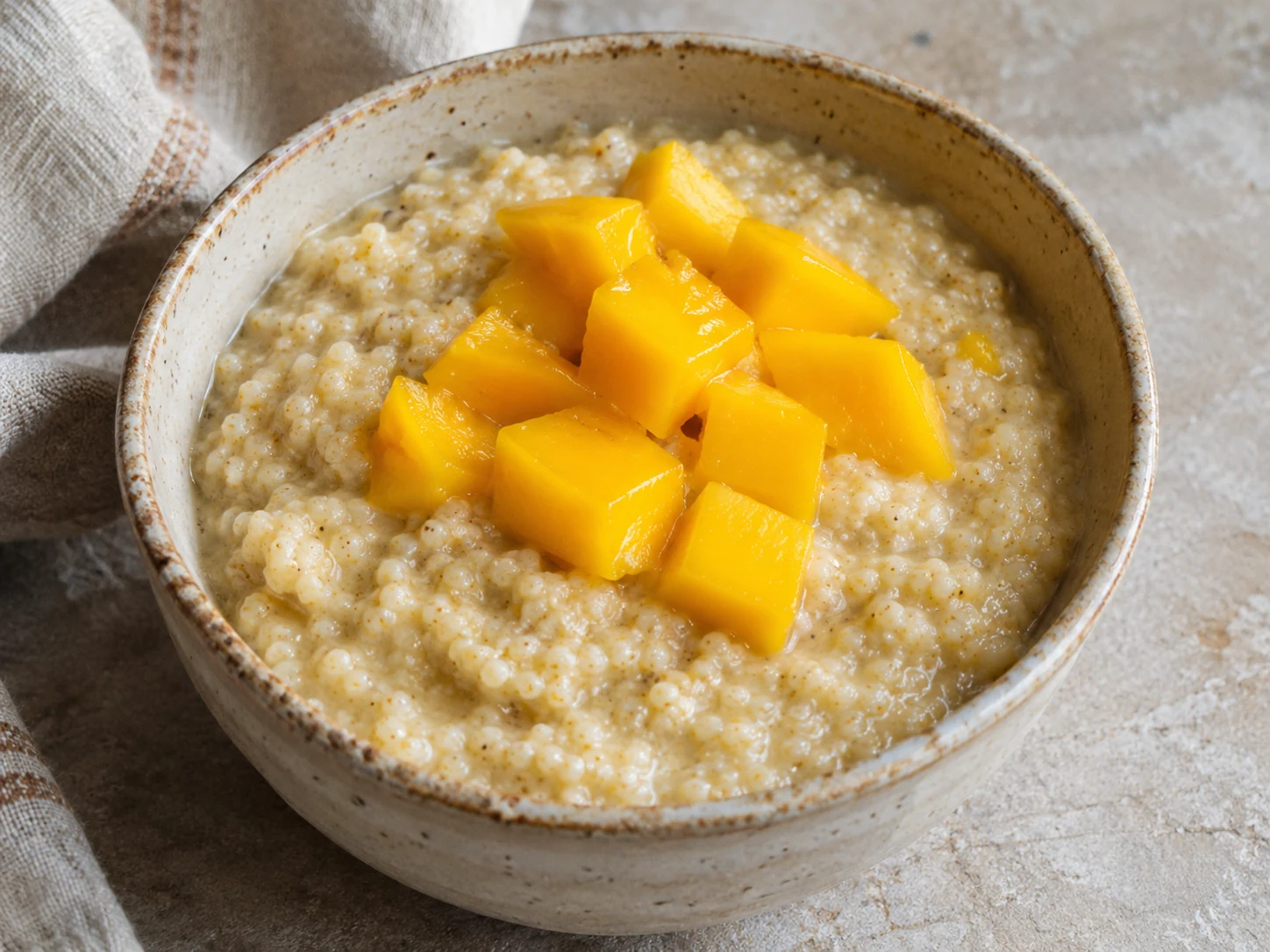
Millet porridge with coconut milk and mango
Hulled millet cooks gently in water before coconut milk is added.
Ingredients
- 120 g dry hulled millet grains
- 500 ml water, plus a few hot spoonfuls if needed
- 200 g unsweetened coconut milk
- 300 g ripe mango flesh
- 25 g sugar
- 1 g salt
- 1 optional pinch cinnamon, excluded from calculation
Preparation
Rinse 120 g millet in a fine sieve and drain.
Put in a heavy pan with 500 ml water. Bring to a simmer and cook about 20 minutes over low heat, partially covered.
Check grain is nearly tender. Add a little hot water if needed before continuing.
Stir coconut milk and weigh 200 g. Add with 25 g sugar and 1 g salt.
Cook another 8–10 minutes, stirring the base, until tender grains sit in a soft cream.
Wash, peel and stone mango; weigh and dice 300 g flesh.
Rest porridge 10 minutes, divide among four bowls and add mango when serving.
Introduction
Hulled millet cooks gently in water before coconut milk is added. Its little grains remain perceptible within a creamy texture, and fresh mango provides a juicier contrast. This porridge is eaten with a spoon, without trying to make it perfectly smooth. The quantities give four dessert portions or four small bowls; they do not alone describe four complete breakfasts.
Use millet grains, not flour. Massango can mean pearl millet in an Angolan context, but the purchased package must identify the actual product. This contemporary creation inspired by Angola does not claim to be an attested traditional recipe. Its balance depends on the time grains need to soften and the liquid remaining when coconut milk is added.
Cultural context
The FAO/WFP report places cereals in Angola's agricultural context and the embassy's official cultural presentation gives general background. These documents prove neither this mango combination nor our proportions. Millet and coconut serve a contemporary editorial creation here, without attribution to a specific region or family. Context sources: https://www.fao.org/4/j2771p/j2771p00.htm ; https://www.embassyangolatr.org/tr/angola/cultura
Tips
Use a very fine sieve to avoid losing grains during rinsing.
Check tenderness before adding the richer, thicker coconut milk.
Weigh coconut milk after stirring the can.
Prepare mango with clean equipment and keep separate until plating.
Rest ten minutes before deciding whether porridge is too runny.
Planning
Choose food-grade hulled millet without other cereals or seasonings. Unhulled whole grains would need different processing. Weigh one hundred and twenty grams dry, then rinse in a very fine sieve under running water. A coarse sieve would lose the tiny seeds. Remove visible debris and drain. If the packet recommends special preparation, follow it and adapt timing; this recipe is not for instant flakes or precooked meal.
Prepare a medium heavy-based pan with space above the liquid to avoid overflowing. Add five hundred millilitres of water and rinsed millet. Bring to a simmer, partially cover and reduce heat. Vigorous boiling consumes water too quickly before grain centres become tender. An ajar lid releases some steam without trapping rising foam. Stir after the first few minutes to check that grains are not sticking to the base.
First cook about twenty minutes in water at a gentle simmer. Check a small cooled spoonful: grain should crush under the teeth without a hard centre. Depending on the batch, several extra minutes may be needed. If water runs short first, add one or two spoonfuls of hot water, stir and continue. Do not expect coconut milk to quickly correct plainly raw grains. Insufficient cooking is not compensated by prolonged resting in bowls either.
Stir the coconut milk can to reunite fat and liquid, then weigh two hundred grams. A very dilute coconut drink does not give the same creaminess; very concentrated cream can make the result heavier. Add milk when grains are nearly tender, with sugar and salt. Continue eight to ten minutes over low heat, regularly passing a spatula over the entire base. The mixture is now thicker and sticks more readily. Do not leave it unattended while preparing fruit.
During this final cooking, wash mango before cutting. Use a clean board and knife, cut cheeks around the stone and remove skin. Weigh three hundred grams of flesh. Ripe mango smells pleasant and yields slightly under pressure; fermented smell or mould means discarding it. Cut even dice about one centimetre wide. Remove long fibres if needed. Keep dice chilled if porridge is not served immediately, without adding them to the hot pan yet.
At the end, preparation should flow slowly from a spoon and retain some liquid around grains. It thickens during the planned ten-minute rest. Stop before it becomes dry; add a little hot water only if consistency prevents spoon serving. If the bottom burns, transfer the unspoilt portion without scraping deposits. More sugar or coconut milk cannot repair burnt taste. Record water adjustments for next time rather than changing every quantity.
After resting, divide among four shallow bowls and add mango at the last moment. Keep a clear contrast: warm cereal, fresh fruit, without juice soaking the whole surface. For cold serving, cool porridge promptly before refrigeration and add mango only when serving. Cold cream may appear firmer; gently loosen with a small spoonful of drinking water if needed. This addition does not replace proper cooking and need not be sweetened.
Serving
Serve one bowl per person with a spoon wide enough for grains and fruit together. Mango comes from the stated three hundred grams, not an additional topping. Sugar remains moderate because fruit is already ripe. Another topping, such as nuts, must be declared for allergens and lies outside the calculation. Do not leave all four bowls on a warm table during a long wait; plate only portions actually needed.
Storage
Cool leftovers promptly in a shallow container and refrigerate at 4°C or below. Consume within forty-eight hours, keeping mango separate if possible. Use a clean spoon to take portions. Reheat only the needed porridge portion once until thoroughly hot centrally, then allow to cool to warm before adding fresh fruit. A box closed while contents are piping hot traps much condensation. This is not a shelf-stable preserve.
Variations
Papaya pieces may replace mango in a clearly named variation with different values. An optional pinch of cinnamon can flavour cooking water; this tiny quantity is excluded from calculations. Millet flour would give another texture and require different quantities; it does not directly replace grains. For less sugar, reduce the twenty-five grams without claiming exactly the same sweetness, especially when porridge is served cold.
Nutrition notes
The estimate represents one quarter of the preparation with its mango share. It includes all coconut milk and sugar, not additional toppings. Millet provides a cereal base without conferring medical effects on dessert. The reference food used as an approximation must be distinguished from grains actually cooked. The optional tiny pinch of cinnamon is not counted.
Conclusion
Tender grains, an unstuck base and freshly added mango give the intended result. Exact timing depends on purchased millet. This contemporary creation remains an editorial proposal not tested in a kitchen. Enjoy your meal!
Enjoy your meal
Enjoy your meal!