Small oven-baked corn and courgette patties
These small patties combine corn kernels and carefully drained grated courgette.
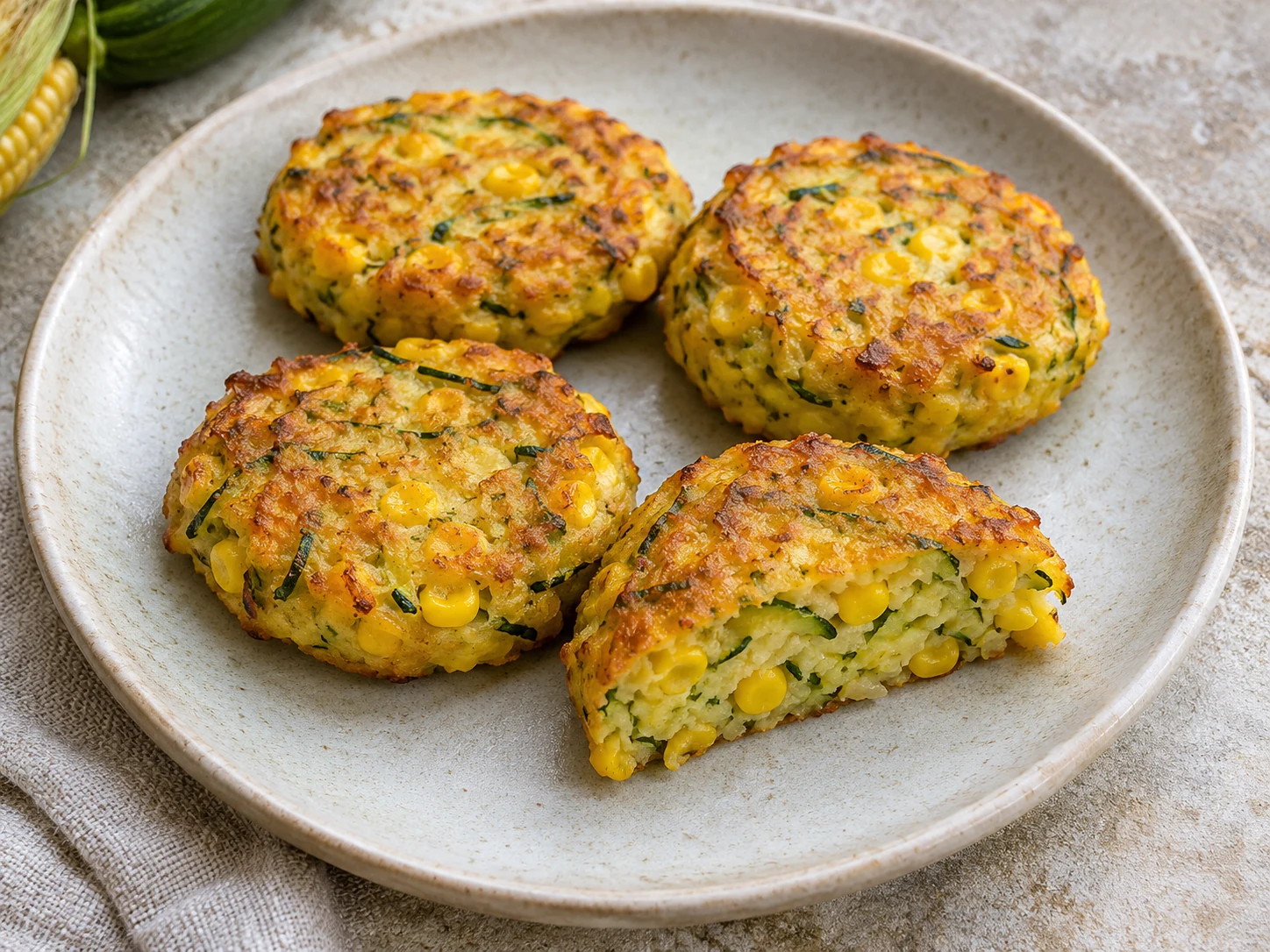
Ingredients
- 350 g cooked drained corn
- 500 g prepared courgette with skin, weighed before squeezing
- 2 eggs, about 100 g without shells
- 80 g T55 wheat flour
- 80 g onion
- 6 g peeled garlic
- 20 g peanut oil
- 3 g salt
- Optional pepper in a tiny quantity
Preparation
Wash and trim courgette, weigh 500 g and coarsely grate. Rest 10 minutes in a sieve and squeeze thoroughly.
Drain already-cooked corn. Chop onion and garlic finely, then beat eggs.
Mix squeezed courgette, corn, onion, garlic, eggs, flour, salt and 10 g oil. Pepper if desired and rest 10 minutes chilled.
Preheat oven to 200 °C. Prepare trays with baking paper and spread remaining 10 g oil in a thin film.
Shape sixteen patties about 8 cm across and 1 cm thick, leaving space between.
Bake about 12 minutes, turn with a broad spatula and continue 10 to 12 minutes, swapping trays if needed.
Open a piece to check a set, thoroughly hot centre without liquid egg or floury batter. Rest briefly without stacking and serve four patties per person.
Introduction
These small patties combine corn kernels and carefully drained grated courgette. Eggs and flour bind them; oven baking sets both sides without deep-frying. The intended result is not a dry crisp but a soft patty, fully cooked in the centre, with visible corn kernels. Sixteen pieces give four servings of four patties. Salad or other vegetables can complete the meal without inclusion in this recipe’s values.
This is a contemporary creation inspired by products used in Angolan diets, without attribution to attested tradition or a claim of kitchen testing. Water control matters more than a long aromatic list. Poorly squeezed courgette makes a spreading mixture; compensating with much flour makes heavy pieces. Preparing vegetables correctly before mixing keeps a recognisable proportion of corn and courgette.
Cultural context
The FAO/WFP report documents corn in Angolan agricultural context. The embassy’s cultural page gives a general framework. These sources attest neither the courgette combination nor this baking method. Proportions, format and binder are an original contemporary creation without attribution to demonstrated provincial tradition.
https://www.fao.org/4/j2771p/j2771p00.htm https://www.embassyangolatr.org/tr/angola/cultura
Tips
Weigh prepared courgette before squeezing.
Squeeze grated vegetable thoroughly.
Drain cooked corn too.
Shape pieces of similar thickness.
Check the centre is fully cooked before serving.
Planning
Choose firm courgettes, preferably small to medium, without mould or collapsed areas. Wash, trim ends and weigh five hundred grams of flesh with skin before grating and squeezing. Tender skin remains. If a large fruit has developed seeds and spongy flesh, remove those before weighing the edible amount. This is not the weight of an already-cooked or squeezed mass.
Coarsely grate over a sieve. Rest ten minutes, then squeeze in a clean cloth or clean hands, in small handfuls. Do not salt at this stage: the planned three grams enter the mixture. Vegetable should remain supple but no longer release a stream when squeezed. No need to collect this water; it must not be poured back into the batter.
Corn is already cooked and weighed after draining at three hundred and fifty grams. Plain canned corn suits; rinse salty liquid and dry well in the sieve. Dried or still-firm kernels would not cook properly in this brief oven stage. With frozen corn, follow manufacturer preparation before measuring cooked weight. Keep kernels whole rather than blending everything.
Chop onion very finely and grate or chop garlic. Thick onion pieces could remain hard in a thin patty. Two eggs represent about one hundred grams without shells; check integrity before cracking into a small bowl. Beat lightly to combine whites and yolks. Flour is T55 wheat rather than starch: it gives binding that cannot automatically be replaced at equal weight by any powder.
Combine squeezed courgette, drained corn, onion, garlic, beaten eggs, flour, salt and ten grams of oil. Mix with a spoon until evenly distributed without crushing kernels. Rest ten minutes chilled to hydrate flour. A spoonful set on a plate should hold a little height rather than immediately puddle. If liquid appears at the bowl’s base, first check draining and stir before deciding to change the formula.
Preheat oven to two hundred degrees. Prepare two trays or bake in batches to avoid crowding. Line with baking paper suitable for this temperature and distribute remaining ten grams of oil in a thin film over used areas. Divide into sixteen portions and flatten to discs about eight centimetres across and one centimetre thick. Uniformity matters more than exact diameter; a thick piece keeps a moist core longer.
Bake about twelve minutes without trying to move patties immediately. The first side must set enough for a broad spatula. Turn gently and continue ten to twelve minutes. If baking both trays together, swap if oven heat is uneven. Times are guides: inspect a piece’s fully set, thoroughly hot centre without floury batter or liquid egg. A golden top alone does not prove complete cooking.
If a patty tears when turning, let the next ones cook longer before lifting. If browning quickly but still wet inside, reduce heat slightly and extend rather than serve undercooked. Do not immediately stack in a closed box, where steam would soften surfaces. Rest one or two minutes on the tray or a clean rack before serving, without turning this short rest into prolonged lukewarm holding.
Serving
Allow four patties per person and set side by side. Fresh salad and a reduced tomato sauce served separately complete the contrast; they are excluded from nutritional calculations. Do not sauce well before serving. For a multi-dish meal, patties can be shared in smaller portions without inventing a new recipe. A broad spatula transfers deliberately soft pieces. The format suits individual plates or a shared dish, provided batches stay hot without enclosing them in accumulated steam.
Storage
Cool leftovers rapidly in one layer, then refrigerate at 4 °C or below in a shallow container. Eat within forty-eight hours. Do not leave raw egg mixture at room temperature during other preparations. Reheat patties only once until thoroughly hot in the centre, preferably spaced to limit softening. Surfaces may not regain exactly the first batch’s texture.
Variations
An edible yellow courgette gives a visual variation with the same water control. Peas instead of corn change composition and title. Gluten-free flour needs its own structure trials; it is not a guaranteed wheat equivalent. Omitting eggs requires another binder; a few spoonfuls of water do not replace them. A tiny pinch of pepper is optional. Smaller discs cook faster: check earlier rather than mechanically retaining times. Frying requires different oil management and is not described here.
Nutrition notes
Corn provides starch, courgette vegetables, and eggs protein and binding. The recipe contains wheat, gluten and egg; also consider peanut oil for allergies. Estimates concern four servings without sauce or salad. Courgette is calculated from prepared raw weight; squeezing removes water and may carry away some nutrients, limiting calculation accuracy.
Conclusion
The aim is a stable but soft patty, visible kernels and fully cooked eggs and flour. This editorial formula is not presented as kitchen-tested. Enjoy your meal!
Enjoy your meal
Enjoy your meal!