Sweet potato skillet with cabbage and ginger
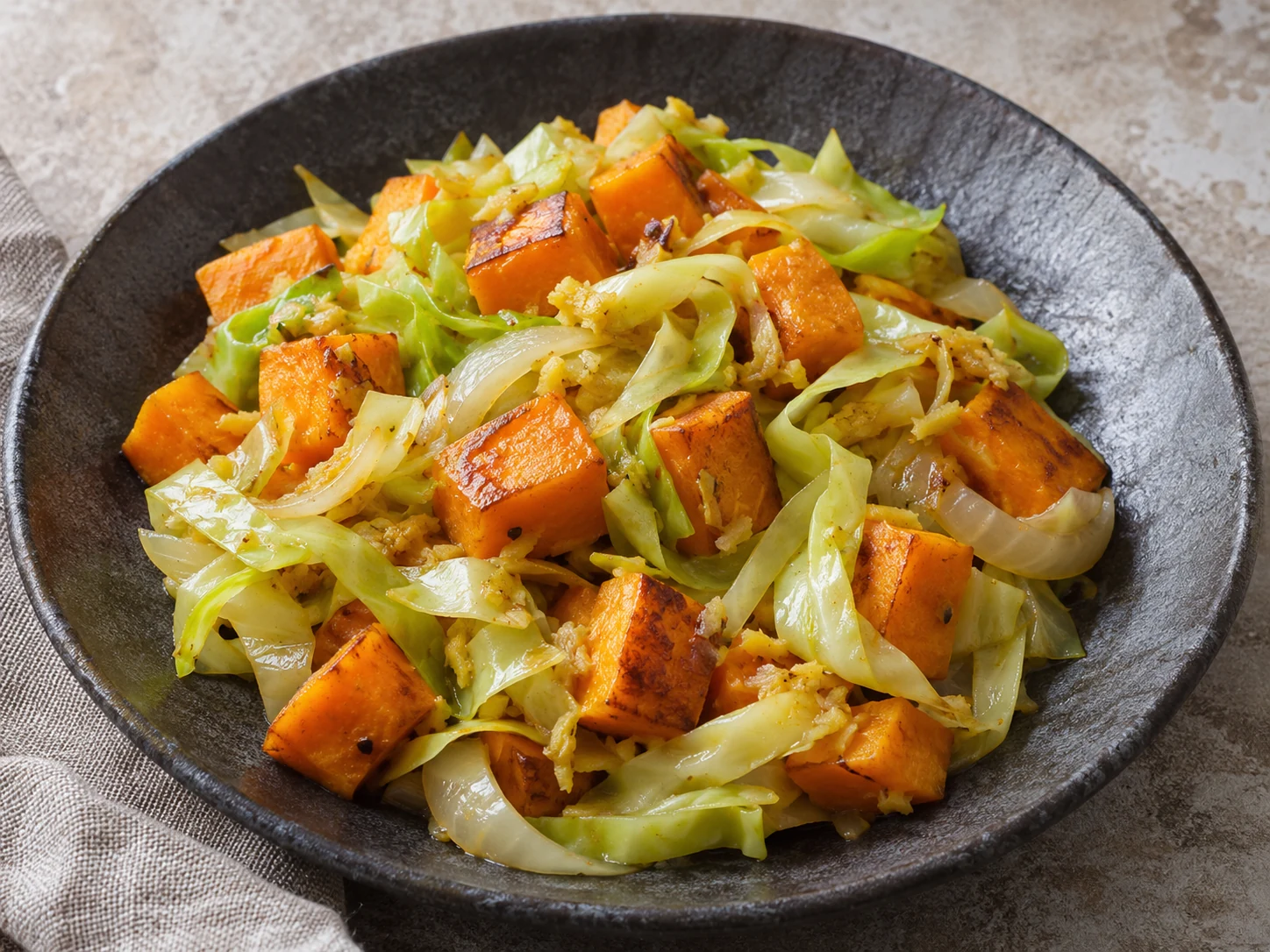
This skillet seeks two complementary textures: meltingly tender sweet potato still in pieces and cooked cabbage retaining some resistance.
Ingredients
- 600 g peeled sweet potato
- 400 g prepared white cabbage without hard core
- 100 g onion
- 20 g peeled fresh ginger
- 6 g peeled garlic
- 25 g peanut oil
- 3 g salt
- Up to 150 ml water for the pan, plus precooking water
- Optional pepper in a tiny quantity
Preparation
Cut sweet potato into 2 cm cubes. Cut cabbage ribbons and slice thick ribs finely. Prepare onion, garlic and ginger.
Precook cubes in simmering water about 6 to 8 minutes, keeping centres slightly firm. Drain and let steam escape.
Heat 15 g oil and gently brown cubes about 8 to 10 minutes until meltingly tender inside. Reserve.
Soften onion in remaining 10 g oil for 5 minutes. Add garlic and ginger for 1 minute.
Add ribs then cabbage ribbons and stir 2 minutes. Pour in 60 ml water, cover 3 minutes and check. Add reserve only as needed, without exceeding 150 ml total.
Uncover, evaporate free water, return sweet potato and add salt. Gently fold 2 minutes until evenly hot.
Check sweet potato is meltingly tender and cabbage cooked but still holding. Pepper if desired, divide into four servings and serve immediately.
Introduction
This skillet seeks two complementary textures: meltingly tender sweet potato still in pieces and cooked cabbage retaining some resistance. Fresh ginger lifts everything without covering vegetable flavours. There is no thick sauce; a few spoonfuls of water finish cabbage and loosen cooking juices. The quantities give four vegetable-and-starch servings, completed according to the meal with a separately chosen protein source.
This is a contemporary creation inspired by products used in Angolan diets, without claiming attested tradition. Sweet potato is precooked in water and lightly browned, while cabbage enters the pan later. Separating them avoids cooking leaves until collapsed merely to soften cubes. A large pan and even pieces help more than continuously maximum heat.
Cultural context
The institutional references cited give Angolan agricultural and cultural context, not proof of this particular skillet. The FAO/WFP report helps place food crops; the embassy page provides a general framework. The combination, proportions and separate cooking are an original contemporary proposal without attribution to attested provincial tradition.
https://www.fao.org/4/j2771p/j2771p00.htm https://www.embassyangolatr.org/tr/angola/cultura
Tips
Cut even sweet potato cubes.
Slice cabbage ribs finer.
Drain before browning cubes.
Add water in small amounts.
Stop cooking before cabbage collapses.
Planning
Weigh six hundred grams of sweet potato after peeling and removing damaged parts. Choose firm tubers without mould or abnormal smell. Wash before peeling to limit soil transfer to flesh, then cut cubes about two centimetres. Tiny pieces break during successive stages; large sections need different precooking. Do not directly replace with plantain under the same title and instructions.
Four hundred grams of white cabbage means prepared leaves without hard central core or damaged outer leaves. Wash and cut ribbons about two centimetres wide. Separate thick ribs and slice them finer: they cook more slowly than soft parts. Raw volume seems large but falls with heat. Do not pack into a small container, since a compressed mass retains water and takes on the texture of long-boiled cabbage.
Peel ginger and grate finely to avoid long threads on the plate. Twenty grams means edible weight, not a piece with skin. Chop garlic separately and slice onion. Ground ginger is not an equal-weight substitute: concentration and aroma differ. Prepare all before heating the pan, since cabbage then cooks fairly quickly and must not wait over heat during other chopping.
Bring water to a simmer in a saucepan and add sweet potato cubes. Cook about six to eight minutes until edges soften but the centre still offers slight resistance. Drain immediately and let steam escape a few minutes. This step is not intended to make purée. If cubes are already completely soft, reduce later pan time and handle particularly gently.
Heat fifteen grams of oil in a large frying pan. Add well-drained cubes in one layer, in two batches if necessary. Let them take a little colour before turning with a spatula, then cook about eight to ten minutes. Check real tenderness with a knife tip: the centre must become meltingly soft. Reserve in a dish rather than moving continually while cabbage cooks. Light colour is enough; very brown faces would mask sweetness.
Pour remaining ten grams of oil into the same pan and soften onion five minutes over medium heat. Add garlic and ginger for one minute, stirring. Add sliced cabbage ribs, then ribbons, and stir two minutes. Add sixty millilitres water, cover three minutes and check. The stated one hundred and fifty millilitres are a maximum reserve, added in small amounts only if the base dries before cabbage cooks.
Uncover and evaporate free water, stirring gently. Cabbage should be soft, hot and cooked, but ribbons remain recognisable and do not mash into paste. Thicker leaves may need another minute; do not impose identical timing on very young and storage cabbage. Return sweet potato, add salt and fold two minutes. Taste before optional pepper and serve as soon as evenly hot.
Serving
Divide among four wide plates, distributing both cubes and cabbage. Tender pieces are better served with a spatula than tongs that would break them. Fish, eggs or already-cooked pulses can accompany according to meal plans, but are excluded from this recipe’s ingredients and values. Avoid long covered holding: remaining steam would continue softening cabbage. If accompanying other preparations, complete mixing just before sitting down.
Storage
Cool leftovers rapidly and refrigerate at 4 °C or below in shallow containers. Eat within forty-eight hours. Reheat only once until thoroughly hot at the centre, with a small spoonful of water if needed. Cabbage will be softer after storage; do not promise the initial texture contrast. Avoid prolonged boiling merely to reheat cubes.
Variations
Pointed cabbage can give a more tender version, with earlier cooking checks. Red cabbage would change colour and time, requiring fresh development. White-fleshed sweet potato can suit, but hold depends on variety and appearance differs. A tiny pinch of pepper is optional. Coconut milk would transform this fairly dry skillet into something wetter and richer. Do not present omitting ginger as identical in flavour; it is the title’s main aromatic.
Nutrition notes
Sweet potato provides starch, cabbage increases vegetables and ginger gives aroma without requiring sweet sauce. All oil is counted in estimates for four servings. Possible protein accompaniments remain excluded. Values vary with varieties and actual edible weights; this preparation makes no therapeutic promise.
Conclusion
The intended success combines meltingly soft cubes, cooked cabbage retaining structure and fresh ginger. This editorial formula is not presented as kitchen-tested. Enjoy your meal!
Enjoy your meal
Enjoy your meal!