Cassava and red bean bake
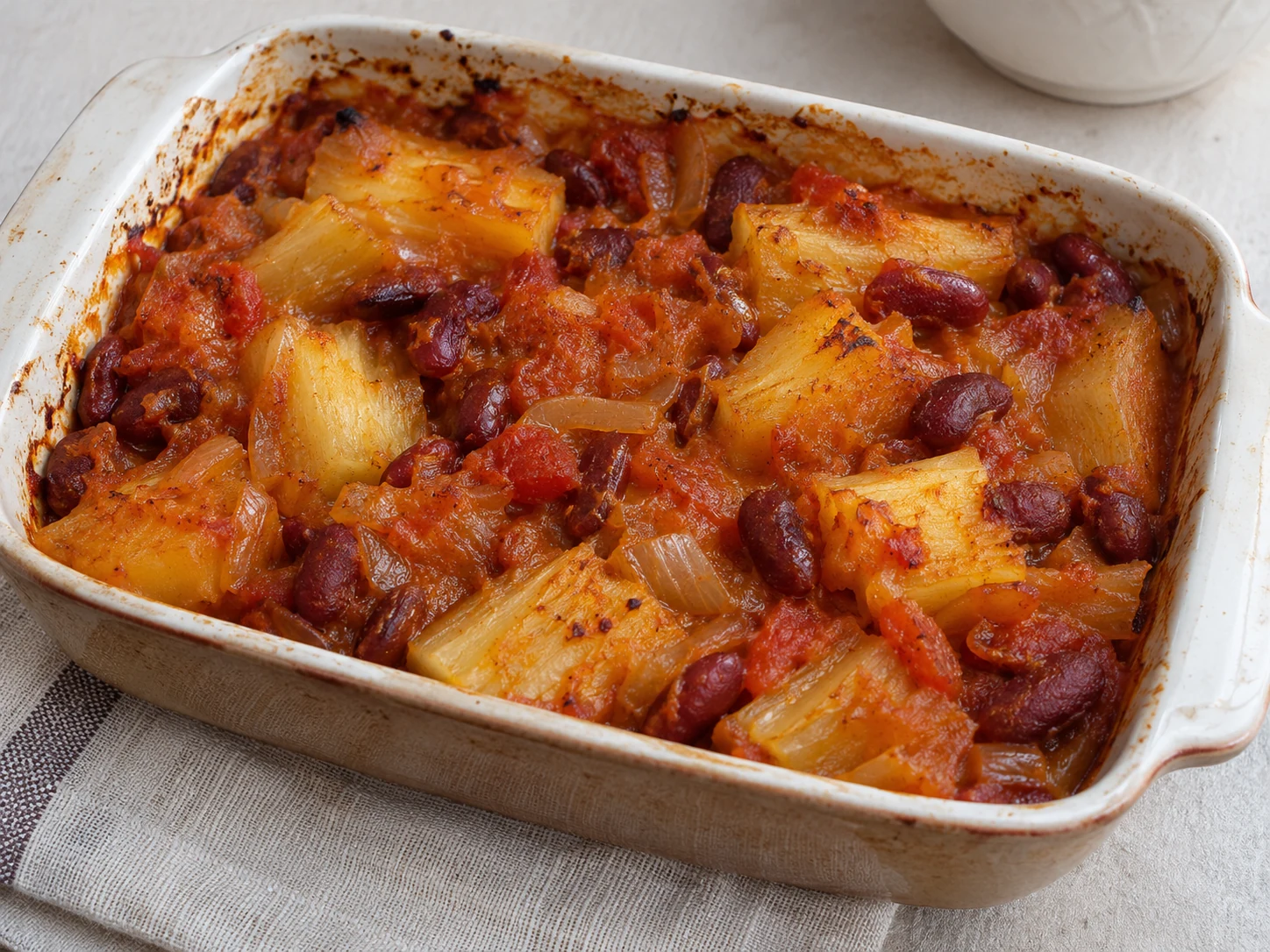
This bake layers pieces of already fully cooked cassava and a red-bean-and-tomato filling.
Ingredients
- 800 g commercial fully cooked cassava ready to reheat
- 400 g cooked ready-to-use red beans, drained
- 400 g plain crushed tomatoes
- 150 g onion
- 6 g peeled garlic
- 30 g T55 wheat flour
- 25 g peanut oil
- 200 ml water
- Up to 3 g added salt depending on products
- Optional pepper in a tiny quantity
Preparation
Check the fully cooked ready-to-reheat cassava label and follow manufacturer instructions. Drain if needed and cut even pieces.
Rinse already-cooked beans if needed, drain and chop onion and garlic.
Soften onion in 15 g oil for 8 minutes. Add garlic for 1 minute, then flour and stir another minute.
Gradually incorporate tomatoes and water. Gently simmer 15 minutes, stirring, until thickened but mobile.
Add beans and heat 5 minutes. Adjust salt without exceeding 3 g added and pepper if desired.
Preheat oven to 180 °C. Grease a wide dish with remaining 10 g oil and alternate cassava and filling without packing.
Reheat in oven about 25 minutes, adjusting to product instructions, until completely hot in the centre. Protect top if needed, rest 3 minutes and serve.
Introduction
This bake layers pieces of already fully cooked cassava and a red-bean-and-tomato filling. A lightly flour-thickened sauce distributes moisture without turning the dish into soup. The top is simply coloured by the oven; there is no cheese or cream. The quantities give four substantial servings, complemented by salad or greens according to appetite. This is a contemporary creation inspired by products present in Angolan diets, with no claim to attested tradition.
Cassava must be a commercial fully cooked product sold ready to reheat. That condition defines the recipe from purchase. The oven is not used to make a raw, unidentified or bitter root edible. It only reheats an already prepared ingredient and combines flavours. The same precision applies to red beans: they are already cooked and ready to use before entering the filling.
Cultural context
The FAO/WFP report on Angola supplies agricultural context for cassava and pulses. The embassy’s cultural page provides a general framework. These institutional sources attest neither this bake, its flour sauce nor the proposed proportions. The combination is an original contemporary creation, without attribution to a province or demonstrated tradition.
https://www.fao.org/4/j2771p/j2771p00.htm https://www.embassyangolatr.org/tr/angola/cultura
Tips
Buy only fully cooked cassava ready to reheat.
Use already-cooked red beans.
Disperse flour before adding water.
Keep sauce mobile enough to surround pieces.
Check heat at the centre of the bake.
Planning
Choose commercial cassava labelled clearly as fully cooked and ready to reheat. Respect its cold chain, date and manufacturer instructions. A bag of merely peeled root, a product only blanched or an unverifiable origin does not meet this description. This recipe provides no treatment protocol for raw or bitter root and does not allow improvising one from the stated oven time.
Weigh eight hundred grams of edible pieces in the selected product’s ready-to-reheat state, without packaging or packing liquid to be discarded. Gently separate pieces and cut into thick slices around one and a half centimetres if supplied in large sections. Do not mash: their distinct presence is a defining feature. If packaging requires a preparation step before reheating, follow it rather than arbitrarily changing the method.
Four hundred grams of red beans means cooked ready-to-use beans, weighed after draining. Plain canned beans are suitable. Check the can, rinse if liquid is salty and drain. Do not add dried or raw beans expecting them to cook in the sauce. Tomatoes are ripe and crushed, without added seasoning. Chop onion and garlic finely and separately to avoid still-firm onion pieces in the dish.
In a heavy-based saucepan, soften onion in fifteen grams of oil for eight minutes over medium heat. Stir edges towards the centre and reduce heat if the base colours strongly. Add garlic for one minute. Sprinkle in the thirty grams of flour and stir one minute to distribute powder through the fat. No dry clumps should remain on the sides; poorly dispersed flour would form lumps when liquid enters.
Add tomatoes gradually while stirring, then pour in the two hundred millilitres of water in several additions. Bring to a simmer and cook fifteen minutes over low heat, regularly scraping the base with a suitable spoon. Flour thickens progressively. Sauce should stay mobile enough to surround ingredients without running like water. Particularly watery tomatoes need a few extra uncovered minutes; overly stiff sauce can loosen with a small spoonful of water.
Add drained beans and fold gently to avoid crushing them all. Heat five minutes. Add the stated salt allowing for any already present in commercial products; three grams here is the maximum added amount. Nutritional calculation counts all three grams. Taste sauce before assembly: seasoning then distributes into cassava, whose flavour is relatively mild. Add a tiny amount of optional pepper if desired.
Preheat oven to one hundred and eighty degrees and grease a wide dish with remaining ten grams of oil. Place half the cassava without packing, cover with some filling, then add remaining pieces and sauce. Keep some cassava surfaces visible. Excessive depth slows central reheating; choose a dish allowing even thickness rather than a narrow container filled to its rim. Do not compress with the spoon’s back.
Bake about twenty-five minutes, adjusting to cassava instructions and starting temperature. The centre must be completely hot, not merely bubbling at the edge. If the top dries before the middle heats, cover loosely for part of baking. Since the product is already cooked, do not prolong until dark colouring. Rest three minutes on a heatproof surface after removal to ease serving without prolonged cooling to lukewarm.
Serving
Serve with a broad spoon or slice, taking all layers in each portion. Divide beans and cassava fairly rather than reserving all filling for the first plates. Leaf or cucumber salad adds fresh contrast and is excluded from nutritional values. The bake already contains substantial starch; extra bread or rice is a meal choice rather than a necessity of this formula. Serving in the baking dish avoids breaking pieces through unnecessary transfer.
Storage
Cool leftovers rapidly in shallow containers, refrigerate at 4 °C or below and eat within forty-eight hours. Observe any shorter limit on already-opened cassava or beans. The recipe does not reset its ingredients’ storage life. Reheat only once until thoroughly hot in the centre; a spoonful of water can loosen thickened sauce. Do not hold the dish merely lukewarm for hours.
Variations
Already-cooked white beans give a variation requiring renaming and recalculation. Cooked sweet potato can replace cassava in another recipe, but its texture and sweetness differ. Gluten-free flour does not automatically replace wheat with equal thickening power. Cheese would change salt, allergens and the intended surface. For small individual dishes, keep proportions and check reheating earlier; do not count a different container as a new recipe. Never present raw cassava as a direct variation.
Nutrition notes
Cassava supplies the starchy base and beans contribute protein and fibre. Flour contains wheat and gluten; peanut oil must be considered for individual allergies. Values are estimates for four servings without accompaniments. The raw-cassava nutritional reference used because no cooked reference is available is an uncertain composition proxy; it never directs culinary use of raw root.
Conclusion
The aim is recognisable pieces, soft filling and even heat. This editorial creation does not claim kitchen testing. Enjoy your meal!
Enjoy your meal
Enjoy your meal!