Beef strips with aubergine and ginguba
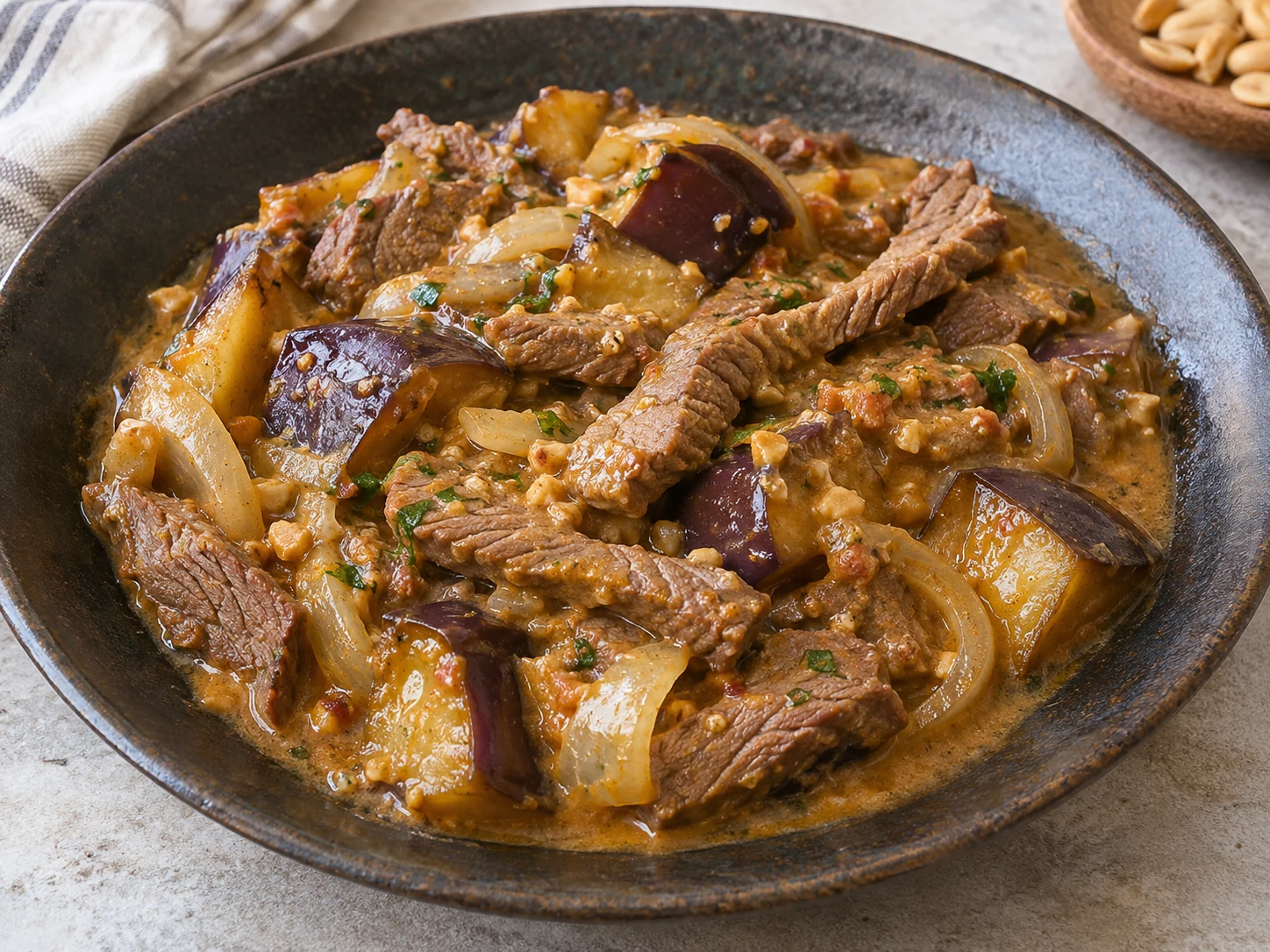
This dish combines beef cut across its fibres, aubergines softened in tomato and a ginguba binding.
Ingredients
- 600 g trimmed raw rump steak
- 700 g trimmed aubergines
- 400 g tomatoes
- 180 g onion
- 10 g peeled garlic
- 80 g pure unsweetened peanut paste
- 20 g sunflower oil
- 400 ml water
- 3 g salt
- 1 optional pinch gindungo
Preparation
Cut beef across the grain into strips about 1 cm thick. Cube aubergines and tomatoes, slice onion and chop garlic.
Heat oil and brown beef in two batches for 5 minutes in total. Set aside; cooking finishes in sauce.
Soften onion for 7 minutes, add garlic then tomatoes and cook for 8 minutes.
Add aubergines and 250 ml water. Cover and cook gently for 15 to 20 minutes until flesh begins yielding.
Dilute peanut paste in remaining 150 ml water, warmed. Incorporate with 2 g salt and simmer for 5 minutes.
Return beef and juices, then continue for 3 to 5 minutes or longer if needed until fully cooked, without raw areas. When thickness permits measurement, check 71 °C at the centre.
Adjust remaining salt and optional gindungo. Serve immediately with sauce still flowing.
Introduction
This dish combines beef cut across its fibres, aubergines softened in tomato and a ginguba binding. The word strips describes cutting, not a promise of exceptionally tender meat regardless of cut. Rump suited to relatively short cooking is used here and surrounded with already-ready sauce. Aubergines need more time than strips, so they begin cooking while browned meat briefly waits separately.
Four portions form a sauced dish without integrated grain. Some rice or funge may complete the meal according to appetite; these accompaniments are excluded from estimates. Peanut paste gives body without cream or flour. Liquid must still circulate between pieces, because overly reduced sauce absorbs meat moisture and creates a dry impression. Final cooking is complete, not a finish with raw or merely warmed beef.
Cultural context
This contemporary creation is inspired by products and combinations of the Angolan table; it is not an attested traditional recipe. The proportions and method are an original editorial proposal, not presented as kitchen-tested. The institutional references below illuminate agricultural or cultural context without documenting this exact formula or assigning it a provincial origin.
https://www.fao.org/4/j2771p/j2771p00.htm https://www.embassyangolatr.org/tr/angola/cultura
Tips
Cut beef across its fibres.
Choose a cut suited to short cooking.
Wait for initial aubergine tenderness before returning meat.
Dilute ginguba to avoid clumps.
Finish cooking beef without unnecessary simmering.
Planning
Choose rump and ask the butcher for a piece suitable for strips. Remove tough outer membranes and weigh six hundred grams after trimming. Observe the direction of long fibres, then cut across them into pieces roughly one centimetre thick and four to five centimetres long. Chuck blade or neck does not become tender in minutes because it is thinly cut: these cuts need different simmering and dish organisation. Avoid very uneven strip sizes too.
Keep meat refrigerated while cutting vegetables, on a covered or protected plate. Do not place raw beef on a board that will later receive ready-to-serve garnish without washing. Lightly dry the surface with food-safe paper if very wet. The plate used after initial browning still contains meat whose cooking is not guaranteed; treat it as an intermediate utensil, not the serving dish. Wash hands after handling raw meat.
Weigh aubergines without stalks or damaged parts. Retain thin skin, or remove alternate strips if thick. Cut roughly three-centimetre cubes. This size preserves some shape while allowing flesh to soften. No salting and draining is planned in this formula. Do not add much oil to fry separately: cooking in a moist base is part of the stated balance and calculated quantities.
Use pure, unsweetened peanut paste and stir in its jar if oil has separated. Weigh eighty grams after homogenising. Already-salted paste or paste with added fats changes flavour and calculation. Peanuts are an allergen to declare clearly, even if sauce is smooth with no visible peanut fragments. Finely chop garlic, slice onion and cut tomatoes before cooking so juices do not burn during late preparation.
Heat twenty grams of oil in a wide sauté pan. Brown meat in two batches, about five minutes in total, then reserve with juices. Do not seek a black crust on every small surface. Soften onion for seven minutes in the same pan, briefly add garlic, then tomatoes for eight minutes. A spoonful of measured water helps loosen brown juices, but a clearly black deposit must be removed rather than dissolved. Ginguba cannot correct bitterness from a burnt base.
Add aubergines with two hundred and fifty millilitres of water. Cover and maintain a simmer for fifteen to twenty minutes. Stir once by lifting cubes and check the bottom does not dry. Flesh should begin yielding under a point; if still spongy and hard, continue before returning meat. Dilute peanut paste in remaining one hundred and fifty millilitres of warmed water, starting with a few spoonfuls then adding the rest. Incorporate gently and add two grams salt.
Let sauce simmer for five minutes to disperse paste, then return beef and all juices. Cook for three to five minutes, checking several thickest strips; continue if any area remains raw. When thickness allows correct probe placement, aim for 71 °C at the centre using a clean thermometer. Time depends on sauce heat and actual cut. Brown surface does not prove complete cooking. If sauce thickens too early, add hot water rather than continuing dry.
Taste after cooking before adding the final gram of salt and pinch of gindungo. If sauce is still very thin but meat ready, remove it for brief reduction, then return without a long wait. Do not keep lean beef in boiling sauce while preparing plates. Aubergines should be tender beneath skin and some cubes may crush slightly without turning the whole dish into purée. Serve once both elements are ready.
Serving
Distribute meat and aubergines evenly among four deep plates, then add sauce. Keep accompaniment plain to allow peanut and tomato flavours through. A small green salad dressed separately provides contrast; avoid another peanut-rich sauce. To keep a portion, cool quickly in a small container rather than leaving the whole pan lukewarm. When reheating, add a few spoonfuls water and heat completely at the centre, knowing a second heating may firm meat further. Additions remain outside calculation.
Storage
Quickly divide leftovers among shallow containers, then refrigerate at 4 °C or below. Eat within 48 hours. Reheat the required quantity only once, until the entire portion is thoroughly hot at the centre. Do not keep the dish lukewarm in the saucepan for a long time.
Variations
Flank steak may suit if trimmed and cut across fibres, with a texture different from rump. A stewing cut requires another recipe and must not simply receive the same cooking minutes. Coarse peanut paste gives acceptable slightly grainy sauce. For less heat, omit gindungo. Courgettes release more water and cook faster than aubergines: substitution requires revising addition time and reduction. A peanut-free version needs a new binding, not just removal of the allergenic product.
Nutrition notes
Values are estimates per serving for four people, without the suggested accompaniments. Calculation uses the stated edible weights and Ciqual reference foods. All oil and salt are counted; water and very small optional amounts of pepper or gindungo are excluded. Brands, meat fat content, cooking losses and actual yield change the result. If energy is missing from the table, it is estimated using 4 kcal/g protein, 4 kcal/g carbohydrate, 9 kcal/g fat and 2 kcal/g fibre. Pure paste is represented by the generic peanut butter or peanut paste reference; its composition may differ from the chosen product, especially salt and fat.
Conclusion
Aim for tender meat, a bound but flowing sauce and still-identifiable pieces. Adjust seasoning after cooking before dividing into four portions. Enjoy your meal!
Enjoy your meal
Enjoy your meal!