Chicken with mango and ginger sauce
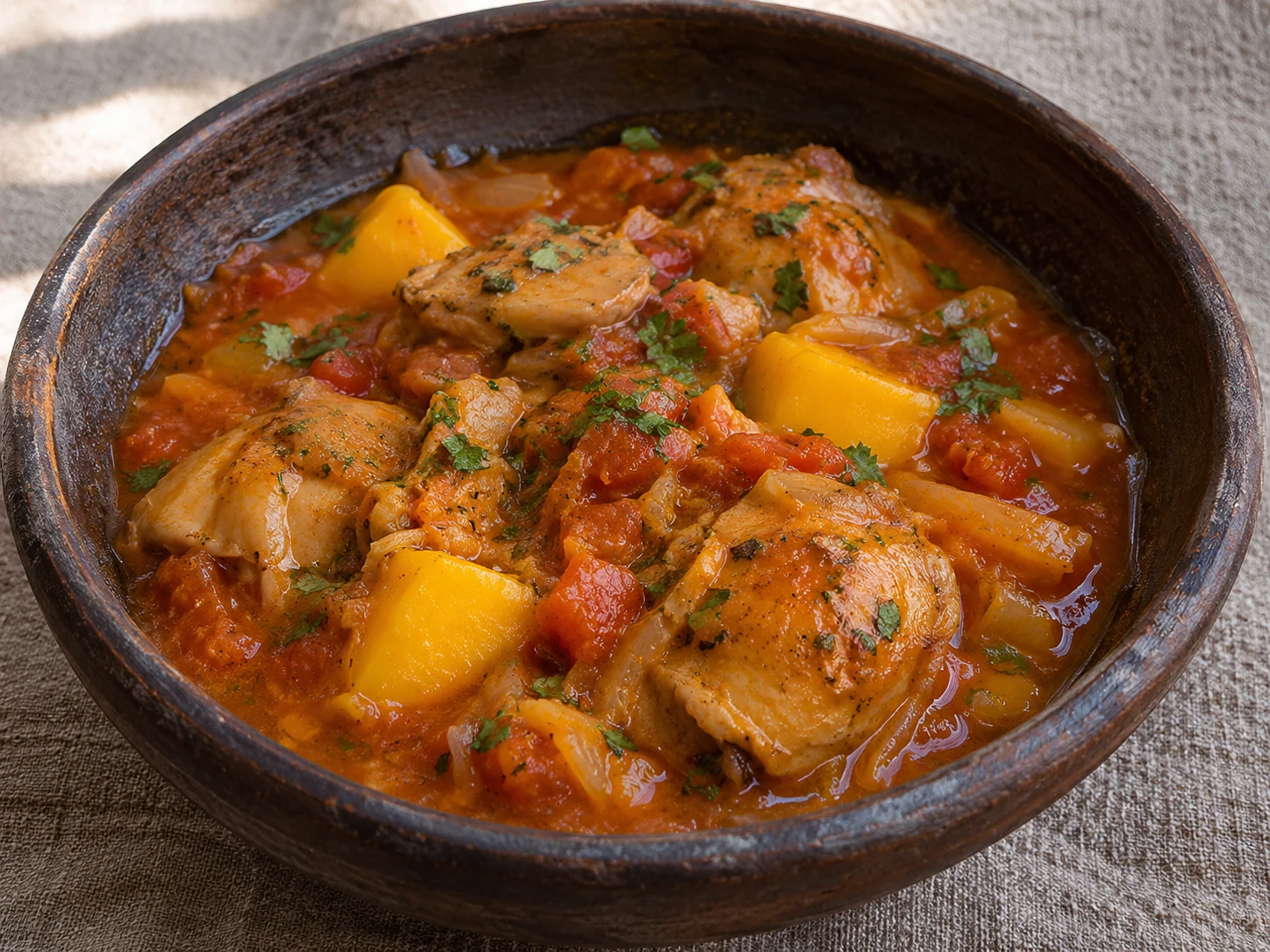
Mango becomes part of a savoury sauce here, with still-recognisable pieces, rather than a candied garnish.
Ingredients
- 700 g skinless boneless chicken thigh meat
- 500 g ripe but firm mango flesh
- 300 g tomatoes
- 160 g onion
- 15 g peeled fresh ginger
- 10 g peeled garlic
- 25 g lemon juice
- 20 g sunflower oil
- 350 ml water
- 3 g salt
- 1 optional pinch gindungo
Preparation
Cut chicken into 4 cm pieces. Slice onion, chop garlic and grate ginger.
Cut mango into 2 cm cubes and tomatoes into small dice. Keep separately.
Heat oil and brown chicken in two batches for 8 minutes in total. Set aside.
Soften onion for 7 minutes, add garlic and ginger for 1 minute, then tomatoes and cook for 7 minutes.
Pour in water, return chicken and add 2 g salt. Simmer partly covered for 15 minutes.
Add mango and continue for 8 to 10 minutes without turning it into jam. Check 74 °C at the centre of the thickest chicken pieces.
Off heat, add lemon, adjust with remaining salt and optional gindungo. Serve after 3 minutes resting.
Introduction
Mango becomes part of a savoury sauce here, with still-recognisable pieces, rather than a candied garnish. Its fruitiness accompanies chicken, while ginger and tomato give depth without added sugar. Lemon is measured at the end to balance a mango whose sweetness may vary. The intended result stays supple and juicy: the sauce base is neither thick syrup nor a completely smooth purée.
Quantities yield four main-course portions. Boneless thigh tolerates gentle cooking more easily than breast, and even cutting facilitates checking. Fruit enters the casserole only after an initial chicken cooking period. This delay avoids boiling mango throughout the time meat needs. Some plain rice or funge may accompany, with green vegetables if desired; these additions are excluded from ingredients and recipe estimates.
Cultural context
This contemporary creation is inspired by products and combinations of the Angolan table; it is not an attested traditional recipe. The proportions and method are an original editorial proposal, not presented as kitchen-tested. The institutional references below illuminate agricultural or cultural context without documenting this exact formula or assigning it a provincial origin.
https://www.fao.org/4/j2771p/j2771p00.htm https://www.embassyangolatr.org/tr/angola/cultura
Tips
Weigh mango without skin or stone.
Add fruit after the initial meat cooking.
Maintain a gentle simmer without candying sauce.
Check 74 °C at the chicken centre.
Dose lemon after tasting cooked mango.
Planning
Weigh seven hundred grams of chicken flesh after removing bones, skin and large fat deposits. Refrigerate until searing. Do not wash poultry under running water: splashes may contaminate the worktop. Cut roughly four-centimetre pieces without very thin strips that would dry before others. Reserve a board for raw chicken, then wash hands and utensils before touching ready-to-serve items.
Choose ripe mango still firm enough to cut neatly. Very fibrous flesh breaks into threads, while overripe fruit quickly becomes compote. Remove skin and stone, then weigh five hundred grams of flesh. Cut roughly two-centimetre cubes and retain juice running onto the clean board. This joins sauce with fruit. Do not add sweetened mango nectar to make up weight: its water, sugar and consistency would change the recipe.
Finely grate fifteen grams of peeled ginger. If the root produces long fibres, chop them with a knife to avoid threads in sauce. Chop garlic and slice onion without mixing them because their addition times differ. Ripe tomatoes are cut small to break down quickly. Plain canned chopped tomatoes suit the same weight, but any salt must be accounted for. Preparing these items before cooking limits interruptions while the casserole heats.
Heat a wide casserole, pour in twenty grams of oil and brown chicken in two batches. Light colour on several sides suffices; the aim is not yet to cook the centre. Do not crowd the bottom, or meat releases water and browns little. Put pieces on a plate reserved for this stage, with their juices. That plate must not receive the finished dish without washing. Remove any black, bitter deposit before preparing the base rather than trying to mask it with fruit.
Soften onion for seven minutes in the same vessel, stirring brown cooking juices. Add a spoonful of measured water if the bottom dries. Then add garlic and ginger for one minute, followed by tomatoes for seven minutes. This progression develops a base without burning aromatic fragments. Pour in three hundred and fifty millilitres of water and return chicken with plate juices. Add two grams of salt, then maintain a moderate simmer partly covered for fifteen minutes.
Add mango and juice without crushing cubes. Mix by lifting, then cook gently for eight to ten minutes. Fruit should soften and give liquid some body but must not caramelise on the bottom. If sauce tightens too much, add hot water by spoonfuls. Heavy reduction concentrates sweetness and changes the balance; that is not the aim. Keep some pieces visible so every portion contains mango rather than a uniform sauce without markers.
Check several large chicken pieces with a clean food thermometer. Their centres must reach 74 °C; sauce colour or absence of pink at the surface does not establish this. If mango is already very tender but meat insufficiently cooked, temporarily remove some fruit with a slotted spoon and continue cooking chicken. If meat is ready but liquid excessive, remove it with mango before briefly reducing sauce alone.
Squeeze lemon separately and remove seeds before weighing twenty-five grams of juice. Add off heat, taste, then decide on the final gram of salt. A more acidic mango may lead you to use only part of the lemon initially and offer the rest at table. Do not automatically correct with sugar. If used, gindungo is incorporated in a very small pinch. Rest three minutes to stabilise juices, then stir once more without breaking cubes.
Serving
Divide among four deep plates with an even quantity of chicken, mango and sauce. Place rice or funge alongside rather than mixing the whole amount into the casserole, keeping sauce visible. Cucumber salad brings simple freshness; a second sweet garnish is less useful. Serve promptly after resting. For a delayed meal, cool and refrigerate instead of leaving fruit to break down over low heat. When reheating, gently lift pieces and add a spoonful of water if needed.
Storage
Quickly divide leftovers among shallow containers, then refrigerate at 4 °C or below. Eat within 48 hours. Reheat the required quantity only once, until the entire portion is thoroughly hot at the centre. Do not keep the dish lukewarm in the saucepan for a long time.
Variations
Firmer mango may need a few extra minutes; tasting before adding helps anticipate acidity. Chicken breast requires another sequence and must not simmer this long as a simple substitution. Gindungo can be omitted to retain only ginger's aromatic warmth. Some lime may replace lemon with a different flavour, but is not added on top of the entire original quantity. Chutney, mango in syrup or candied fruit cannot replace fresh flesh here without reformulating the sauce.
Nutrition notes
Values are estimates per serving for four people, without the suggested accompaniments. Calculation uses the stated edible weights and Ciqual reference foods. All oil and salt are counted; water and very small optional amounts of pepper or gindungo are excluded. Brands, meat fat content, cooking losses and actual yield change the result. If energy is missing from the table, it is estimated using 4 kcal/g protein, 4 kcal/g carbohydrate, 9 kcal/g fat and 2 kcal/g fibre. Lemon juice is represented by raw lemon flesh, a declared approximation that may slightly alter estimates.
Conclusion
Aim for tender meat, a bound but flowing sauce and still-identifiable pieces. Adjust seasoning after cooking before dividing into four portions. Enjoy your meal!
Enjoy your meal
Enjoy your meal!