Oven-baked fish with a cassava flour crust
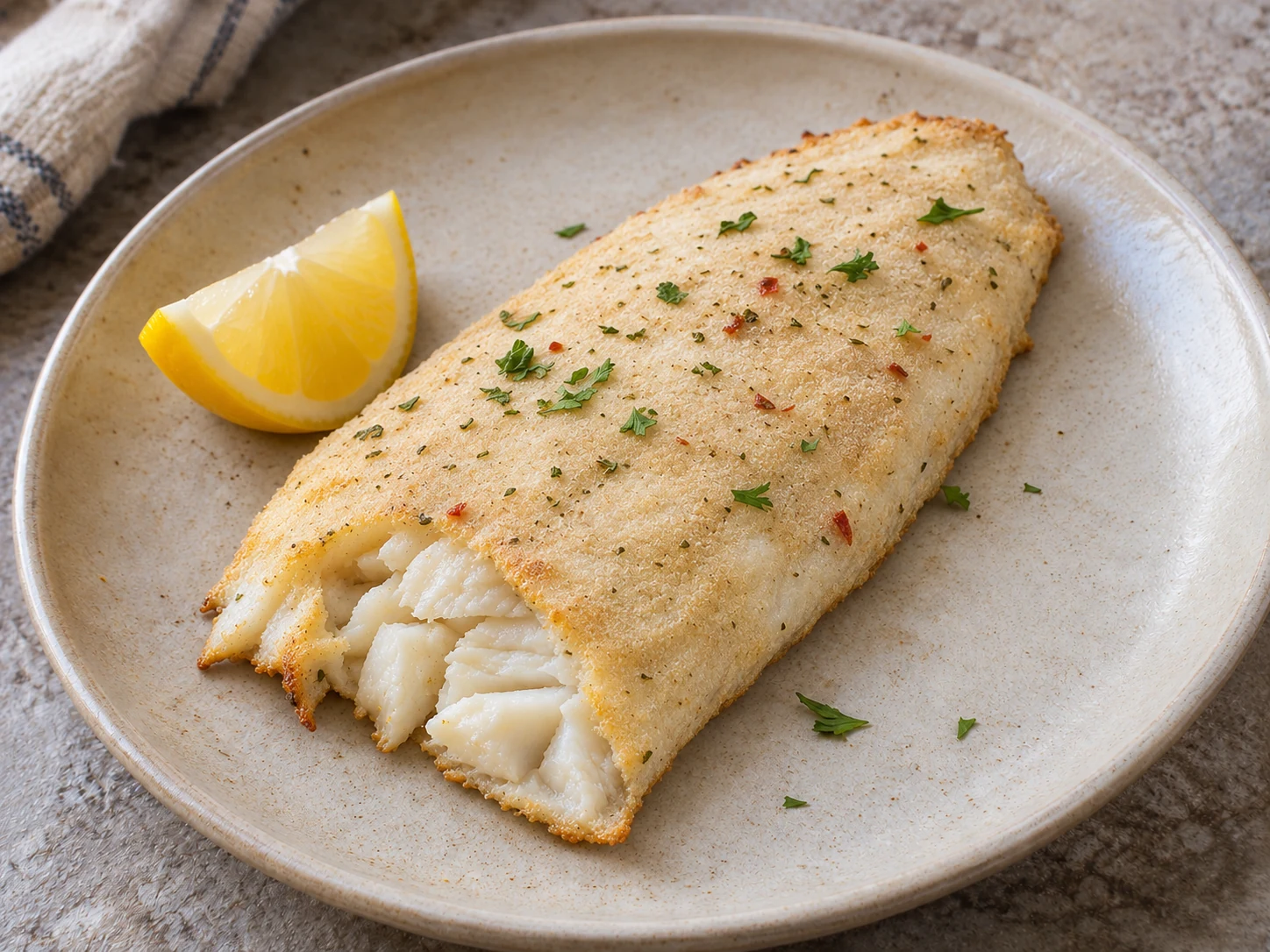
A thin layer of cassava flour, garlic and parsley covers the fish’s upper side.
Ingredients
- 600 g raw skinless boneless cod
- 40 g commercial food-grade cassava flour
- 20 g sunflower oil
- 6 g peeled garlic
- 10 g fresh parsley
- 10 g lemon juice
- 2 g salt
- 1 minute pinch gindungo, optional
Preparation
Preheat to 190 °C. Check bones, pat four portions dry and keep chilled while making topping.
Mix flour, finely grated garlic, salt and washed, dried, chopped parsley. Add 10 g oil in droplets for fine crumbs. Add gindungo if desired.
Brush fish with remaining 10 g oil. Spread a thin topping layer over the upper surface and press lightly.
Bake in the middle around 15–20 minutes according to thickness and flour directions. Check cooked topping without raw powder and opaque fish reaching 63 °C at the centre.
Protect the top if needed without contact with a heating element. Carefully transfer to four plates and offer lemon separately. Serve without waiting.
Introduction
A thin layer of cassava flour, garlic and parsley covers the fish’s upper side. Baking turns this topping into a dry, lightly golden surface while the dish protects the underside. Crust means a light film, not a thick casing enclosing the entire fillet. Lemon is reserved for serving to avoid soaking the surface before eating.
This contemporary formula uses unsalted cod and commercial cassava flour intended for human food. It describes neither making flour from fresh roots nor domestic treatment of inadequately processed cassava. It is not claimed as a traditional Angolan recipe. The four fish portions may be accompanied by vegetables according to appetite; no additional accompaniment is included in the ingredients.
Cultural context
This recipe is a contemporary creation inspired by ingredients from the Angolan table, not an attested traditional recipe. The references document the products and their context; they are not the source of the proposed formula. The proportions and method are an original editorial proposal. The institutional texts cited provide agricultural or cultural context and do not establish a traditional origin for this formula.
https://www.fao.org/4/j2771p/j2771p00.htm https://www.embassyangolatr.org/tr/angola/cultura
Tips
Use commercial food-grade cassava flour suitable for cooking.
Do not confuse flour and tapioca starch.
Make a thin, even layer.
Check fish reaches 63 °C and flour is cooked.
Offer lemon separately to keep the surface dry.
Planning
Choose four skinless, boneless cod portions weighing one hundred and fifty grams each, of similar thickness. The weight refers to fish intended to be eaten. Whole fish would require different preparation and yield. Gently feel each piece and remove remaining bones with clean tweezers. Refrigerate fillets while preparing the topping. After chilled thawing, drain and pat dry so excessive water does not seep through the crust during cooking.
Read the cassava flour label carefully. Use a commercially processed food product intended for this use, kept dry, with cooking directions on its packaging. Tapioca starch, although also from cassava, does not give the same texture and is not a direct replacement. Coarse toasted flour granules also need another adaptation. Do not use powder of uncertain origin or processing, or assume a simple bake makes any root powder safe.
Forty grams is enough for a thin layer on four portions. Weigh rather than multiplying spoonfuls because packing varies. Sieve small lumps if present without discarding a large fraction to change fineness artificially. Reject damp flour or an unusual smell. Keep in its closed packaging away from kitchen steam, and do not return anything touched by hands that handled raw fish to the packet.
Wash and thoroughly dry parsley before chopping very finely. Large leaves would create burnt spots on an otherwise floury surface. Grate garlic and mix with flour and salt, then add parsley. Add ten grams of oil in small drops and work with a fork into fine, even crumbs. An elastic paste is not the aim. Reserve the other ten grams of oil for brushing fish; all this fat is counted in the estimate.
Preheat a conventional oven to one hundred and ninety degrees. Choose a dish or rimmed tray lined with baking paper rated for that temperature. Pieces should fit without touching, with a little room for a spatula. A very large, thin tray can quickly dry edges; check earlier if the oven heats strongly. In a fan oven, start checking before the maximum time rather than automatically leaving twenty minutes.
Pat fillet tops dry again if needed and brush with reserved oil. Spread topping evenly a few millimetres thick without dropping large heaps onto the tray. Press very lightly with clean fingers or a spoon back for contact. Do not roll fillets repeatedly in flour: thick layers retain dry pockets and unnecessarily prolong fish cooking. The underside is not coated.
Bake in the middle around fifteen to twenty minutes according to thickness. First observe topping: it must lose its powdery appearance, dry and take a pale colour, not turn dark brown. Check the thickest piece’s centre with a clean thermometer inserted from the side; fish must reach sixty-three degrees. Flesh becomes opaque and flakes easily. A coloured crust alone does not guarantee the centre is cooked, and raw flour must not be served as decoration.
If the top colours too early, protect lightly with baking paper kept away from a heating element and continue checking fish. Do not use the grill as an automatic correction: it would burn small herbs before evenly cooking an excessively thick flour layer. If an area remains powdery, note a thinner layer and better oil distribution for next time. Do not pour a large amount of water into the hot dish to make it disappear.
Serving
Remove as soon as fish and topping are cooked. Slide a wide spatula under each portion and place on prepared plates. Some crumbs may fall; distribute only if cooked and not burnt. Offer the ten grams of lemon juice in a small dish or around fish without wetting the crust before serving. Steamed vegetables or a lightly dressed salad give suitable contrast; they are excluded from quantities and values.
The dry topping can be prepared a little ahead, but add oil and cover fish only shortly before cooking. Keep the mixture intended for raw food apart from ready-to-serve ingredients. Do not keep cooked fillets in the switched-off oven for a long wait: flesh keeps losing water and crust can soften against juices. A delayed meal is better handled by postponing baking.
Storage
Cool leftovers rapidly in a shallow container, refrigerate at 4 °C or below and eat within 24 hours. Reheat only once until thoroughly hot at the centre. Do not keep a portion that has stood at room temperature for a long time.
Variations
Another white fish in thick portions may work if title and calculation reference change. Small thin fillets cook faster and may dry before flour loses its raw appearance. They need a different topping thickness and fresh monitoring.
Cassava flour is listed in the FAO 2010 table under code 02_004; this food reference does not describe the commercial brand used and does not turn the flour into tapioca starch. A minute pinch of gindungo may join the topping, optionally and uncounted. Parsley may be omitted without multiplying garlic to compensate.
Nutrition notes
Estimated values per serving, excluding accompaniments. Calculated from edible weights and reference foods; brands, cooking and actual yield may change the results. All fats are counted in full. Where energy is not provided in the table, it is estimated from protein and carbohydrate (4 kcal/g), fat (9 kcal/g) and fibre (2 kcal/g). Optional spices in very small quantities are not counted. All added oil and salt are counted; water and optional spices in minute quantities are excluded. Moisture content can also change the nutritional intake. Cassava flour: FAO 2010 reference, code 02_004 (cassavaFlour), West African food composition table. https://www.fao.org/4/i1755e/i1755e00.pdf The reference is flour, not tapioca starch; the commercial product used may differ in moisture and composition.
Conclusion
Serve as soon as the described textures are obtained and adjust the final seasoning on the plate. This contemporary editorial creation is presented neither as an attested traditional recipe nor as a kitchen-tested formula. Enjoy your meal!
Enjoy your meal
Enjoy your meal!