Roasted squash salad with black-eyed peas and ginguba
Roasted squash cubes join ready-cooked black-eyed peas and crunchy ginguba in a lime and parsley salad.
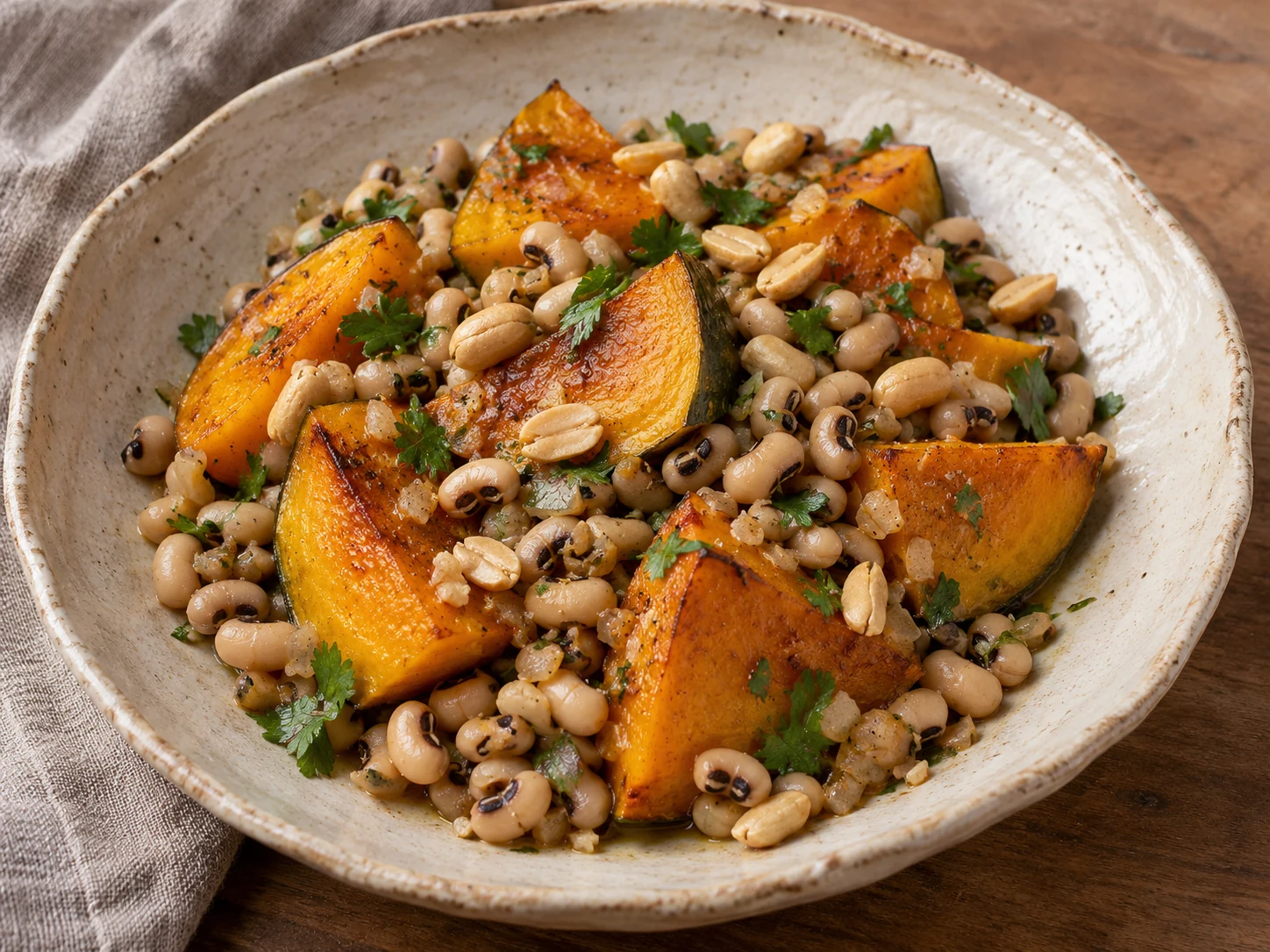
Ingredients
- 700 g peeled, seeded butternut squash flesh
- 500 g fully cooked plain drained black-eyed peas
- 60 g unsalted roasted shelled peanuts
- 80 g onion
- 15 g fresh parsley
- 5 g fresh ginger
- 35 g lime juice
- 30 g olive oil, including 15 g for roasting
- 3 g salt
- 1 optional pinch of gindungo
Preparation
Preheat oven to 200 °C. Prepare and weigh 700 g squash flesh, then cut 2 cm cubes. Coat with 15 g oil and spread in one layer.
Roast 25–35 minutes, turning halfway, until tender inside and lightly coloured. Cool 5 minutes for immediate assembly.
Rinse and drain already cooked peas, then weigh 500 g. Slice onion, grate ginger and chop washed, dried parsley. Crush peanuts and reserve.
Mix lime, salt and ginger, then whisk with remaining 15 g oil. First coat peas with dressing.
Add onion and parsley, then fold squash with a broad spatula, lifting without crushing. Taste and add optional gindungo.
Add most ginguba at serving. Divide into four portions and scatter remaining pieces from the allocated 60 g. Serve promptly or keep cold.
Introduction
Three elements create this salad’s contrast: tender squash with lightly coloured edges, black-eyed peas holding their shape and ginguba pieces added at the end. Lime and onion balance roasted vegetable sweetness. The aim is not to hide squash under thick sauce but to coat enough to connect each mouthful. Quantities make four plant-based lunch portions or substantial sides depending on the rest of the meal.
This contemporary creation draws inspiration from produce used in Angola. It is attributed to no province and not presented as a documented traditional speciality. Black-eyed peas, also called cowpeas, are weighed already cooked and drained. Any soaking and cooking must therefore happen before this recipe begins. Ginguba means peanut; guests must be informed. Once assembled, salad remains perishable even with acidic dressing.
Cultural context
Angola’s embassy in Türkiye mentions ginguba in its account of Angolan food. The 2004 FAO/WFP report describes bean crops among others. These references illuminate product context and do not prove this salad, its roasting or dressing. Proportions and assembly are contemporary editorial choices. Context sources: https://www.embassyangolatr.org/tr/angola/cultura and https://www.fao.org/4/j2771p/j2771p00.htm
Tips
Pea weight is already cooked and drained.
Space squash on the tray to roast.
Use all measured oil without uncounted additions.
Dress peas before adding fragile squash.
Declare peanuts and preserve pieces until serving.
Planning
Choose dense-fleshed squash such as butternut that cuts into neat cubes. Wash outside, remove skin, seeds and stringy parts, then weigh seven hundred grams flesh. Whole squash weight does not replace prepared weight. Set pieces on a stable face before cutting to prevent rolling under the knife. Cut roughly two-centimetre cubes: smaller may dry; much larger stay firm inside while edges colour.
Preheat oven to 200 °C and have a tray wide enough for one layer. Crowded cubes generate steam and roast less well. Distribute fifteen grams of measured oil over squash with a spatula or clean hands, then spread. Do not spontaneously add oil whenever an edge looks dry; turning halfway already redistributes fat. Baking paper helps release but does not remove the need to check undersides.
Five hundred grams black-eyed peas means fully cooked, plain, drained grains ready to eat. Canned peas work without sauce. Rinse and drain a few minutes before weighing. Previously cooked peas must be tender in the centre but not crushed to purée. Do not add dry or merely soaked grains to this assembly: residual squash heat will not cook them. A preseasoned product changes salt and nutritional calculations.
Choose sixty grams unsalted roasted peanuts, shelled weight. Check smell and storage; discard mouldy or rancid seeds. Coarsely crush, retaining small pieces. Powder would vanish in dressing and lose the intended contrast. Keep separate until serving. For peanut allergy, do not simply remove pieces from the finished dish: plan a distinct preparation from the outset with suitable ingredients and clean utensils.
Slice onion finely and rinse briefly if too pungent, then dry thoroughly. Grate ginger to distribute without long fibres. Wash and dry parsley before chopping. Mix lime juice, salt and ginger in a bowl, then whisk with the remaining fifteen grams oil. All three grams salt go into this dressing; squash is not salted separately. This avoids many hard-to-track little additions and facilitates final adjustment.
Check squash with a knife tip after twenty-five minutes: centres must be tender and edges still visible. Depending on oven and variety, continue several minutes without seeking a very dark crust. Cool just five minutes before immediate assembly or cool promptly for cold serving later. First mix peas with sauce to season them without crushing squash. Add onion and parsley, then cubes using a broad spatula. Lift from below rather than stirring vigorously; finish with ginguba just before dividing.
Serving
Present in a broad dish or divide directly between four plates. Distribute cubes and peas before scattering reserved pieces so everyone gets three textures. Serve warm or cool without leaving long on the table. For a buffet, keep a refrigerated reserve and replenish small portions. Bitter leafy salad may accompany; another starch is not automatically needed because peas and squash already provide substance.
Storage
Cool roasted squash promptly in a shallow dish before refrigerating at 4 °C or below. Keep peas and assembled salad at the same temperature and eat within 24 hours. Store ginguba dry and separate according to packaging. Do not leave the dish at room temperature for hours because it contains no meat. Maintain cold during transport in a suitable container.
Variations
Red kuri squash may replace butternut, checking firmness and actual flesh weight. Cooked white beans make another salad that should be named clearly; do not keep identical nutritional values without recalculating. Replacing parsley with coriander changes aroma without assembly method. To prepare ahead, keep squash, peas, dressing and ginguba separate in the cold, except dry seeds stored according to packaging. Assemble shortly before eating to preserve cubes and crunch.
Nutrition notes
Black-eyed peas contribute protein and fibre, squash carbohydrate and ginguba fat. These descriptions are not medical promises. Per-serving estimates use edible weights, exclude accompaniments and count all oil, including roasting oil. Brands, cooking, draining and yield change results. Optional tiny spices are excluded. If energy is missing, calculate protein and carbohydrate at 4 kcal/g, fat at 9 kcal/g and fibre at 2 kcal/g. The World Agroforestry cooked-cowpea reference does not quantify intrinsic sodium; it is excluded from estimated salt, while added salt is counted.
Conclusion
The intended result combines tender intact squash, whole peas and still-crunchy peanuts. Correct assembly order matters more than prolonged mixing. This editorial formula is not presented as kitchen-tested.
Enjoy your meal
Enjoy your meal!