Rice salad with pineapple and shrimp
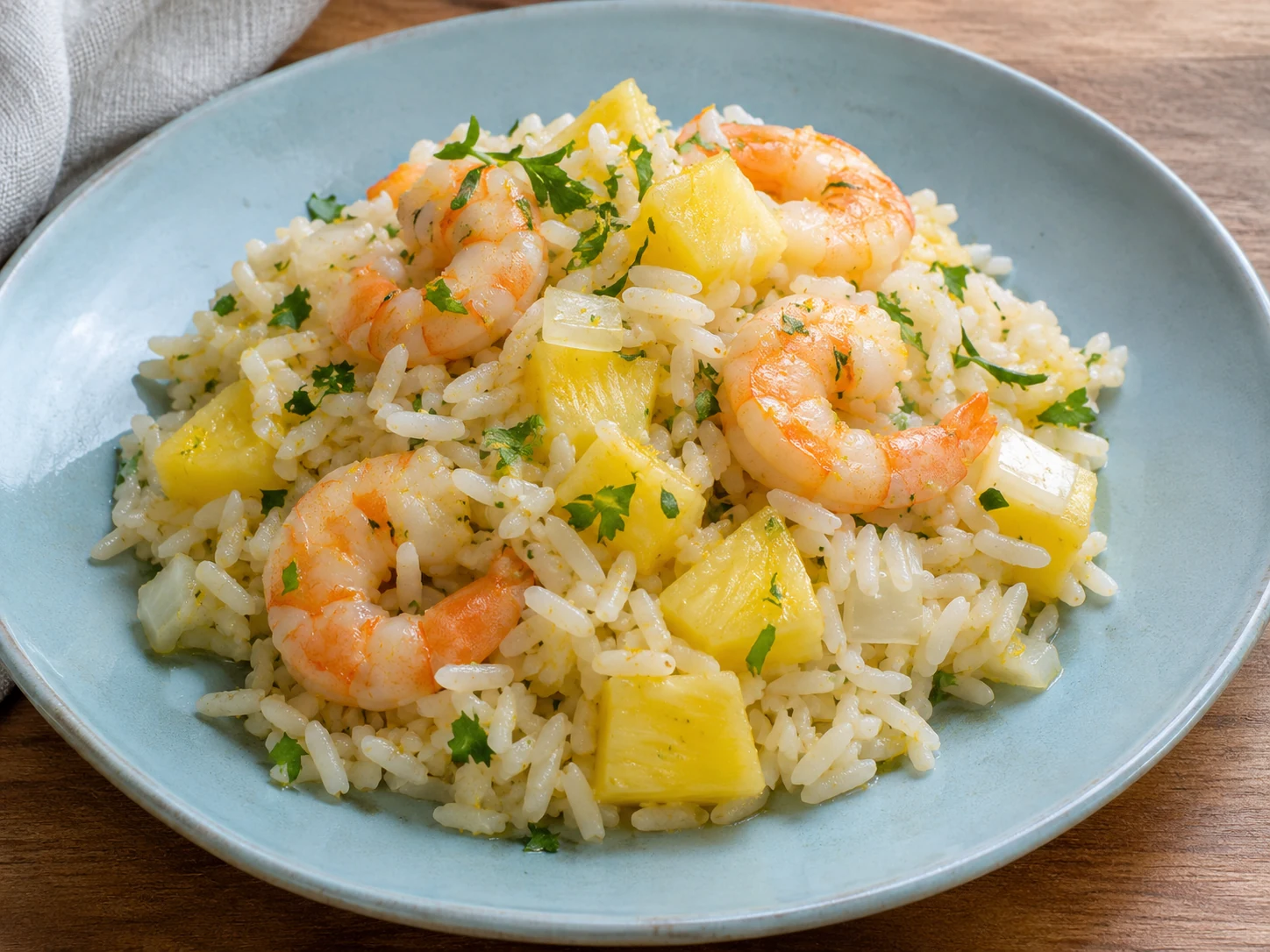
Rapidly cooled rice, cooked shrimp and pineapple cubes make a fresh lime-dressed salad with cucumber and pepper.
Ingredients
- 200 g dry white rice
- 400 g raw peeled shrimp, flesh weight
- 350 g prepared pineapple flesh
- 200 g prepared cucumber
- 150 g prepared red pepper
- 60 g onion
- 15 g fresh parsley
- 35 g lime juice
- 25 g olive oil
- 3 g salt
- Sufficient cooking water
- 1 optional pinch of pepper
Preparation
Rinse rice and cook in plenty of unsalted water following the packet, about 12–18 minutes. Drain when tender, spread thinly in a clean dish and cool promptly. Refrigerate at 4 °C or below without exceeding 2 hours at room temperature.
Thaw shrimp in the refrigerator if needed. Check intestinal tracts and shells, then cook in simmering water to 63 °C in the centre. Drain, cool promptly in a separate dish and refrigerate at 4 °C or below.
Prepare and weigh pineapple, cucumber and pepper. Dice, drain fruit and finely slice onion. Wash, dry and chop parsley.
Mix lime and salt, then whisk with oil. Separate thoroughly cold rice grains and mix with vegetables and some dressing.
Gently add cold pineapple and shrimp. Taste a complete mouthful, add remaining dressing and optional pepper.
Divide between four plates, serve cool and keep waiting portions at 4 °C or below. Consume within 24 hours.
Introduction
This salad combines separate rice grains, supple shrimp flesh and juicy but firm pineapple. Fruit provides sweet acidity without soaking the dish’s bottom. Cucumber and pepper add crunch while lime connects everything without hiding shellfish. Proportions make four complete-meal servings. Bread need not be added automatically because rice already forms the starch base.
This contemporary creation draws inspiration from produce used in Angola without claiming historical tradition. It requires proper cooling organization: rice does not stay in its pan waiting for the next steps. Shrimp are fully cooked before assembly and lime does not cook them. Prepare shallow dishes and refrigerator space before starting. Active time differs from time needed for thoroughly cold components; assemble only once that stage is complete.
Cultural context
Angola’s embassy in Türkiye presents products and preparations of Angolan food. The 2004 FAO/WFP report describes national food crops. These references provide inspiration context and do not document this rice, pineapple and shrimp salad. Proportions, raw vegetables and dressing are contemporary editorial choices. Context sources: https://www.embassyangolatr.org/tr/angola/cultura and https://www.fao.org/4/j2771p/j2771p00.htm
Tips
Rice is weighed dry.
Arrange cooling before starting cooking.
Check 63 °C in the centre of a large shrimp.
Drain pineapple to avoid soaking grains.
Keep cold and consume within 24 hours.
Planning
Use two hundred grams dry white rice, preferably long-grain. Weight does not mean already cooked rice. Rinse in a fine sieve, then cook in plenty of unsalted water following packet directions, generally twelve to eighteen minutes. Taste: grain should be tender without bursting into paste. Drain as soon as ready. Salad is not easily corrected if rice is deliberately overcooked to “soften it further”. Brown rice needs another duration and does not follow this timing.
Immediately spread drained rice in a clean shallow dish in a thin layer. Cool promptly, then refrigerate at 4 °C or below rather than waiting for a large mass to cool in its pan. Do not leave at room temperature for more than two hours in total; in a very hot room shorten this further. An ice bath beneath the container can speed cooling without adding water to rice. Keep covered in the cold afterward. This is not merely a texture preference: cooked-rice storage needs particular attention.
Allow four hundred grams raw peeled shrimp as flesh weight, excluding heads and shells. If frozen, thaw in the refrigerator, then drain. Remove visible intestinal tract and check for shell pieces. Cook in simmering water until centres reach 63 °C, checking a large shrimp with an appropriate thermometer; time depends on size. Flesh turns opaque. Drain immediately and cool promptly in another clean shallow container, then refrigerate at 4 °C or below.
Wash pineapple exterior before cutting. Remove skin, eyes and hard core, then weigh three hundred and fifty grams flesh. Cut roughly one-and-a-half-centimetre cubes and drain a few minutes without crushing. Very ripe, soft fruit produces too much juice; keep it for another use, not diluting dressing. Well-drained pineapple canned in juice may work, but do not choose syrup-packed fruit expecting the same balance.
Wash and dry cucumber, pepper and parsley. Remove pepper seeds and weigh one hundred and fifty usable grams. Halve cucumber; if its centre is watery, remove soft part before weighing two hundred grams. Dice both vegetables evenly. Slice the sixty grams onion very finely. Thick pieces would dominate delicate shrimp mouthfuls. Chop parsley only when other components are ready, using a clean board not previously used for raw shellfish without washing.
Mix lime and three grams salt in a bowl, then whisk with oil. Rice was cooked unsalted so all this salt enters the final dish rather than being lost in water. Gently separate cold grains with a fork, add vegetables and some dressing. Fold pineapple and shrimp in last using broad movements. Taste a bite containing the three main components before pouring in remaining allocated lime. Do not macerate long: acidity changes cooked shrimp surfaces and fruit releases water.
Serving
Divide between four plates, checking each receives shrimp and pineapple, not only grains from the bottom. Serve cool at mealtime. For a buffet, bring out only a small part and refrigerate reserve. Declare the crustacean allergen. Leafy salad may accompany, but extra creamy sauce is unnecessary for balance and must be counted if added.
Storage
Keep rice, shrimp and assembled salad at 4 °C or below. Consume within 24 hours after preparation. Cool rice and shellfish promptly in separate containers, then cover once cold. Do not save a dish for tomorrow after it has stood long on the table. For transport, use an insulated box with a cold source. Lime and pineapple do not replace the cold chain.
Variations
Some pineapple may be replaced by firm mango, changing the name. Already cooked boneless fish gives another salad; check its own storage requirements. Ready-cooked purchased shrimp are suitable if correctly refrigerated and used according to packaging, but weight then refers to cooked product and requires a different nutritional calculation. Do not replace cooked shrimp with raw seafood merely sprinkled with lime.
Nutrition notes
Rice contributes carbohydrate and shrimp protein; these are not medical promises. Per-serving estimates use stated raw edible weights, exclude accompaniments and count all oil. Brands, cooking and yield may change results. Optional tiny spices are excluded. When energy is missing, calculate using protein and carbohydrate at 4 kcal/g, fat at 9 kcal/g and fibre at 2 kcal/g. Rice and shrimp are weighed raw for calculation, then cooked before consumption.
Conclusion
Separate grains, drained fruit and shrimp cooked without excess give the intended texture. Cooling control is integral to the recipe, not merely putting it away. This editorial formula is not presented as kitchen-tested.
Enjoy your meal
Enjoy your meal!