Cabbage soup with corn and ginger
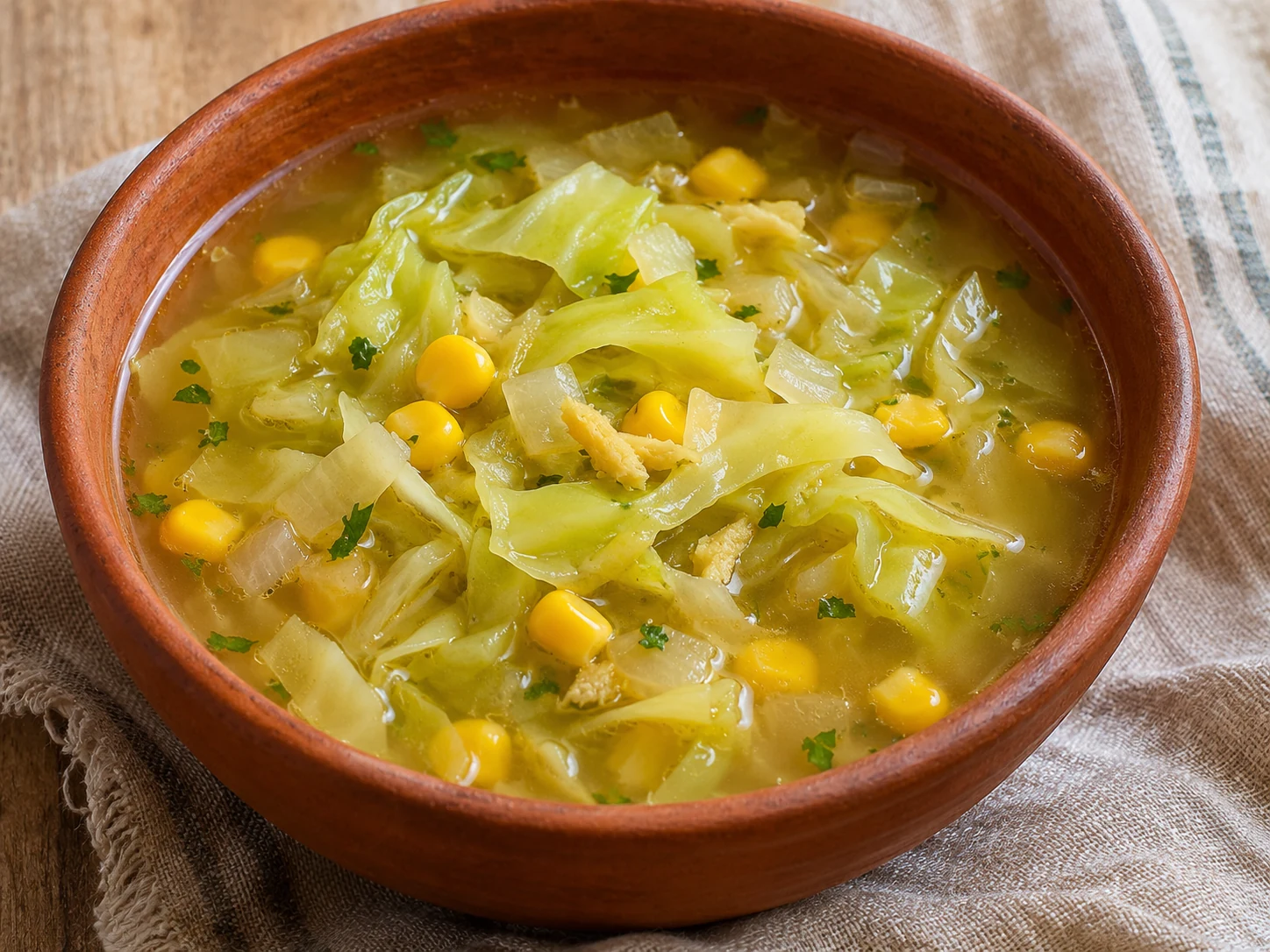
Finely sliced white cabbage and ready-cooked corn make a light soup whose ginger-scented broth does not mask the vegetables.
Ingredients
- 500 g prepared white cabbage without core
- 400 g cooked, drained corn
- 150 g onion
- 200 g tomatoes
- 10 g garlic
- 15 g fresh ginger
- 20 g olive oil
- 1 litre water
- 20 g lime juice
- 3 g salt
- 1 optional pinch of gindungo
Preparation
Remove cabbage core and damaged leaves, wash and weigh 500 g leaves, then slice into 5 mm strips. Drain and weigh already cooked corn. Prepare onion, garlic, ginger and tomatoes.
Heat oil in a 3-litre pan. Sweat onion 8 minutes without strong colouring. Add garlic and ginger for 1 minute, then tomatoes for 5 minutes.
Add cabbage and turn for 3 minutes. Pour in 900 ml water, reserve 100 ml and bring to a simmer.
Cook partly covered for 15–20 minutes until a thick strip is supple. Add reserved water if liquid drops too far.
Add cooked corn and heat at a gentle simmer for 10 minutes, stirring the bottom. Add salt and optional gindungo.
Switch off, stir in lime, then taste cabbage, corn and broth together. Divide evenly between four bowls and serve hot.
Introduction
White cabbage forms thin, supple strips in a clear broth, while corn kernels provide touches of sweetness. Ginger is grated to spread through the liquid rather than cut into thick slices that would surprise on the spoon. A small onion and tomato base adds depth without thickening the whole pan. The aim is soup with visible vegetables, not a blended cream soup. Quantities make four generous starter bowls or light lunches to complement.
This contemporary creation draws inspiration from produce used in Angola without borrowing a documented speciality’s name. Corn enters already cooked: dried kernels and raw cobs follow a different procedure. Cabbage cooks directly in broth after a brief turn with onion. This difference preserves whole kernels while controlling leaf tenderness. Plan a separate accompaniment for a more substantial meal and do not implicitly include it in the soup’s nutritional values.
Cultural context
The FAO/WFP report dated 6 August 2004 describes, among other matters, maize’s place among Angola’s food crops. It provides agricultural context and does not document this cabbage soup or its proportions. Clear broth, grated ginger and the order of additions are contemporary editorial decisions. No provincial origin or status as a collected tradition is attributed. Context source: https://www.fao.org/4/j2771p/j2771p00.htm
Tips
Weigh usable cabbage leaves only.
Slice evenly for uniform cooking.
Corn must already be cooked before adding.
Taste a thick strip to check tenderness.
Distribute kernels from the pan bottom.
Planning
Choose a heavy, compact white cabbage without slimy or wilted outer leaves. Remove damaged leaves, divide cabbage and remove the hard core. The five hundred grams specified means usable leaves, not the whole head’s weight. Wash pieces, then drain. Set their cut face on a stable board and slice into strips about five millimetres wide. Regular cutting avoids large, still-firm ribbons among already very soft leaves.
Weigh four hundred grams of corn after cooking and draining. Plain canned corn is suitable; rinse if the liquid is salty, then let water drain in a colander. For frozen corn, first follow the manufacturer’s cooking instructions. Do not assume the soup’s final ten minutes suffice for any still-raw product. Kernels must already be edible before incorporation. Keeping canning liquid is unnecessary: this broth uses fresh water and a vegetable base.
Peel and finely slice onion. Peel only hard or damaged ginger skin and grate finely; weigh fifteen grams of usable part. Chop garlic and finely dice tomato. Keep its juice to release cooking residues. Prepare everything before heating oil. Garlic needs only a brief time and must not wait in the hot pan while you search for a board or knife.
Use a pan of at least three litres, with a base broad enough to stir cabbage. First sweat onion until soft without strong browning. Add garlic and ginger for one minute, then tomato. If the bottom dries, add a spoonful of measured water rather than extra unallocated oil. When tomato starts breaking down, add cabbage and turn with two spoons. It initially takes much space but collapses quickly with heat.
Pour in nine hundred millilitres water and reserve the last hundred. Once simmering resumes, cook partly covered for fifteen to twenty minutes. Cabbage should yield under the teeth without becoming a grey disintegrating mass. Taste a thick strip, not just a small top leaf. Young cabbage may need less time; a dense head may require several extra minutes. If much liquid evaporates, replenish from reserved water. Avoid a vigorous boil that blurs texture and splashes broth.
Then add cooked corn and heat ten minutes. Stir from the bottom to distribute kernels, which tend to sink. Adjust salt after this addition because canned corn sometimes already supplies it. Switch off before adding lime juice. Light acidity is enough to enliven cabbage; too much lime makes tomato harsh. Taste a strip, some kernels and liquid together before correcting. If soup waits a few minutes, cover off the heat rather than continuing to cook leaves.
Serving
Distribute strips between four bowls, then divide corn and liquid. This avoids a first bowl mainly cabbage and a final one full of kernels. Serve thoroughly hot without reducing until broth disappears. For a fuller meal, offer cooked beans separately or another protein dish; the soup itself remains deliberately light. Present extra chilli separately for individual adjustment.
Storage
Cool leftovers promptly in shallow containers and refrigerate at 4 °C or below. Eat within 48 hours. Reheat the needed quantity only once until thoroughly hot in the centre, stirring to distribute kernels. Add water if broth has reduced, then taste before salting. Do not keep a lukewarm pan on the cooker for hours.
Variations
Pointed cabbage may replace white cabbage, checking doneness earlier. Red cabbage changes broth colour and produces another presentation that should be announced. For a more substantial soup, add a separately cooked starch, count the addition and reconsider liquid quantity. Do not directly replace cooked corn kernels with flour: it thickens broth and needs another method. A few parsley leaves are possible but remain an addition to count when tracking intake.
Nutrition notes
Cabbage and corn contribute fibre and carbohydrate without making this soup a health promise. Per-serving estimates use edible weights, exclude accompaniments and count all oil. Brands, draining, cooking and actual yield may alter results. Optional spices in tiny quantities are excluded. When reference energy is missing, calculate using protein and carbohydrate at 4 kcal/g, fat at 9 kcal/g and fibre at 2 kcal/g.
Conclusion
The desired textures remain distinct: supple leaves, whole kernels and liquid in every bowl. Stop cooking according to the actual cabbage and measure lime after heat to preserve balance. This editorial formula is not presented as kitchen-tested.
Enjoy your meal
Enjoy your meal!