Sweet potato tartlets with sorghum pastry
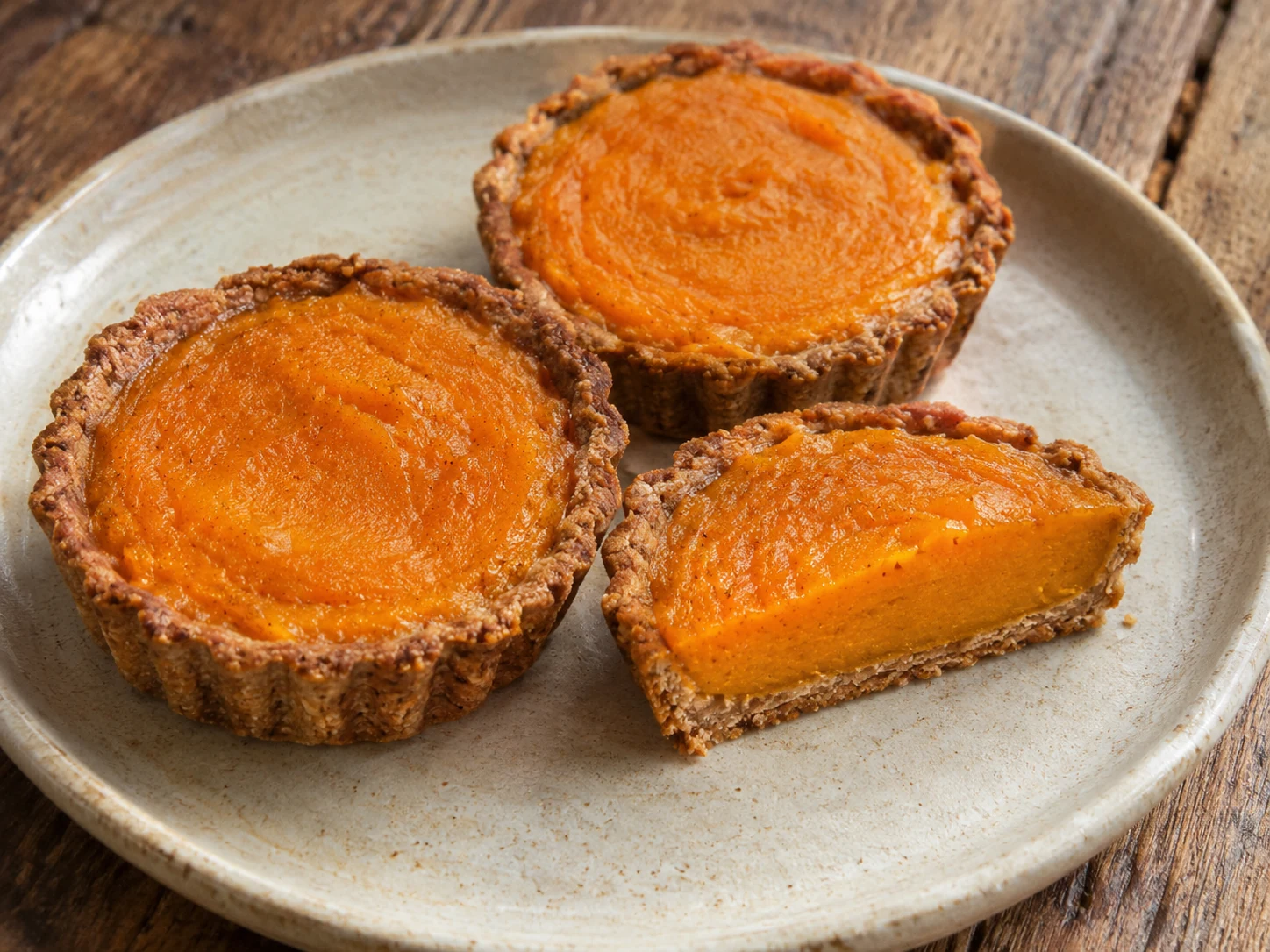
These eight tartlets combine short sorghum pastry and an egg-bound sweet potato filling.
Ingredients
- 140 g fine food-grade sorghum flour, massambala
- 60 g T55 wheat flour
- 70 g cold unsalted butter
- 100 g beaten eggs without shells, including 50 g for pastry and 50 g for filling
- 60 g sugar, including 30 g for pastry and 30 g for filling
- 1 g salt
- 0–20 ml cold water, only if needed for pastry
- 350 g cooked, cooled sweet potato mash without additions
- 100 g unsweetened coconut milk
- 1 optional pinch cinnamon, excluded from the calculation
Preparation
Prepare sweet potato mash, drain and cool; weigh 350 g. Beat and divide the 100 g eggs.
Rub both flours with 30 g sugar, 1 g salt and 70 g cold butter. Incorporate 50 g egg; add 5–20 ml cold water if needed.
Bring together without prolonged kneading, cover and refrigerate 30 minutes.
Divide into eight and line eight 8 cm tins with pastry about 3 mm thick. Repair cracks and prick lightly.
Blind-bake at 180°C for 12 minutes with paper and weights, then 3 minutes without weights. Lower oven to 170°C.
Mix mash with 100 g coconut milk, 30 g sugar and remaining 50 g egg. Fill bases.
Bake about 22–25 minutes until the centre is set with no liquid wave; if possible check at least 75°C at the core. Continue if needed.
Wait 10 minutes, carefully unmould and leave on a rack before serving eight portions.
Introduction
These eight tartlets combine short sorghum pastry and an egg-bound sweet potato filling. Some wheat flour makes the base easier to handle, so this is not gluten-free. Sorghum brings cereal flavour without providing wheat's elasticity by itself. Butter and egg ensure cohesion, while chilling limits tearing and spreading. The filling should be smooth and set, not liquid in the centre.
Sweet potato is weighed after cooking, peeling and cooling. Colour depends on variety; orange flesh is not essential for success. This contemporary creation inspired by Angola does not represent an attested traditional speciality. Sorghum, called massambala in Angolan vocabulary, motivates the name; it should not be confused with massango, meaning pearl millet. The formula remains an editorial proposal not tested in a kitchen.
Cultural context
FAO/WFP agricultural context and the embassy's official cultural presentation place the ingredients in an Angolan framework without proving these tartlets' historical origin. The title explains the featured ingredient, while the recipe also declares wheat despite its smaller proportion. Whole sorghum in the nutrition table is only an approximation for the flour, not cultural evidence. Context sources: https://www.fao.org/4/j2771p/j2771p00.htm ; https://www.embassyangolatr.org/tr/angola/cultura
Tips
Weigh beaten eggs then divide into two fifty-gram quantities to avoid allocation errors.
Repair a crack by pressing, without stretching sorghum-rich pastry.
Blind baking and final baking also fully cook the food-grade flours.
Weigh cooled mash: three hundred and fifty grams of raw tuber are not equivalent.
Sorghum and pearl millet do not have the same name in this recipe.
Planning
Provide eight small metal tins about eight centimetres in diameter. Removable bases make unmoulding easier, but place them on a tray to move together. Much deeper tins change filling depth and cooking. Prepare baking paper and clean baking weights for blind baking. Purpose-made ceramic weights are not edible. If dried pulses serve as weights, reserve them for that use afterwards rather than mixing into an already cooked serving.
Boil or steam sweet potato until a blade passes easily through the pieces. Drain thoroughly, peel if necessary and mash without milk or butter. Let steam escape and cool before weighing three hundred and fifty grams. Watery mash makes filling fragile; boiling followed by too brief draining is one possible cause. Sieve coarse fibres if needed without prolonged blending that introduces unnecessary air.
Use fine food-grade sorghum flour and plain wheat flour without raising agents. Both must be cooked before consumption; do not taste raw pastry, which also contains egg. Weigh one hundred grams of beaten eggs without shells, reserving fifty for pastry and fifty for filling. Wheat, egg and milk from butter are present allergens. Pastry based on another flour is not automatically safe for someone with an allergy.
Mix both flours, thirty grams of sugar and one gram of salt. Add cold butter in small cubes and rub with fingertips into even crumbs. Incorporate the fifty grams of egg allocated to pastry and bring together without prolonged kneading. If dry areas remain, add cold water in five-millilitre spoonfuls, at most twenty millilitres, only until cohesive. An elastic ball is not the aim. Flatten into a disc, cover and refrigerate thirty minutes.
Divide pastry into eight similar portions. Roll each between two sheets of baking paper to about three millimetres thick, then line tins without stretching edges. Repair small cracks with a gently pressed scrap. Do not add much flour to the worktop, since this changes proportions and dries the base. If pastry warms and sticks, return briefly to the refrigerator rather than forcing it. Prick bases lightly without making large through-holes.
Preheat the oven to one hundred and eighty degrees. Place a small piece of baking paper in each base, add weights and blind-bake twelve minutes on the middle shelf. Carefully remove weights and paper and continue three minutes to dry the surface. The base should no longer look raw and wet. This pre-baking helps resist the mash but does not replace final cooking. Keep tins on the tray and lower the oven to one hundred and seventy degrees.
Mix cooled mash with one hundred grams of previously homogenised coconut milk, the remaining thirty grams of sugar and reserved fifty grams of egg. Work just to a cream without pockets of mash, without prolonged foaming. Divide among eight bases without exceeding the rim. Bake about twenty-two to twenty-five minutes at one hundred and seventy degrees; depth may require a few additional minutes. The centre must be set, without a liquid wave when gently moving the tray. A clean probe reading at least 75°C centrally supplements checking egg cooking.
Leave tartlets in tins ten minutes before carefully removing, then place on a rack. Very hot filling looks softer than after resting; do not touch with a finger to test. If the base breaks during unmoulding, wait longer and support underneath instead of squeezing edges. Check doneness on one piece before storing the batch. Neither refrigeration nor a decorative layer corrects still-raw filling.
Serving
Count one tartlet per serving and serve warm or cold on a small plate. The filling is sweet enough without a caramel layer. A thin slice of fresh fruit may accompany it outside the nutrition calculation, but should not hide the centre's texture. For neat presentation, unmould only after the initial rest and use a wide spatula. The base is crispest on baking day; in the refrigerator, mash moisture gradually softens it.
Storage
Cool promptly then refrigerate uneaten tartlets at 4°C or below in a clean box and consume within forty-eight hours. Do not stack while hot: condensation softens bases. Egg filling must not remain for hours on the table. Reheat only needed pieces once until thoroughly hot at the centre, then allow to cool to warm. Freezing after cooling is possible, but pastry may lose crispness.
Variations
An optional pinch of cinnamon may flavour filling; it is excluded from the estimate. Replacing all wheat with sorghum requires reformulating the binder and does not guarantee the same hold. Pumpkin mash requires assessing water content before any substitution. A large tin changes depth and baking time: do not automatically apply the time for eight tartlets. A very dilute plant drink cannot replace coconut milk without changing filling.
Nutrition notes
The estimate corresponds to one of eight tartlets without serving fruit. It counts all butter, both egg portions and all sugar. Sorghum flour is estimated using table values for raw whole sorghum, which do not describe every milling exactly. Sweet potato and cereals confer no therapeutic status on this dessert. The optional pinch of cinnamon is not counted.
Conclusion
Aim for a cooked base that holds and a gentle but firm centre. Record tin diameter and mash moisture to understand differences between batches. This contemporary creation is not presented as kitchen-tested. Enjoy your meal!
Enjoy your meal
Enjoy your meal!