Sweet maize cream with coconut milk
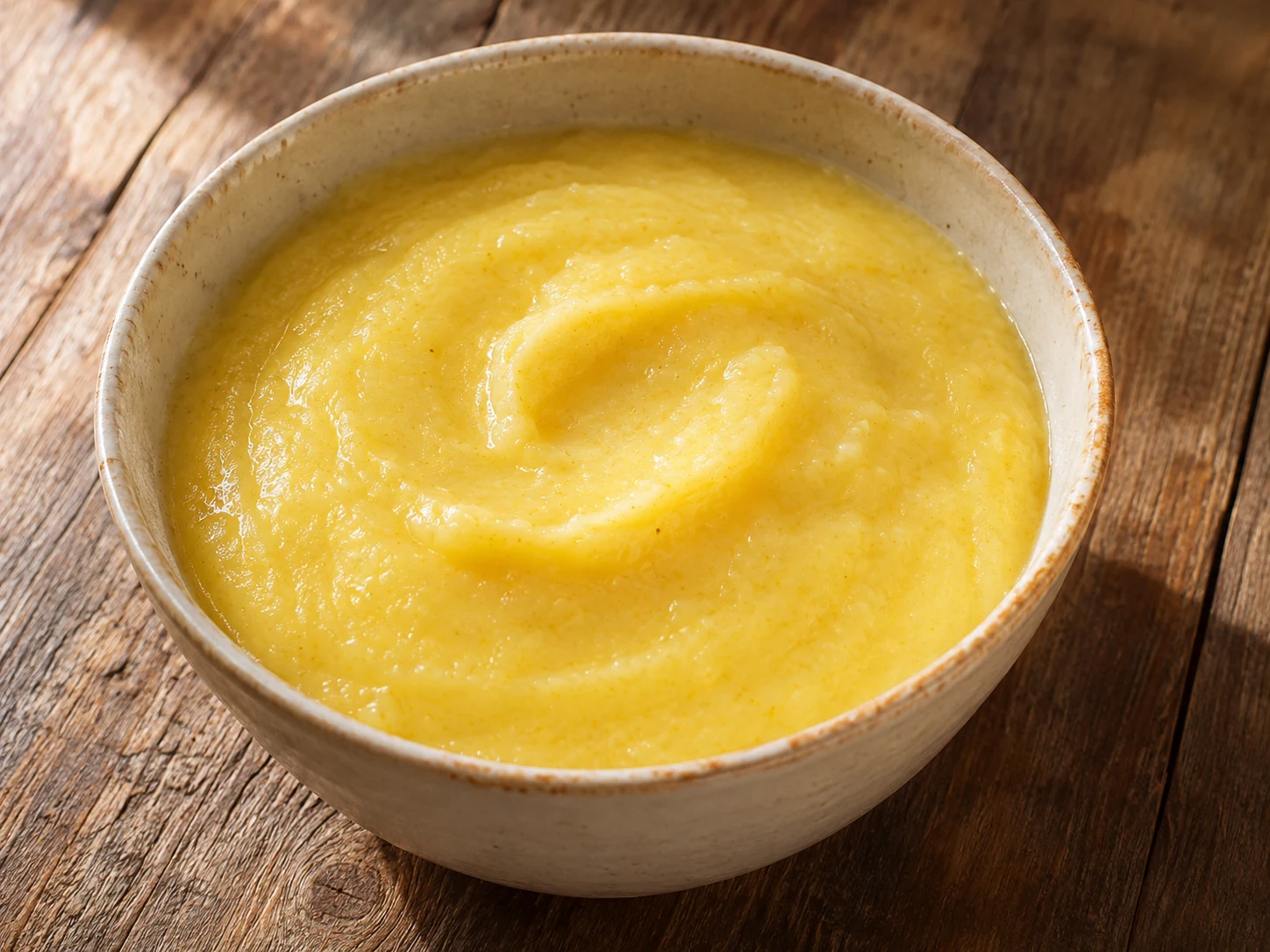
This cream combines fine maize flour, coconut milk and a little sugar.
Ingredients
- 60 g finely milled food-grade maize flour, not precooked
- 300 g unsweetened coconut milk
- 400 ml water, including 150 ml for dilution
- 45 g sugar
- 1 g salt
- 1 optional pinch cinnamon, excluded from the calculation
Preparation
Whisk 60 g maize flour into 150 ml cold water.
Stir coconut milk, weigh 300 g and heat with the remaining 250 ml water until simmering.
Stir the suspension then pour in a thin stream while whisking. Reduce heat to low.
Cook 15–20 minutes after returning to a simmer, stirring frequently and passing over the base.
At about 12 minutes, incorporate 45 g sugar and 1 g salt. Add a spoonful of hot water only if necessary to continue cooking.
Check a cooled spoonful for absence of raw taste and hard grains. Divide the still-soft cream into four bowls.
Serve warm at a comfortable temperature or cool promptly then refrigerate about 2 hours for a cold dessert.
Introduction
This cream combines fine maize flour, coconut milk and a little sugar. Maize cooks in the liquid, then thickens further as it cools. Aim for a soft cream that sits on a spoon, not a compact porridge that can be sliced. The quantities provide four dessert bowls. Serve warm or cold, with a slightly firmer texture after refrigeration.
Use finely milled food-grade maize flour, not maize starch sold as cornflour in some countries. These products hydrate differently and provide neither the same flavour nor nutrition. Use unsweetened coconut milk, stirred before measuring. This is a contemporary creation inspired by ingredients used in Angola, not presented as an attested traditional recipe or a kitchen-tested formula.
Cultural context
The FAO/WFP report mentions maize in Angola's agricultural context. This explains the grain choice without attesting this sweet coconut-milk cream. The embassy's official cultural page gives general context, not validation of proportions or name. The dessert is designed here around the contrast between cereal flavour and coconut richness. Context sources: https://www.fao.org/4/j2771p/j2771p00.htm ; https://www.embassyangolatr.org/tr/angola/cultura
Tips
Stir the whole coconut can before weighing so you do not take only fat.
Stir the cold suspension just before pouring because maize settles.
Pass the spatula into base corners without scraping burnt deposits.
Taste a cooled small spoonful to check flour cooking.
Cream thickens in the cold; remove from heat before it becomes a block.
Planning
Read both packages before starting. Coarse maize meal requires longer cooking and may remain grainy; precooked flour has different hydration. This recipe uses ordinary fine flour that needs cooking. Do not use a damp, mouldy or infested packet. Weigh sixty grams into a dry bowl. Spoon measures vary with packing and risk turning the cream into an overly thick paste.
Open coconut milk and stir the entire contents to reunite the fatty layer and watery phase. Weigh three hundred grams after mixing. A very dilute coconut drink does not offer the same richness; an extremely concentrated cream may need more water. The stated four hundred millilitres of water correspond to the basic formula, adjusted only in small spoonfuls during cooking. Do not replace some water with a sweetened liquid without reassessing sugar.
Take one hundred and fifty millilitres of cold water from this total and pour gradually over the flour. Whisk into a suspension without dry pockets. Maize does not dissolve like sugar; it is normal for flour to settle if the bowl stands still. Stir again just before adding. This cold stage prevents throwing powder straight into hot liquid, where clumps would set outside before their centres become wet.
Choose a heavy-based saucepan wide enough to stir without overflowing. Combine coconut milk and the remaining two hundred and fifty millilitres of water. Heat over medium heat until just simmering, without vigorous boiling. Pour the maize suspension in a thin stream while whisking. Reduce heat promptly as it thickens. A whisk reaches the middle, but a flexible spatula can then reach corners and base where cream may stick.
Cook fifteen to twenty minutes at a very gentle simmer, stirring often and more towards the end. Count time only after the mixture returns to temperature. Taste a little cooled on a spoon: there should be no raw flour taste or hard grains under the teeth. If the base browns, immediately transfer the unspoilt portion to another pan without scraping deposits. A burnt smell cannot be hidden with sugar or more coconut.
Add forty-five grams of sugar and one gram of salt after about twelve minutes, then finish cooking. Sugar must dissolve completely. Salt stays discreet and highlights flavour; this is not intended as a savoury cream. If stirring becomes difficult before flour is cooked, add a spoonful of hot water, mix and wait before adding more. A large quantity of water all at once makes adjustment less controllable.
At the end, cream should flow slowly off the spatula and spread without forming a block. It firms as it cools: do not seek the cold consistency over the heat. Immediately divide into four shallow bowls, alternating small ladlefuls for similar portions. If a skin is unwanted, place food-contact-safe film against the surface after intense steam dissipates. Do not use film unsuitable for hot foods.
For a cold dessert, arrange prompt cooling then refrigerate about two hours. Shallow containers cool faster than a large thick bowl. Do not stack still-hot bowls in an airtight box. For warm serving, simply wait until the temperature is comfortable for the mouth and do not serve scalding cream to a child. Stir before plating only if not yet portioned; vigorous stirring of a set cream may make it less smooth.
Serving
Serve the four bowls as they are with a small spoon. A thin mango slice can be offered alongside but is not included in the calculation. Avoid hiding the surface under a thick topping that would change the dessert's balance. Cold texture should stay creamy, even though less flowing than straight from the heat. If too firm after a first attempt, record the precise flour type before increasing water next time.
Storage
Keep cooled bowls refrigerated at 4°C or below and consume within forty-eight hours. Cover cleanly after heat dissipates and use clean spoons. Coconut milk does not allow leaving dessert at room temperature for long. If reheating is wanted, heat only the needed portion once, stirring, and ensure the centre is thoroughly hot, then let it return to a comfortable temperature. Freezing may make the cream less smooth.
Variations
An optional pinch of cinnamon may flavour the milk initially; this tiny quantity is excluded from the estimate. A plant drink other than coconut gives a different, often less rich cream, to be named differently. Replacing flour with starch requires new quantities and cooking time: do not automatically retain the sixty grams. A less sweet version may be considered without promising identical perceived sweetness, particularly served very cold.
Nutrition notes
The estimate corresponds to one of four bowls and includes all coconut milk. Its composition varies greatly by brand; the generic reference is an approximation, not analysis of the purchased product. Flour provides a cereal base without making this dessert therapeutic. Serving fruit and optional cinnamon are not included.
Conclusion
Properly cooked flour and controlled thickening give the intended texture. Recording flour weight, milk type and behaviour after cooling enables reasoned adjustment. This contemporary creation remains an editorial formula not tested in a kitchen. Enjoy your meal!
Enjoy your meal
Enjoy your meal!