Mango compote with múcua
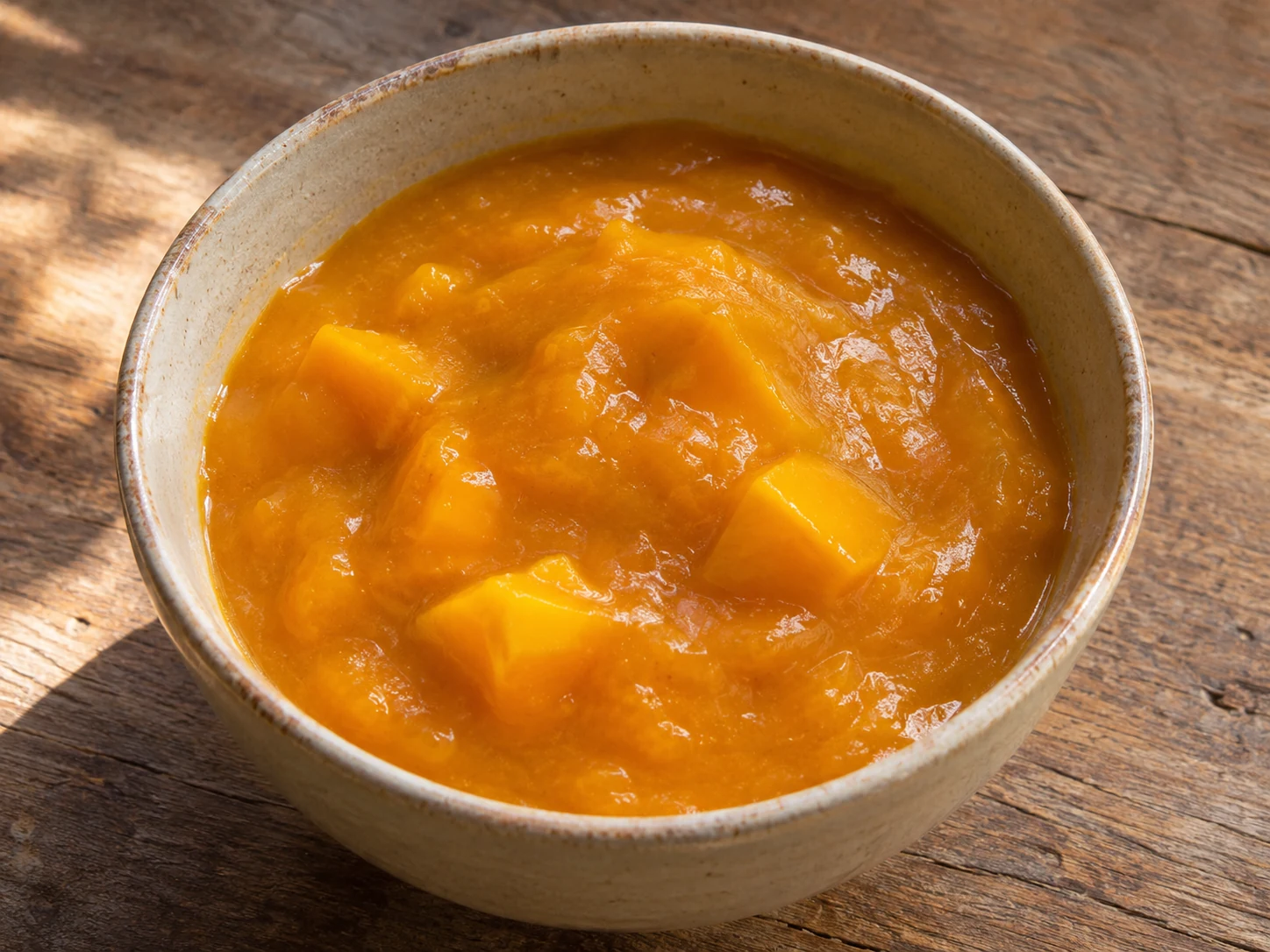
Mango makes a briefly cooked compote here, with tender pieces in lightly thickened juice.
Ingredients
- 800 g ripe mango flesh
- 20 g unsweetened food-grade múcua powder
- 25 g sugar
- 150 ml water, including 50 ml to dilute múcua
- 1 optional pinch ground ginger, excluded from the calculation
Preparation
Wash, peel and stone mangoes. Weigh 800 g flesh; cut 600 g into 2 cm dice and 200 g more finely.
Dilute 20 g múcua in 50 ml water and hydrate 10 minutes. Sieve only coarse fragments if needed.
Heat the 200 g small pieces with 25 g sugar and 100 ml water over low heat for 5 minutes.
Add the 600 g dice and simmer gently about 7 minutes, partly covered, until tender.
Stir in diluted múcua and continue 3 minutes, stirring. Adjust with a spoonful of hot water only if needed.
Taste a cooled spoonful, remove from heat and divide into four portions. Leave about 30 minutes for warm serving or cool promptly before refrigeration.
Introduction
Mango makes a briefly cooked compote here, with tender pieces in lightly thickened juice. Múcua, dried pulp of the baobab fruit, brings acidity that answers the ripe fruit's sweetness. It is diluted separately and added after the first cooking stage, distributing its flavour without dry clumps. The result is neither a preserving jam nor a firm jelly. It is eaten with a spoon, warm or chilled, in four dessert portions.
This contemporary creation inspired by Angola does not claim to be an attested traditional preparation. Choosing two ingredients does not establish a recipe's history. Eight hundred grams means flesh after removing skin and stone, so the purchase weight depends on variety. The small quantity of sugar complements already ripe mango; it does not turn green, fibrous flesh into tender, fragrant fruit.
Cultural context
The official cultural presentation of Angola's embassy gives general context on the diversity of ingredients and food practices. The FAO/WFP report offers further agricultural context. These sources do not prove this compote's historical existence or proportions. Múcua remains as the ingredient name, explained as “baobab pulp”. The dessert and method belong to this editorial work, not a recipe collected from a particular community. Context sources: https://www.fao.org/4/j2771p/j2771p00.htm ; https://www.embassyangolatr.org/tr/angola/cultura
Tips
Weigh mango after peeling and removing stones to keep the correct fruit-to-water ratio.
Take dilution water from the stated total instead of adding an extra hundred and fifty millilitres.
Sweetened drink powder does not have the same composition as plain pulp.
Taste a cooled spoonful before changing sugar.
This low-sugar compote is not a shelf-stable preserve.
Planning
Choose fragrant mangoes that yield slightly to pressure, without leaking juice or alcoholic smell. Green skin can belong to a ripe variety: also consider texture and smell. Wash fruit before cutting to avoid carrying dirt from skin to flesh. Use a stable board and clean knife. Cut either side of the stone, remove skin and carefully recover flesh from the sides. Weigh ready-to-cook flesh, not waste.
Dice about six hundred grams into two-centimetre pieces and cut the remaining two hundred grams smaller. This size difference gives one portion that breaks down and another still recognisable. If the mango has long fibres, remove as many as possible with a knife rather than relying on final blending. A completely blended compote is possible, but different in character. Do not use grated stones or thick skin to reach the specified weight.
Choose plain food-grade múcua powder without added sugar or drink mix. Check there are no shell or seed pieces. This is already prepared pulp; the recipe does not describe processing whole harvested fruit. Mix the twenty grams with fifty millilitres of water taken from the stated one hundred and fifty. Add a little water first, work with a spoon, then thin gradually. Hydrate ten minutes. If coarse fibres remain, sieve without forcing hard fragments through; do not discard all the fine pulp.
Put small mango pieces in a heavy-based pan with the twenty-five grams of sugar and remaining one hundred millilitres of water. Heat gently five minutes, stirring to start releasing juice. Add larger dice and continue about seven minutes at a gentle simmer, partly covered. Time depends on ripeness: a knife tip should enter easily. Vigorous boiling shreds pieces and splashes sugary juice. Reduce heat before stirring if the pan splashes.
Stir in diluted múcua and continue three minutes over low heat, scraping the bottom with a spatula. The powder may thicken juice; it does not automatically make a jelly. If the compote looks dry, add a spoonful of hot water and reassess without drowning it. If too runny, leave uncovered one minute, stirring, remembering it thickens slightly when cool. Do not add raw starch to repair a texture that has not yet rested.
Take a small spoonful and let it cool to warm before tasting. A piping-hot preparation makes the balance between sweetness and acidity difficult to judge. Múcua acidity should remain present without dominating mango aroma. Do not keep adding sugar while hot to mask every acidic impression. Remove from heat as soon as flesh is tender and juice distributed. Rest about thirty minutes for warm serving, arranging prompt cooling if destined for the refrigerator. Resting cannot replace cooking for still-hard mango.
Serving
Divide among four bowls, distributing pieces and juice equally. For chilled serving, allow to cool then refrigerate; do not leave a large lukewarm bowl on the table for hours. A spoonful of plain yoghurt can be offered separately, but adds milk and is not included in the calculated values. The compote stands alone without crushed biscuits or sprinkled sugar. Stir gently before serving if a little liquid has separated.
Storage
Keep cooled compote in a clean, closed container in the refrigerator at 4°C or below, and consume within forty-eight hours. Use a clean spoon each time. Do not regard acidity as sterilisation: this preparation is not intended for preserving jars or room-temperature storage. For longer keeping, freeze small portions after cooling; texture may become softer after thawing.
Variations
A pinch of ground ginger can flavour cooking; optional and tiny, it is excluded from the calculation. Very sweet mango may allow omitting sugar, but the energy value changes. Another acidic fruit powder cannot replace múcua weight for weight: acidity, fibre and thickening power differ. Make a smooth version by blending the cooked compote after slight cooling and following the appliance instructions for hot foods. It does not constitute a second recipe in the book.
Nutrition notes
The estimate covers one quarter of the preparation. The baobab reference corresponds to food-grade dried pulp and does not describe every powder brand. Actual fibre varies with sieving and product. Fruit does not turn this dessert into a treatment, and no therapeutic benefit is claimed. Accompaniments and the optional pinch of ginger are not included.
Conclusion
Success means tender dice, evenly distributed juice and clear but balanced acidity. Recording mango variety and ripeness is more useful than seeking identical cooking time each time. This contemporary creation is an editorial proposal not tested in a kitchen. Enjoy your meal!
Enjoy your meal
Enjoy your meal!