Creamy millet with red beans and onions
This dish combines millet grains, already-cooked red beans and slowly softened onions.
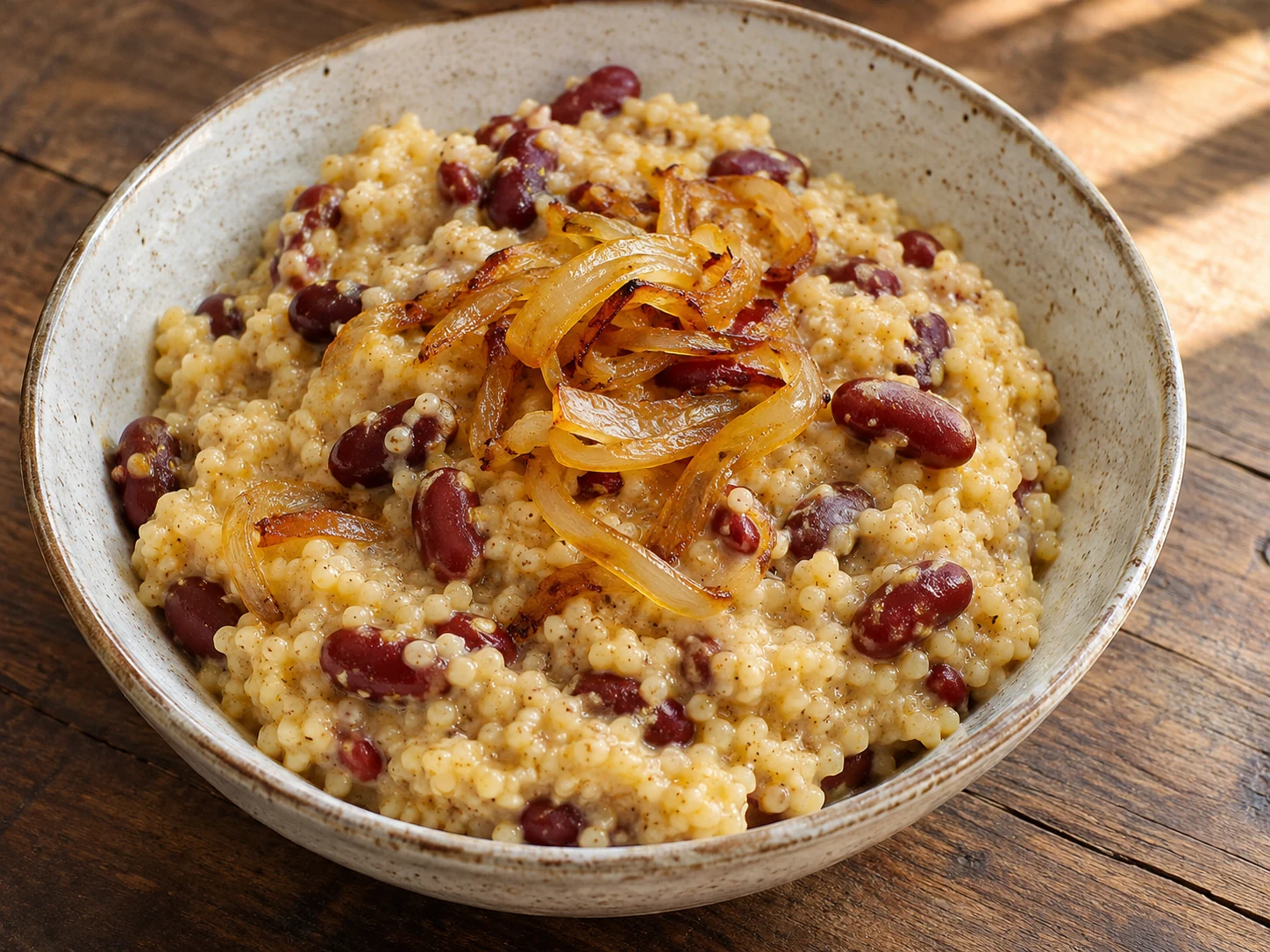
Ingredients
- 250 g dry hulled millet grains
- 500 g cooked ready-to-use red beans, drained
- 300 g peeled onions
- 6 g peeled garlic
- 30 g peanut oil
- 1 litre water, adjusted to millet
- 2 g salt
- Optional pepper in a tiny quantity
Preparation
Check millet and rinse if recommended by the packet, then drain. Rinse already-cooked beans if necessary and drain.
Slice onions. Soften in 20 g oil over medium-low heat about 25 minutes, using a little reserved water if necessary. Add chopped garlic in the last minute.
Heat remaining 10 g oil in a saucepan and stir millet 1 minute. Add 800 ml water and salt.
Gently simmer partially covered according to the packet, often 20 to 25 minutes. Keep 200 ml water hot in reserve.
Mash one-third of beans with a few spoonfuls of hot water. When millet is tender, add this cream, whole beans and half the onions.
Simmer 5 minutes until fully hot, gradually adding water as needed for a soft texture. Pepper if desired.
Rest off heat 2 minutes, divide among four bowls and top with reserved onions. Serve immediately.
Introduction
This dish combines millet grains, already-cooked red beans and slowly softened onions. Creaminess comes from gently cooking millet and mashing some beans, without cream or cheese. Grains remain noticeable in a soft preparation moist enough to loosen beneath a spoon. Four servings form a meal base, accompanied by vegetables according to appetite and the table’s arrangement.
The formula is a contemporary creation inspired by grains and pulses present in Angolan diets; it is not described as an attested regional tradition. Pearl millet is known in the Angolan context as massango, distinct from sorghum or massambala. This recipe uses identifiable hulled food-grade millet, without promising identical absorption for every variety. It is neither a millet-flour paste nor funge: grains cook directly in water.
Cultural context
The FAO/WFP report on Angola places grains and pulses in agricultural context; the embassy’s cultural page provides a general framework. These references attest neither this creamy millet nor its proportions. Distinguishing massango and massambala helps identify products without assigning this combination a provincial origin or demonstrated tradition.
https://www.fao.org/4/j2771p/j2771p00.htm https://www.embassyangolatr.org/tr/angola/cultura
Tips
Buy millet grains, not flour.
Use already-cooked ready-to-use red beans.
Cook onions gently without burning.
Keep some beans whole.
Adjust fluidity just before serving.
Planning
Buy hulled millet grains intended for human consumption. Weigh the two hundred and fifty grams dry. Read cooking instructions and remove possible debris before a quick rinse if recommended. Flour does not replace these grains in the saucepan. Nutritional calculation may use a documented approximate reference, but this composition approximation does not change the product to buy or the culinary process.
Use only cooked ready-to-use red beans, such as plain canned beans. Five hundred grams is drained weight. This recipe does not cover dried beans or permit raw beans. Check the can’s condition, product description and instructions after opening. Rinse if preserving liquid is salty, then drain sufficiently to keep the dish’s water quantity controllable.
Peel onions and cut even half-rings, neither very thick nor tiny fragments. Three hundred grams means edible weight after peeling. In a sufficiently wide pan they should spread without a compact mound. Chop garlic separately and add late. The principal intended taste is onion made sweet through cooking, not a heavily browned or artificially sweetened garnish.
Heat twenty grams of oil in that pan, add onions and cook over medium-low heat about twenty-five minutes. Stir regularly, bringing edges towards the centre. If the base dries and starts sticking, add a spoonful of water from the reserve and reduce heat. Onions should soften and turn lightly golden without black spots. Add garlic in the final minute to preserve aroma and prevent bitterness.
Meanwhile heat remaining ten grams of oil in a heavy-based saucepan. Add drained millet and stir one minute without trying to toast strongly. Pour in eight hundred millilitres of water and the two grams of salt. Bring to a gentle simmer, partially cover and cook gently according to the packet, often twenty to twenty-five minutes. Keep remaining two hundred millilitres of water hot for adjustments and thinning beans.
Mash about one-third of cooked beans in a bowl with a few spoonfuls of hot water. Aim for an imperfect thick cream, not a sieved purée. This part binds the millet’s liquid. Keep other beans whole for contrast. Do not use canned liquid as the only cooking water without knowing its salt and composition: it would substantially vary seasoning and intended thickness.
When millet becomes tender, add mashed beans, whole beans and half the onions. Mix gently and simmer five minutes to heat pulses completely. Loosen with small additions of hot water if the preparation holds as a block. It should spread slowly when a spoon passes through. A still-hard grain first needs longer cooking, rather than just more stirring or extra oil.
Taste and add optional pepper. Remove from heat and rest only two minutes before serving; millet continues thickening while waiting. Scatter reserved onions over servings rather than burying them all. If the base sticks, transfer the upper part without scraping brown layers. Onions cook alongside millet: this arrangement limits total time without assuming their cooking times are exactly identical.
Serving
Serve in four deep plates or warm bowls with a spoon suited to the texture. Check every portion receives whole beans and an onion garnish. Tomato salad or separately cooked greens add vegetables excluded from nutritional values. Avoid a long wait on a warming plate, which dries edges while the centre stays dense. If service is slightly delayed, loosen with a few spoonfuls of hot water and briefly heat thoroughly again, without a strong boil or counting this texture adjustment as a different recipe.
Storage
Cool leftovers rapidly in small shallow containers, refrigerate at 4 °C or below and eat within forty-eight hours. Also observe beans’ own limit if their can was already open. Reheat only once until thoroughly hot in the centre, adding water in small amounts to loosen thickened millet. Do not keep a large pan merely lukewarm for several hours. Topping onions can be stored separately if that simplifies reheating.
Variations
Cooked white beans give a different-coloured version, to rename and recalculate. Sorghum grains need their own hydration and timing; they do not directly replace millet under the same instructions. Coconut milk would bring different richness and does not belong to this cream-free formula. To retain more distinct grains, mash slightly fewer beans, accepting weaker binding. A tiny pinch of pepper is optional. Removing onions would change the dish’s very character; do not present that omission as an identical version.
Nutrition notes
Millet provides the grain base and beans contribute protein and fibre. Creamy texture does not imply dairy, though all oil is still counted. Estimates concern four servings without vegetable accompaniments. Using a flour reference to approximate millet grains is a calculation limitation explained in the method, not an analysis of the dish or a guarantee of perfect equivalence.
Conclusion
The aim is tender grains in a soft binder, recognisable beans and sweet onions. Adjust water to actual products. This editorial formula is not presented as kitchen-tested. Enjoy your meal!
Enjoy your meal
Enjoy your meal!