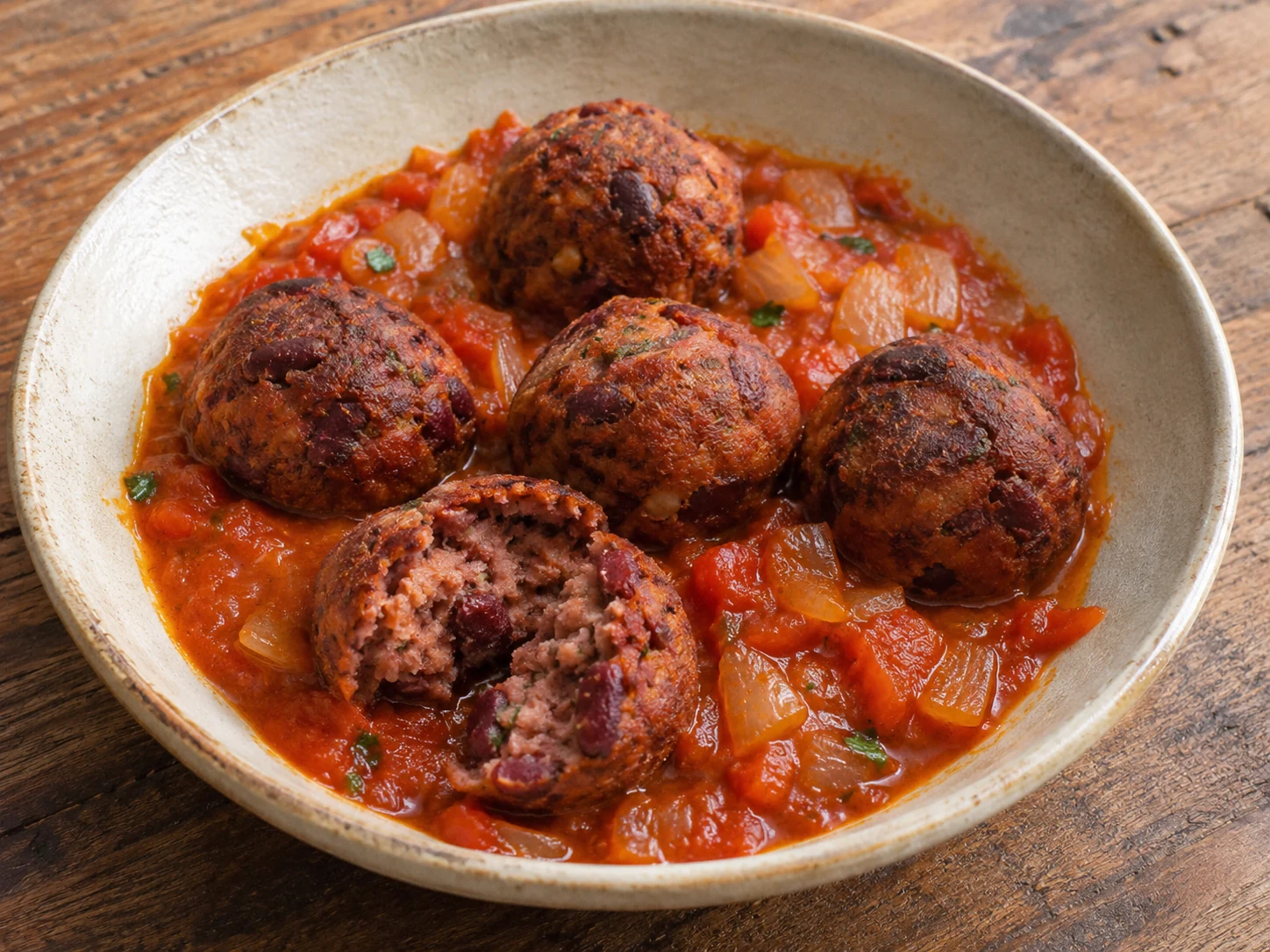
Red bean balls with tomato sauce
These balls use red beans that are already cooked, drained and coarsely mashed.
Ingredients
- 600 g cooked ready-to-use red beans, drained
- 1 egg, about 50 g without shell
- 60 g T55 wheat flour
- 100 g onion
- 6 g peeled garlic
- 600 g unseasoned crushed tomatoes
- 25 g peanut oil
- 3 g salt
- Optional pepper in a tiny quantity
Preparation
Rinse cooked beans if necessary, drain, dry and coarsely mash.
Chop onion. Soften half in 10 g oil for 6 to 8 minutes, then cool to lukewarm.
Mix beans, lukewarm onion, beaten egg, flour and 1 g salt. Rest 15 minutes in the refrigerator.
Preheat oven to 200 °C. Form sixteen balls, place on a tray and brush with 5 g oil.
Bake about 25 minutes, turning halfway, until surface sets and centre is thoroughly hot with no liquid egg.
Meanwhile soften the other onion half in remaining 10 g oil. Add chopped garlic for 1 minute, tomatoes and remaining 2 g salt.
Simmer sauce uncovered 20 minutes. Pepper if desired, divide sauce and set balls on top just before serving.
Introduction
These balls use red beans that are already cooked, drained and coarsely mashed. An egg and a little flour bind them; baking sets their surface before serving with tomato sauce. They do not seek to imitate minced meat exactly. The centre stays soft, with some bean fragments, and sauce accompanies without dissolving the shape. Sixteen small balls make four servings of four pieces.
This is a contemporary creation inspired by pulses and tomatoes used in Angolan diets. It is not an attested traditional recipe and is not presented as kitchen-tested. Success depends more on drying beans and resting the mixture than on complex spices. A separately reduced sauce is preferable to boiling the balls in a large volume of liquid.
Cultural context
The institutional sources cited document Angolan agricultural and cultural context, not these balls or their egg-and-flour binder. The FAO/WFP report helps place pulses in that context; the embassy page does not prove this formula’s origin. It is a contemporary editorial creation with no claim to attested tradition.
https://www.fao.org/4/j2771p/j2771p00.htm https://www.embassyangolatr.org/tr/angola/cultura
Tips
Use only cooked ready-to-use red beans.
Dry beans before mashing.
Chop the onion for the balls finely.
Respect resting time before shaping.
Avoid long simmering in the sauce.
Planning
Use only cooked, ready-to-use red beans, such as plain canned beans. Six hundred grams are weighed after draining. This recipe does not describe cooking dried beans or allow raw beans in the mixture. Check the label, the can’s condition and storage instructions after opening. Rinse if the liquid is salty, then let beans drain in a sieve.
Spread beans on a clean cloth or absorbent paper without crushing immediately. Abundant remaining water forces you to add too much flour and produces compact balls. Gently pat dry, then mash in a bowl with a fork or potato masher. Keep some small fragments but avoid large whole beans that would create cracks during shaping. A blender may make the mixture excessively sticky; it is not essential.
Chop onion very finely and divide into two equal parts. Soften the first half in ten grams of oil for six to eight minutes. Cool to lukewarm before mixing with beans: a piping-hot addition would start coagulating the egg. Large raw onion pieces would weaken the balls and might stay hard after cooking. Chop garlic separately and reserve for sauce, where it will distribute better.
Add lukewarm onion, beaten egg, flour and one gram of salt to beans. Mix with a spoon without kneading at length. Rest fifteen minutes in the refrigerator so flour absorbs moisture. The mixture should roll between slightly damp hands. If sticky, wet hands again before adding flour; an extra handful would change texture and nutritional values.
Divide into sixteen similarly sized portions. Roll without compressing excessively and set on a baking-paper-lined tray. Use five grams of oil to lightly brush their surface. Space between pieces helps heat circulate. Preheat oven to two hundred degrees and bake about twenty-five minutes, carefully turning halfway with a spatula rather than gripping with tongs.
While the balls rest or bake, soften the second onion half in the remaining ten grams of oil. Add garlic for one minute, then crushed tomatoes and remaining two grams of salt. Simmer uncovered twenty minutes, stirring the base. Use ripe tomatoes or unseasoned canned tomatoes; an already salted preparation would alter the calculation. Sauce should coat a spoon without becoming a dry paste.
The oven should produce a slightly firm surface, not a very dark crust. Check that a ball opened in the centre has no liquid egg and is thoroughly hot. Times are guides: larger pieces or a weak oven need adjustment. If browning too quickly, reduce heat a little and continue instead of removing them with an insufficiently set centre.
Put hot sauce in a dish or plates, then set balls on top. One minute of contact is enough to connect the flavours. Long simmering in tomato would let flour absorb liquid and might break them apart. If a ball cracks during transfer, serve with a wide spatula and minimise handling; do not try to join it back together in boiling sauce.
Serving
Allow four balls per person and divide sauce equally. Greens or crunchy salad complete the meal. Rice can be offered for a larger appetite but is not included in this recipe’s ingredients or values. For family service, choose a dish wide enough to keep pieces in one layer. Do not stack balls under all the sauce: weight and moisture would flatten the lower pieces. Provide a spoon for sauce and a spatula for balls.
Storage
Store balls and sauce separately after rapid cooling. Refrigerate at 4 °C or below and eat within forty-eight hours. Beans opened before this recipe remain subject to their own storage limit; cooking does not reset it. Reheat only once until thoroughly hot at the centre, then combine at serving. Moist sauce gradually softens balls when stored together.
Variations
Cooked white beans can produce a lighter variation, to be renamed and nutritionally reassessed. Another flour does not necessarily absorb the same water; do not claim automatic equivalence, especially for starch. Egg genuinely contributes to binding and omitting it requires fresh development. A tiny optional pinch of pepper can season sauce. For a drier version, serve balls and tomato side by side without changing quantities. Pan-cooking would require different oil management and is not the process described here.
Nutrition notes
Beans contribute protein and fibre; flour and egg structure the balls. The recipe contains wheat, gluten, egg and peanut oil, to consider according to individual allergies. Values are estimates for four servings, without rice or salad. They are neither a dietary prescription nor a laboratory analysis.
Conclusion
Soft but manageable balls and reduced sauce are the two intended guides. Adjust oven to the observed result without claiming a previous trial. Enjoy your meal!
Enjoy your meal
Enjoy your meal!