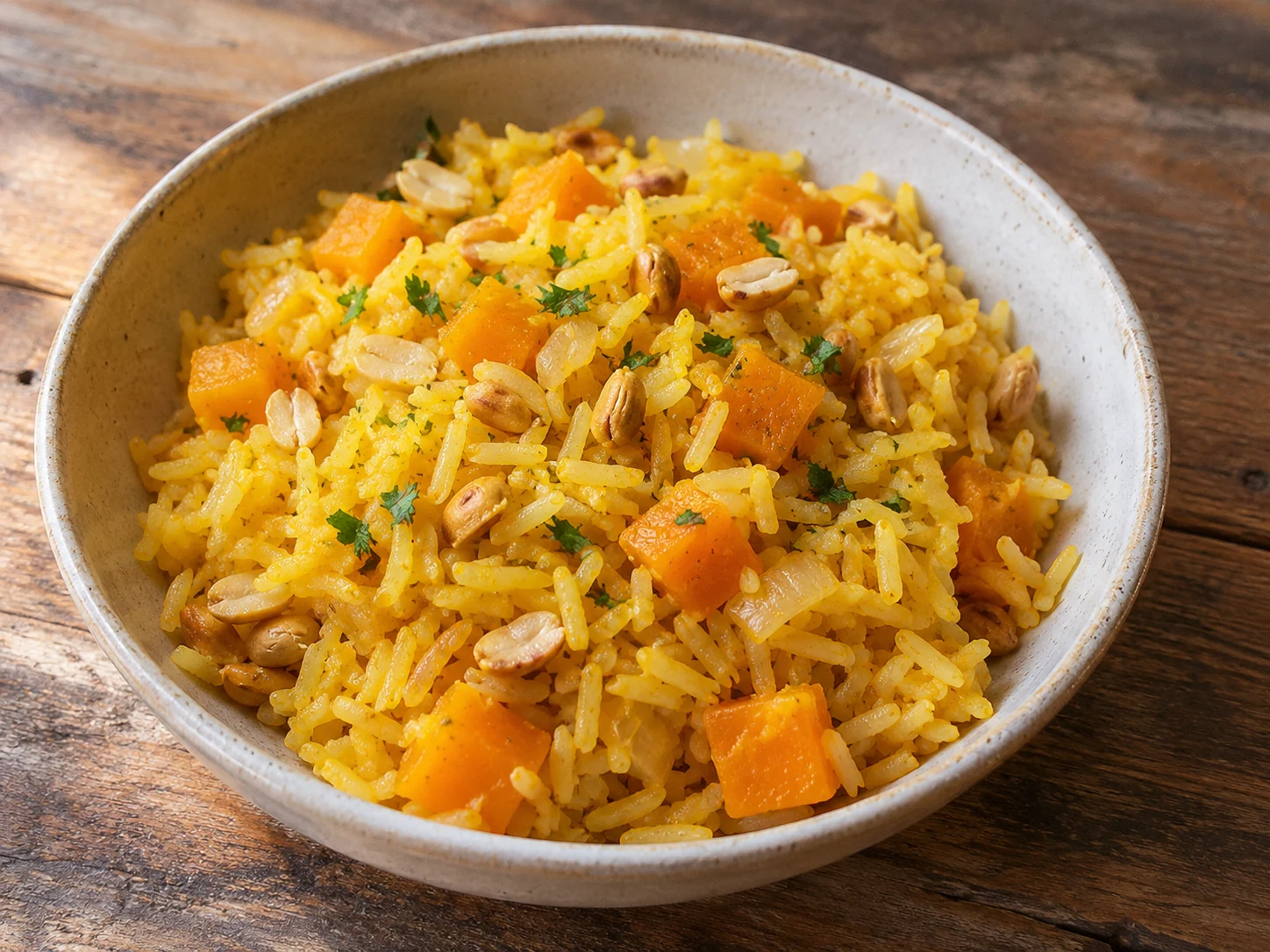
Golden rice with pumpkin and peanuts
This rice owes its golden colour to cooked pumpkin rather than colouring.
Ingredients
- 250 g dry long-grain white rice
- 600 g peeled pumpkin flesh
- 80 g roasted peanuts with no added salt
- 120 g onion
- 6 g peeled garlic
- 25 g peanut oil
- 450 ml water, adjusted to the rice
- 3 g salt
- Optional pepper in a tiny quantity
Preparation
Preheat oven to 200 °C. Cut pumpkin into 2 cm cubes, coat with 15 g oil and spread on a tray.
Roast about 25 minutes, turning halfway, until tender.
Chop onion and garlic. Soften onion in the remaining 10 g oil for 8 minutes, then add garlic for 1 minute.
Add rice, rinsed if necessary and drained, stir 1 minute, then pour in water and salt.
Cover and simmer gently according to the packet, usually 12 to 15 minutes, adjusting water if grains remain firm.
Rest off heat 5 minutes, covered, then separate grains. Gently mix with hot pumpkin, crushing only a few cubes.
Fold in half the chopped peanuts. Pepper if desired, divide among four plates and top with remaining peanuts.
Introduction
This rice owes its golden colour to cooked pumpkin rather than colouring. Some cubes break down during mixing while others remain recognisable. Roasted peanuts provide a crunchy contrast and an aroma distinct from the sweet vegetable. The recipe is a contemporary creation inspired by products present in Angolan diets; it does not reproduce an attested traditional preparation. The quantities give four servings, eaten hot on their own for a light meal or with additional vegetables.
Pumpkin and rice do not begin cooking together. Roasting one and cooking the other separately controls two different textures before combining them without turning the grains into purée. Golden describes an intended visual result, not a guarantee of identical colour with every variety. A pale pumpkin will yield lighter rice even when correctly cooked.
Cultural context
The FAO/WFP report on Angola provides agricultural context for rice and peanuts. The embassy’s cultural page supplies general context. These institutional sources establish neither the historical existence of this pumpkin combination nor the proposed proportions. The recipe is an original contemporary creation, with no provincial attribution or claim to attested tradition.
https://www.fao.org/4/j2771p/j2771p00.htm https://www.embassyangolatr.org/tr/angola/cultura
Tips
Weigh pumpkin after peeling.
Space cubes apart on the tray.
Adjust water to the chosen rice.
Lift grains without crushing.
Keep half the peanuts for topping.
Planning
Choose a piece of pumpkin with firm orange flesh. The six hundred grams are weighed after removing skin, seeds and fibres. Very fibrous pumpkin mixes less pleasantly with rice. Set it on a stable board, divide before peeling if necessary and keep fingers out of the knife’s path. Cut cubes of about two centimetres to limit uneven cooking.
Use ordinary long-grain white rice, weighed dry. Brown and precooked rice need different times and water quantities. Read the packaging before heating the saucepan. Four hundred and fifty millilitres of water is a starting point for absorption cooking; pan width and lid affect evaporation. Keep a little hot water available for adjustments near the end.
The peanuts are already roasted, with no added salt. Buy them in clean packaging and reject any batch with a rancid smell or abnormal appearance. Coarsely chop with a knife or mortar without grinding into powder. They must remain noticeable after mixing. Peanut is a major allergen: disclose its presence and do not share a contaminated utensil with food intended for someone allergic.
Preheat the oven to two hundred degrees. Coat pumpkin cubes with fifteen grams of oil taken from the total. Spread in a single layer on a tray with small spaces between pieces. An overcrowded tray retains steam and produces moist pumpkin rather than a lightly roasted surface. Cook about twenty-five minutes, turning halfway; a knife tip should enter without marked resistance.
Meanwhile, chop onion and garlic separately. In a heavy-based saucepan, soften onion in the remaining ten grams of oil for eight minutes over medium heat. Stir and reduce heat if edges colour before the centre softens. Add garlic for just one minute. This late addition prevents burning and bitterness that would mask the pumpkin’s sweetness.
Rinse rice if recommended by its manufacturer, then drain. Add to the onion and stir one minute. Add measured water and salt, bring to a gentle simmer, cover and reduce heat. Follow the packet time, often twelve to fifteen minutes. Do not stir continually: grains break and release more starch, which is not the effect intended here.
Check near the end. If rice is firm and the base dry, add two spoonfuls of hot water, cover and extend cooking a little. If grains are tender but wet, briefly let steam escape uncovered over very low heat. Then remove from heat and rest five minutes, covered. Separate with a fork rather than pressing with a heavy spoon, to retain distinct grains.
Add hot pumpkin by gently lifting the rice. Deliberately crush a few cubes against the side to distribute their colour, but keep most whole. Fold in half the peanuts, taste and add optional pepper. Scatter the remaining peanuts over portions at the last moment. Holding them a long time in a covered pan softens them; this is why they do not cook with rice from the start.
Serving
Serve in a wide shallow dish that displays pumpkin cubes and peanut topping. Divide the rice first, then check every portion receives vegetables and crunchy fragments. Cucumber salad or separately cooked greens can complete the meal; they are not included in calculated values. Do not drown the dish in thick sauce, which would erase the texture contrast. If serving several dishes, take smaller portions without artificially changing the stated number of servings for this formula.
Storage
Cool leftover rice promptly in shallow containers and refrigerate at 4 °C or below; eat within twenty-four hours. Do not leave the pan lukewarm for hours. Store topping peanuts separately to limit softening. Reheat only once until fully hot in the centre, with a small spoonful of water if grains have firmed up. Storage does not exactly restore the crunch of the initial serving.
Variations
Another firm-fleshed food-grade squash can replace pumpkin, adjusting cooking and accepting a different colour. Roasted pumpkin seeds produce another variation, but are not nutritionally equivalent to peanuts and require a new name. For more heat, a trace of pepper can be added to each plate rather than the whole pan. Do not replace white rice with brown rice without reviewing water and time. Coconut milk would produce richer, wetter rice; it is not part of this version.
Nutrition notes
Rice provides the starchy base, and peanuts supply fats and protein among other nutrients. Pumpkin increases vegetables without replacing the other components of a meal. Values remain estimates per serving, not analyses of the actual dish served. Accompaniments and any quantity changes must be assessed separately; the recipe makes no therapeutic promise.
Conclusion
The intended result combines tender grains, soft pumpkin cubes and a crunchy topping. Adjust cooking to the actual products. This editorial formula is not presented as kitchen-tested. Enjoy your meal!
Enjoy your meal
Enjoy your meal!