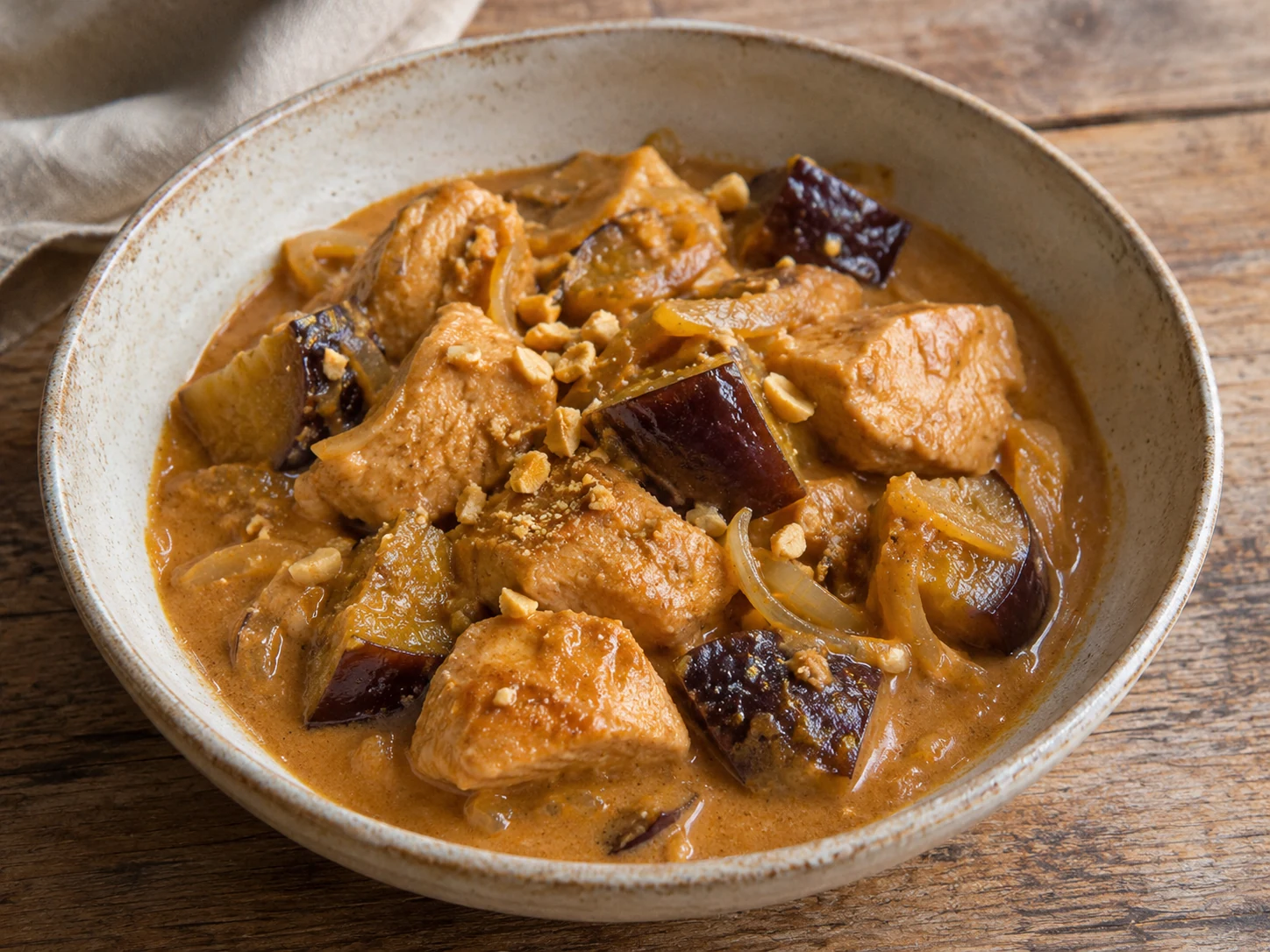
Turkey with aubergine and ginguba
Ginguba, the name for peanuts, turns tomato and aubergine juices into a creamy sauce without cream here.
Ingredients
- 700 g raw turkey breast fillet
- 700 g trimmed aubergines
- 400 g ripe tomatoes
- 180 g onion
- 10 g peeled garlic
- 80 g pure unsweetened peanut paste
- 20 g sunflower oil
- 450 ml water
- 3 g salt
- 1 optional pinch gindungo
Preparation
Cut turkey into 3 cm pieces and keep chilled. Cut aubergines into 3 cm cubes, slice onion and chop garlic.
Heat oil, brown turkey for 4 minutes in two batches and set aside without trying to cook completely.
Soften onion for 7 minutes, add garlic then tomatoes and cook for 8 minutes.
Add aubergines and 300 ml water. Cover and cook gently for 15 minutes, stirring once.
Dilute peanut paste in the remaining 150 ml water, warmed. Incorporate into sauce with 2 g salt.
Return turkey and juices. Simmer for 10 to 15 minutes until aubergines are tender and poultry pieces reach 74 °C at the centre.
Adjust fluidity, remaining salt and optional gindungo. Serve after 3 minutes resting without reducing until meat dries.
Introduction
Ginguba, the name for peanuts, turns tomato and aubergine juices into a creamy sauce without cream here. Turkey is introduced in two stages: brief browning, then final cooking in the already-developed sauce. This allows aubergines to soften without subjecting breast fillets to long simmering that would dry them. Pieces retain a clear size, and sauce should flow between them rather than form a compact paste.
Quantities yield four main-course portions, supplemented according to appetite with some funge or plain rice. The recipe contains no integrated starchy food; the accompaniment remains a separate choice excluded from nutritional estimates. The intended flavour is unsweetened peanut, supported by tomato and onion. Gindungo remains an optional touch. It is not intended to mask rancid peanut paste or burnt aubergine.
Cultural context
This contemporary creation is inspired by products and combinations of the Angolan table; it is not an attested traditional recipe. The proportions and method are an original editorial proposal, not presented as kitchen-tested. The institutional references below illuminate agricultural or cultural context without documenting this exact formula or assigning it a provincial origin.
https://www.fao.org/4/j2771p/j2771p00.htm https://www.embassyangolatr.org/tr/angola/cultura
Tips
Dilute ginguba before incorporation.
Do not confuse browned turkey with cooked turkey.
Wait until aubergines begin yielding before returning meat.
Check 74 °C at the centre.
Declare peanut allergen and avoid improvised substitutions.
Planning
Choose plain turkey breast fillets without industrial marinade. Weigh seven hundred grams of meat after removing visible sinewy parts. Cut into roughly three-centimetre pieces, similar enough to cook together. Refrigerate until searing and do not wash under running water. Wash hands, knife and board after contact with raw poultry. The plate holding merely browned turkey must not receive the finished dish without washing, because this meat is not yet completely cooked.
Aubergines should be firm, with shiny skin and no damaged spongy areas. Remove stalks, then weigh seven hundred grams. Keep skin if thin: it helps cubes hold shape. Very thick skin may be removed in alternate strips. Cut roughly three-centimetre cubes and prepare shortly before cooking to limit browning. This formula calls for neither presalting nor separate frying. Those operations would change released water and especially absorbed oil quantity.
Check that peanut paste contains only peanuts without added sugar. If oil has risen in the jar, stir before weighing eighty grams. Salted paste requires reconsidering final salt. Peanuts are a major allergen: declare their presence, check products and do not present another seed paste as an automatically safe solution. Garlic is finely chopped and tomatoes cut in small dice so they distribute without needing blending.
Use a deep sauté pan with a lid, wide enough to hold cubes without crushing. Heat twenty grams of oil and quickly brown turkey in two batches. Four minutes in total gives light colour; this stage does not guarantee centre cooking. Reserve meat with juices it releases. Then soften onion for seven minutes, loosening brown cooking juices. Briefly add garlic, then tomatoes for eight minutes. If the bottom is black, remove that deposit rather than mixing it into sauce.
Add aubergines and three hundred millilitres of water. Cover and cook for fifteen minutes at a gentle simmer. Steam and tomato moisture begin softening flesh; aubergine must not bathe in a large quantity of oil. Stir once with a wide spatula and check the bottom. Cubes may look bulky initially, then collapse slightly. If still very firm, continue for a few minutes before returning turkey: lean meat should not wait for their softening through a long cooking period.
Warm the remaining one hundred and fifty millilitres of water and gradually incorporate into peanut paste in a bowl. Start with a few spoonfuls, stir until smooth, then add the rest. Pour into the pan, stirring gently. This dilution limits clumps and enables thickness control. Add two grams of salt, then return turkey and juices. Maintain a gentle boil for ten to fifteen minutes without allowing sauce to set on the bottom. A spoonful of hot water may be added if it thickens too early.
Check several thick pieces with a clean thermometer: turkey must reach 74 °C at the centre. Check aubergine is tender all the way beneath the skin. If meat is ready but sauce too thin, remove it during brief reduction, then return. If everything is ready, do not continue out of habit: breast dries despite sauce. Taste before the final gram of salt and pinch of gindungo, then rest off heat for three minutes. Ginguba thickens a little more as it cools.
Serving
Divide among four deep plates, ensuring everyone receives as much turkey as aubergine. Take sauce from the bottom without crushing cubes. A small plain accompaniment allows peanuts to be tasted without competition; offer separately. Fresh tomato salad may provide contrast, but avoid a second peanut sauce in the same meal. If serving is delayed, cool and refrigerate rather than holding over heat for a long time and reducing juices. When reheating, add a little water and check piece centres become thoroughly hot again.
Storage
Quickly divide leftovers among shallow containers, then refrigerate at 4 °C or below. Eat within 48 hours. Reheat the required quantity only once, until the entire portion is thoroughly hot at the centre. Do not keep the dish lukewarm in the saucepan for a long time.
Variations
Chicken breast can replace turkey with the same 74 °C centre check, but the title must identify the meat used. Courgettes cook faster than aubergines and release more water: they cannot be substituted without adjusting order and reduction. Coarser peanut paste makes grainy sauce, which is acceptable if the product remains pure. For a peanut-free version, build another sauce and check every allergy requirement; simply removing paste leaves a liquid without its intended binding.
Nutrition notes
Values are estimates per serving for four people, without the suggested accompaniments. Calculation uses the stated edible weights and Ciqual reference foods. All oil and salt are counted; water and very small optional amounts of pepper or gindungo are excluded. Brands, meat fat content, cooking losses and actual yield change the result. If energy is missing from the table, it is estimated using 4 kcal/g protein, 4 kcal/g carbohydrate, 9 kcal/g fat and 2 kcal/g fibre. Pure paste is represented by the generic peanut butter or peanut paste reference; its composition may differ from the product used, especially salt and fat.
Conclusion
Aim for tender meat, a bound but flowing sauce and still-identifiable pieces. Adjust seasoning after cooking before dividing into four portions. Enjoy your meal!
Enjoy your meal
Enjoy your meal!