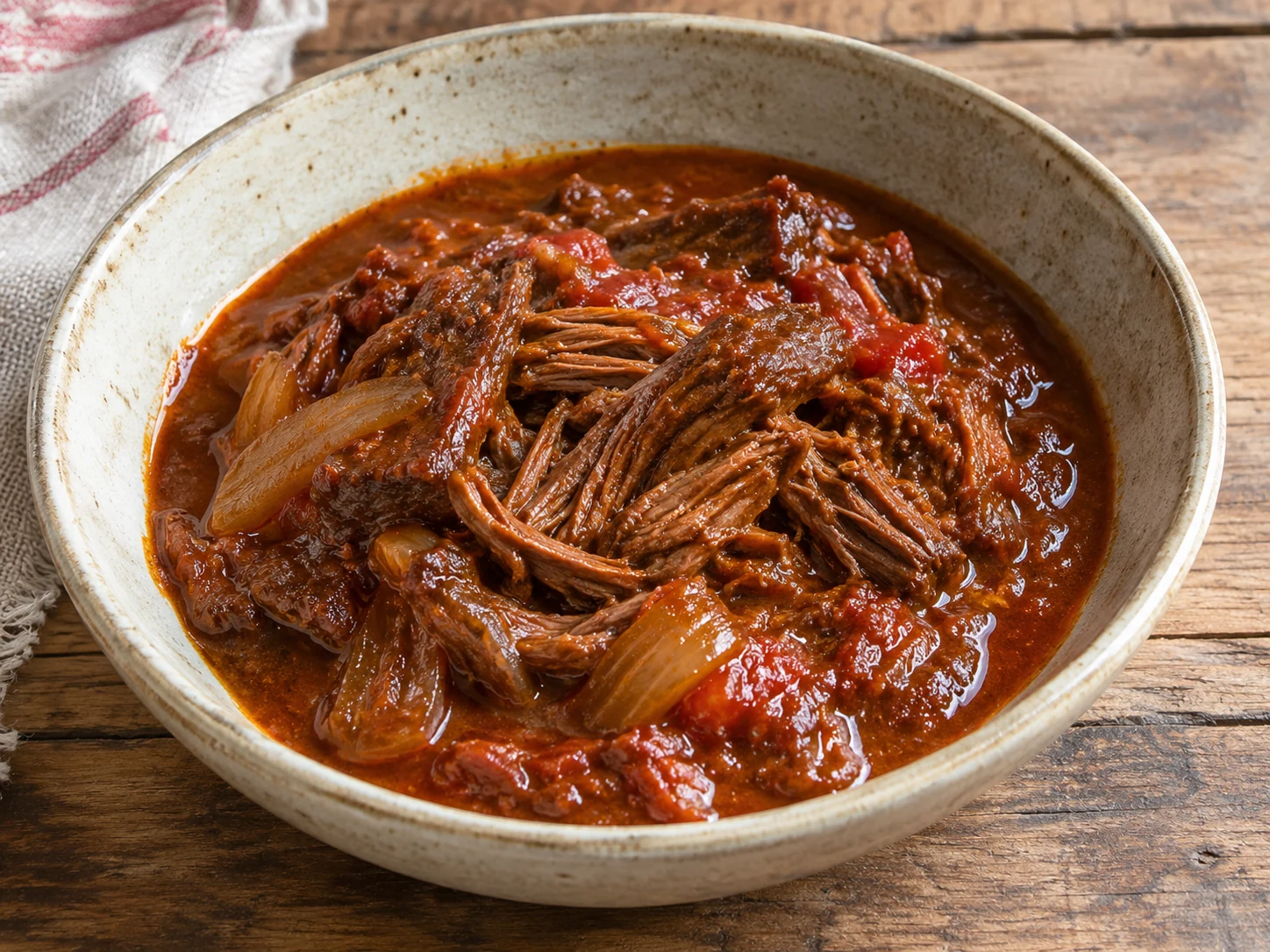
Shredded beef with tomato and coffee
Coffee provides a discreet note in a savoury tomato sauce here.
Ingredients
- 800 g trimmed raw beef chuck blade
- 600 g ripe tomatoes
- 200 g onion
- 10 g peeled garlic
- 100 ml mild unsweetened filter coffee
- 20 g sunflower oil
- 500 ml hot water
- 3 g salt
- 1 optional pinch pepper
Preparation
Cut beef into four large pieces. Slice onion, chop garlic and cut tomatoes.
Heat oil and brown meat on several sides for 10 minutes in total. Set aside.
Soften onion for 8 minutes, then add garlic and tomatoes. Cook for 10 minutes, stirring.
Pour in coffee and hot water. Return beef with 2 g salt and bring to a simmer.
Cover and simmer very gently for about 2 h 30 to 3 h, checking liquid every 30 minutes.
When meat falls apart without resistance under two forks, remove and shred. Remove any remaining thick membranes.
Reduce sauce if needed, return meat and reheat for 5 minutes. Adjust with remaining salt and serve.
Introduction
Coffee provides a discreet note in a savoury tomato sauce here. It should not be recognisable as a concentrated drink or turn beef into dessert. One hundred millilitres of mild filter coffee is enough for four portions: tomato, onion and meat juices remain foremost. Long cooking transforms a cut suited to stewing into supple fibres, separated after cooking and returned to their juices.
Chuck blade contains connective tissue that needs time to soften. A tender steak intended for quick cooking does not give the same result and would be a poor substitute in this sequence. The stated time is a range, not a guarantee: thickness, meat age and steady heat matter. The correct guide is easy separation under two forks. Meat that is simply cooked but still firm is not ready to shred.
Cultural context
This contemporary creation is inspired by products and combinations of the Angolan table; it is not an attested traditional recipe. The proportions and method are an original editorial proposal, not presented as kitchen-tested. The institutional references below illuminate agricultural or cultural context without documenting this exact formula or assigning it a provincial origin.
https://www.fao.org/4/j2771p/j2771p00.htm https://www.embassyangolatr.org/tr/angola/cultura
Tips
Use a cut intended for stewing.
Choose mild coffee without grounds.
Monitor liquid level every 30 minutes.
Wait until fibres separate easily.
Reduce sauce before returning shredded meat.
Planning
Choose a boneless chuck blade piece with some marbling but no thick outer fat layer. Weigh eight hundred grams after trimming. Divide into four large pieces rather than small dice: they withstand long cooking better and yield longer fibres. Do not try to remove all small internal tissues before cooking, but remove tough outer membranes. Keep chilled until searing and use clean utensils for post-cooking stages.
Prepare normally brewed filter coffee, then measure one hundred millilitres. It must be mild, without sugar, milk, added flavouring or grounds. Very concentrated espresso or a large spoonful of dry instant coffee would greatly change bitterness. For an even subtler flavour, choose a moderate roast; do not compensate for burnt coffee with sugar. The recipe does not call for this addition. Decaffeinated coffee is suitable if its flavour remains comparable, though it changes the reference used for calculation.
Lightly dry the beef surface with food-safe paper and heat the casserole before pouring in oil. Brown pieces without crowding, in several batches if necessary. Do not move them constantly: let one side brown before turning. Ten minutes is a guide for the whole batch, not a requirement to blacken each side. Set aside on a plate and collect clean juices. A black bottom or acrid smell means the burnt deposit must be removed before continuing.
Soften the two hundred grams of onion in the same casserole. Stir brown cooking juices with a wooden spoon and add a spoonful of the measured water if the bottom dries. Garlic joins the onion just before tomatoes to prevent burning. Let tomatoes break down for ten minutes. Plain canned tomatoes suit the same weight; account for any salt they contain. This base should already taste pleasant before coffee is added, as it cannot correct undercooked tomato.
Pour in coffee and five hundred millilitres of hot water, then return meat and juices. In a snug casserole, liquid reaches about halfway up the pieces. Bring to a simmer, cover and reduce to the lowest heat allowing a few bubbles. Vigorous boiling evaporates too fast and may make the fibres feel tougher. Check every thirty minutes, gently turn meat and add a little hot water if the bottom threatens to dry. Do not leave cooking unattended for a prolonged period.
Start checking tenderness after two and a half hours. Insert two forks into a piece: fibres should separate without much effort. If they resist, replace the lid and continue in twenty-minute intervals, retaining liquid. Extra time is better than forced shredding that produces small dry fragments. Then remove meat to a clean dish, discard still-rubbery parts and separate into thick fibres. Avoid reducing it to very fine crumbs.
Observe sauce without meat. If watery, reduce uncovered for a few minutes; if already thick, do not persist. A spoon should leave a trail that slowly closes. Return fibres and mix gently so they soak up sauce without absorbing all the juices. Reheat for five minutes, then taste before the final gram of salt. Reduction concentrates bitterness as well as salt: stop before sauce becomes sticky. Serve with enough liquid to keep the shredded meat supple.
Serving
Present shredded beef in a warm dish or divide directly among four plates with sauce. Some funge, plain rice or vegetable purée can collect juices; these accompaniments are excluded from quantities and estimates. Add a green vegetable for texture variety. To fill bread, lightly drain a portion with a spoon without reducing the entire casserole until dry. The extra bread then changes meal composition and must be counted separately.
Storage
Quickly divide leftovers among shallow containers, then refrigerate at 4 °C or below. Eat within 48 hours. Reheat the required quantity only once, until the entire portion is thoroughly hot at the centre. Do not keep the dish lukewarm in the saucepan for a long time.
Variations
Coffee may be reduced to fifty millilitres, replacing half with water for a milder first attempt. Do not double the dose because the dish cooks for a long time: bitterness concentrates during reduction. Another braising cut recommended by the butcher suits the recipe with adapted tenderness checks. A pinch of gindungo may season the tomato. Adding chocolate, sugar or a sweet sauce would create another proposal requiring a revised title, proportions and nutritional calculation.
Nutrition notes
Values are estimates per serving for four people, without the suggested accompaniments. Calculation uses the stated edible weights and Ciqual reference foods. All oil and salt are counted; water and very small optional amounts of pepper or gindungo are excluded. Brands, meat fat content, cooking losses and actual yield change the result. If energy is missing from the table, it is estimated using 4 kcal/g protein, 4 kcal/g carbohydrate, 9 kcal/g fat and 2 kcal/g fibre.
Conclusion
Aim for tender meat, a bound but flowing sauce and still-identifiable pieces. Adjust seasoning after cooking before dividing into four portions. Enjoy your meal!
Enjoy your meal
Enjoy your meal!