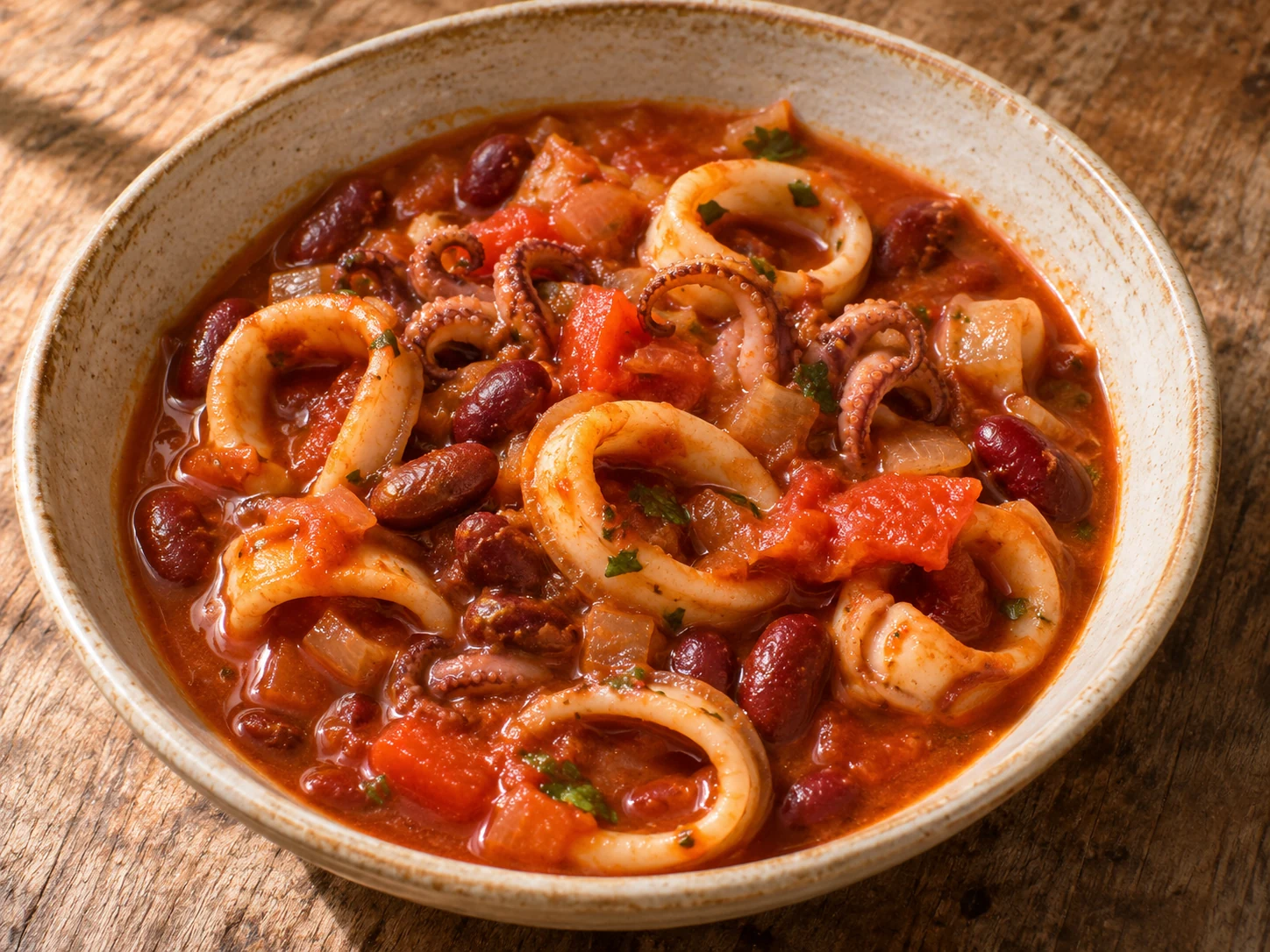
Squid with red kidney beans and tomatoes
Squid is seared quickly, then combined with an already prepared base of red kidney beans and tomatoes.
Ingredients
- 600 g cleaned raw squid, edible weight
- 500 g cooked, drained red kidney beans
- 500 g tomatoes
- 150 g peeled onion
- 8 g peeled garlic
- 20 g sunflower oil
- 150 ml water
- 20 g lemon juice
- 10 g fresh parsley
- 2 g salt
- 1 minute pinch gindungo, optional
Preparation
Check cleaned squid, drain, pat dry and cut into 1 cm rings; divide tentacles into small groups. Keep chilled.
Soften sliced onion in 10 g oil for 8 minutes. Add chopped garlic for 1 minute and diced tomatoes for 8 minutes.
Add water and drained beans. Simmer half-covered 10 minutes and reduce before adding squid if needed. Add gindungo if desired.
In a hot pan, sear half the squid with 5 g oil around 1–2 minutes, turning, until fully opaque and cooked; check 63 °C at the centre if possible.
Set aside on a clean plate. Cook the second half the same way with the remaining 5 g oil.
Combine squid and beans in the hot sauce, fold for no more than one minute, then remove from heat.
Add salt, lemon and parsley, taste and divide immediately among four plates.
Introduction
Squid is seared quickly, then combined with an already prepared base of red kidney beans and tomatoes. This separates its short cooking from the sauce’s cooking: simmering everything together for twenty minutes would easily make rubbery rings. The aim is whole beans, softened tomato and supple squid pieces without a thick flour coating or deep-frying.
This contemporary creation uses products of the Angolan table and its marine resources; it is not presented as an attested traditional recipe. Four portions combine pulses and molluscs. Lemon and parsley are added at the last moment for fresh contrast. Squid weight means the cleaned edible part, not whole animals with innards, beak and cartilage.
Cultural context
This recipe is a contemporary creation inspired by ingredients from the Angolan table, not an attested traditional recipe. The references document the products and their context; they are not the source of the proposed formula. The proportions and method are an original editorial proposal. The institutional texts cited provide agricultural or cultural context and do not establish a traditional origin for this formula.
https://www.fao.org/4/j2771p/j2771p00.htm https://www.embassyangolatr.org/tr/angola/cultura
Tips
Weigh squid after complete cleaning.
Use beans that are already fully cooked.
Dry rings and sear in small batches.
Combine with sauce only at the last moment.
The dish contains molluscs, a separate allergen from crustaceans.
Planning
Buy six hundred grams of raw cleaned squid, including mantles and possibly prepared tentacles. Check with the seller what has been removed. Innards, beak, eyes and cartilaginous pen are excluded from the stated weight. This recipe starts with a product ready to cut and does not describe complete cleaning of a whole animal. If buying whole, allow for preparation losses without including them in nutritional calculations or replacing the weight with a visual estimate.
Refrigerate until use. For frozen squid, thaw chilled in a colander over a container, then drain thoroughly. Do not leave squid soaking in thawing liquid for long. Pat dry with food-safe paper: a very wet surface cools the pan and boils pieces instead of searing them. Clean board, knife and hands after preparing raw squid. Prepare parsley on a clean surface reserved for ready-to-serve ingredients.
Cut mantles into rings about one centimetre wide. Divide tentacles into comparable small clusters without leaving a clump much thicker than the rings. Regular cuts aid uniform quick cooking. There is no need to score each piece deeply for decoration: this multiplies fragments and complicates monitoring. Keep cut squid covered and chilled throughout preparation of the beans and tomato sauce.
Use five hundred grams of already cooked, drained red kidney beans. Plain canned beans work; rinse if needed and weigh after draining. Dried beans cannot go straight into this recipe, since soaking and thorough cooking require separate organisation. Ready beans should mash easily between fingers while retaining their skins. Set aside any still-hard beans rather than relying on fifteen minutes in sauce to finish insufficient cooking.
Dice ripe tomatoes, retaining juice and removing the tough stalk attachment. Finely slice onion and chop garlic. Divide measured oil into two ten-gram portions: one for sauce, one for squid. Prepare a sauté pan for beans and a frying pan wide enough to sear squid in two batches. This requires two pans but avoids cooling the tomato with a large amount of wet raw product.
Soften onion in the first oil portion over medium heat for eight minutes. Add garlic for one minute, then tomato for eight, stirring regularly. Tomato should lose its raw appearance and begin to break down. Add one hundred and fifty millilitres of water and fold in beans without crushing. Simmer half-covered for ten minutes. Liquid should surround beans without drowning them; reduce a few extra minutes if tomatoes are very watery, before starting squid.
Heat the second pan with five grams of the reserved oil. Take only half the squid out of the cold and spread without overlapping. The pan must be hot but not smoking. Sear around one to two minutes, turning quickly, according to thickness; pieces become opaque and firm up without turning hard. A clean thermometer can check sixty-three degrees at the centre of a sufficiently thick piece. Stated time cannot replace observation, especially if rings are thicker than expected.
Transfer the first batch to a clean plate, add the remaining five grams of oil and cook the second the same way. Do not tip all accumulated liquid into the hot pan at once, causing splashes and a temperature drop. Combine both batches with the already hot bean sauce and fold gently for no more than one minute, just to distribute. Squid must not wait in sauce that boils for a long time.
If pieces release lots of water, do not try to dry the pan by cooking them ten additional minutes. Remove when cooked and keep only a little useful juice in the sauce. Next time, improve draining, reduce batch size or use a wider pan. Long cooking intended to soften squid again is another method, with different timing and bean addition; it should not be improvised in this recipe’s last minutes.
Serving
Add salt, lemon juice and washed, dried, chopped parsley off the heat. Taste sauce before increasing salt, especially with salted canned beans. Serve immediately in four deep plates, distributing rings and tentacles as evenly as beans. Keep juices short so a spoon collects both elements together.
A leaf salad or vegetables cooked without heavy sauce can accompany the dish. Beans already provide a substantial base; rice or bread depend on appetite and are excluded from quantities and estimates. To work ahead, prepare and cool only the tomato-bean base. Reheat fully before searing squid at the last moment. Keep raw molluscs apart from cooked vegetables until this final cooking.
Storage
Cool leftovers rapidly in a shallow container, refrigerate at 4 °C or below and eat within 24 hours. Reheat only once until thoroughly hot at the centre. Do not keep a portion that has stood at room temperature for a long time.
Variations
Cooked white beans can replace red kidney beans, but adapt the title and estimate. Their more fragile texture requires even gentler mixing. Chickpeas also make a different preparation; they do not justify automatically retaining values calculated for red kidney beans.
A minute pinch of gindungo may be added to tomato for a spicy version without masking squid flavour. It remains optional and uncounted at this scale. Parsley may be omitted. Do not replace raw squid with frozen breaded rings: coating, fats and method would change entirely. Already cooked squid needs only suitable reheating and does not follow the searing described.
Nutrition notes
Estimated values per serving, excluding accompaniments. Calculated from edible weights and reference foods; brands, cooking and actual yield may change the results. All fats are counted in full. Where energy is not provided in the table, it is estimated from protein and carbohydrate (4 kcal/g), fat (9 kcal/g) and fibre (2 kcal/g). Optional spices in very small quantities are not counted. All added oil and salt are counted; water and optional spices in minute quantities are excluded. Moisture content can also change the nutritional intake.
Conclusion
Serve as soon as the described textures are obtained and adjust the final seasoning on the plate. This contemporary editorial creation is presented neither as an attested traditional recipe nor as a kitchen-tested formula. Enjoy your meal!
Enjoy your meal
Enjoy your meal!