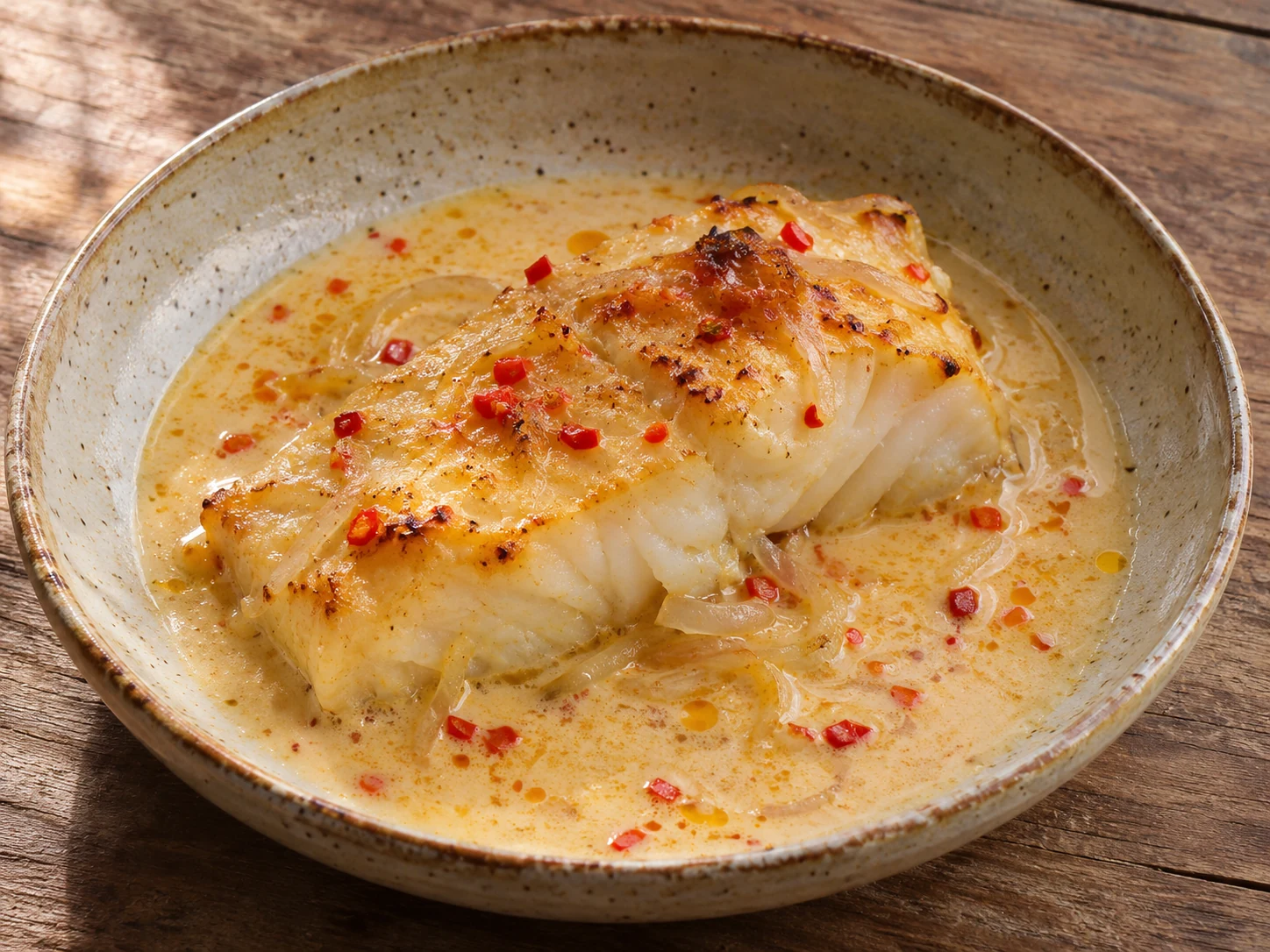
Oven-baked cod with coconut and gindungo sauce
The cod cooks in a small amount of coconut milk sauce flavoured with a little gindungo.
Ingredients
- 600 g raw skinless boneless cod
- 250 g unsweetened coconut milk
- 120 g peeled onion
- 6 g peeled garlic
- 10 g prepared fresh ginger
- 15 g sunflower oil
- 80 ml water
- 20 g lime juice
- 10 g fresh coriander
- 2 g salt
- 1 small pinch gindungo, optional
Preparation
Preheat the oven to 180 °C. Check cod for bones, pat portions dry and keep chilled.
Chop onion and grate garlic and ginger. Soften onion in oil over medium heat for 8 minutes, stirring.
Add garlic and ginger for 1 minute. Stir in coconut milk, water, salt and a small pinch of gindungo if desired.
Simmer 5 minutes. Pour sauce into a suitable dish and arrange four portions in one layer.
Bake around 12–18 minutes according to thickness, until opaque flesh separates easily; check 63 °C at the centre if using a thermometer.
Remove, add lime juice and chopped coriander. Serve immediately with the sauce.
Introduction
The cod cooks in a small amount of coconut milk sauce flavoured with a little gindungo. The sauce is prepared on the hob before joining the fish in the oven: keeping these stages separate avoids extending the fillets’ cooking just to soften the onion. The aim is flesh that separates into large flakes, surrounded by a creamy but still flowing liquid. This is neither fried fish nor a crusted gratin.
This contemporary creation uses products associated with the Angolan table without claiming to be traditional. Here cod means fresh or frozen unsalted fish, not dried salt cod, which would require desalting and a different calculation. The four portions are intentionally simple. Lime is the finish, while chilli adds gentle warmth that allows both fish and coconut to remain recognisable.
Cultural context
This recipe is a contemporary creation inspired by ingredients from the Angolan table, not an attested traditional recipe. The references document the products and their context; they are not the source of the proposed formula. The proportions and method are an original editorial proposal. The institutional texts cited provide agricultural or cultural context and do not establish a traditional origin for this formula.
https://www.fao.org/4/j2771p/j2771p00.htm https://www.embassyangolatr.org/tr/angola/cultura
Tips
Use unsalted cod, not salt cod requiring soaking.
Keep fish chilled until assembly.
Soften the onion completely before adding fish.
Adjust gindungo to the product and diners.
Check the thickest part and serve without waiting.
Planning
Buy four pieces of cod weighing one hundred and fifty grams each, without skin or bones. Loins of different widths work if they have similar thickness; that is the main factor governing cooking. Gently run your fingers over each piece and remove remaining bones with tweezers. Refrigerate while preparing the sauce. Thawed fish must remain chilled and be thoroughly drained before patting dry.
Choose unsweetened coconut milk, not a light drink intended for drinking. Stir the tin’s contents before weighing two hundred and fifty grams: the thick and watery parts can separate while standing. Fat content differs by brand and affects the final consistency. If the product is very thick, the measured water helps loosen it without a long boil. Do not replace it with sweetened dessert cream.
Finely and evenly dice the onion and grate the garlic and ginger. Weigh ginger after removing dry or fibrous parts. Prepare these aromatics before heating the oil, as a hurried search for equipment can easily leave the pan base burning. Use a small heavy-based saucepan. Over medium heat, onion should become soft and translucent without predominantly browning. Stir and lower the heat if it catches; a spoonful of the measured water can help.
Add garlic and ginger only when the onion is tender. One minute releases their aromas before adding coconut milk and the remaining water. Gently scrape the pan base to distribute the aromatics, then maintain a light simmer for five minutes. A vigorous boil reduces the sauce too quickly and can increase fat separation. Taste a cooled spoonful to assess the chilli without burning your mouth.
Gindungo has no uniform strength. Start with a small pinch of the identified product, mix and wait briefly before deciding to add more. Do not replace a pinch of powder with a whole spoonful of chilli sauce; salt, vinegar and intensity would differ. No nutritional weight is assigned to this optional minute quantity. A mild version can omit it entirely and retain the contrast of ginger and lime.
Preheat the oven to one hundred and eighty degrees. Choose a dish holding all four portions in one layer with small spaces between them. An oversized dish spreads the sauce too thinly and it dries before the fish cooks. Pour in the hot sauce, position the dried pieces and spoon a little sauce over them. The liquid surrounds their bases without necessarily covering them. Do not stack fillets to save space.
Bake at mid-height and start checking after twelve minutes; continue to around eighteen depending on thickness and oven. Gently part the flakes at the centre of the thickest piece. Flesh should be opaque and separate without resistance while remaining moist. A clean thermometer can check for sixty-three degrees at the centre. If undercooked, return it for a few minutes rather than relying on an uncertain wait out of the oven.
Once cooked, remove the dish immediately. Do not wait for the sauce surface to brown, as that colour says nothing about cod tenderness. If a little coconut oil appears on top, gently stir the sauce around the pieces without breaking them; slight separation does not call for another boil. Add lime juice out of the oven and scatter coriander that has been washed, dried and chopped.
Serving
Prepare plates as cooking finishes and lift each piece with a wide spatula. Divide the sauce around them rather than repeatedly handling the fish. Plain rice or steamed vegetables may complete the meal according to appetite; they are excluded from quantities and nutritional estimates. Very salty or spicy accompaniments make this gentle sauce harder to appreciate.
To work ahead, prepare only the sauce, then cool and refrigerate it. Reheat it before adding cold fish at mealtime. Do not leave raw fish waiting in lukewarm sauce on the worktop. Prepare lime and herbs separately. Judge oven time by the portions’ actual doneness rather than extending it automatically because the sauce was made yesterday.
Storage
Cool leftovers rapidly in a shallow container, refrigerate at 4 °C or below and eat within 24 hours. Reheat only once until thoroughly hot at the centre. Do not keep a portion that has stood at room temperature for a long time.
Variations
Another firm white fish can replace cod if the title is changed and the time reassessed for its thickness. Salt cod is not a direct substitute. Using more water makes a less rich sauce but also reduces its body; do not claim the same nutritional estimate if the amount of coconut changes.
Omit coriander if its aroma is disliked. Avoid compensating with lots of dried herbs, which would absorb sauce and mask the fish. A little finely grated lime zest can accompany the juice, using only washed fruit suitable for this purpose. Zest does not replace the juice’s acidity.
Nutrition notes
Estimated values per serving, excluding accompaniments. Calculated from edible weights and reference foods; brands, cooking and actual yield may change the results. All fats are counted in full. Where energy is not provided in the table, it is estimated from protein and carbohydrate (4 kcal/g), fat (9 kcal/g) and fibre (2 kcal/g). Optional spices in very small quantities are not counted. All added oil and salt are counted; water and optional spices in minute quantities are excluded. Moisture content can also change the nutritional intake.
Conclusion
Serve as soon as the described textures are obtained and adjust the final seasoning on the plate. This contemporary editorial creation is presented neither as an attested traditional recipe nor as a kitchen-tested formula. Enjoy your meal!
Enjoy your meal
Enjoy your meal!