Tomato soup with rice and coconut milk
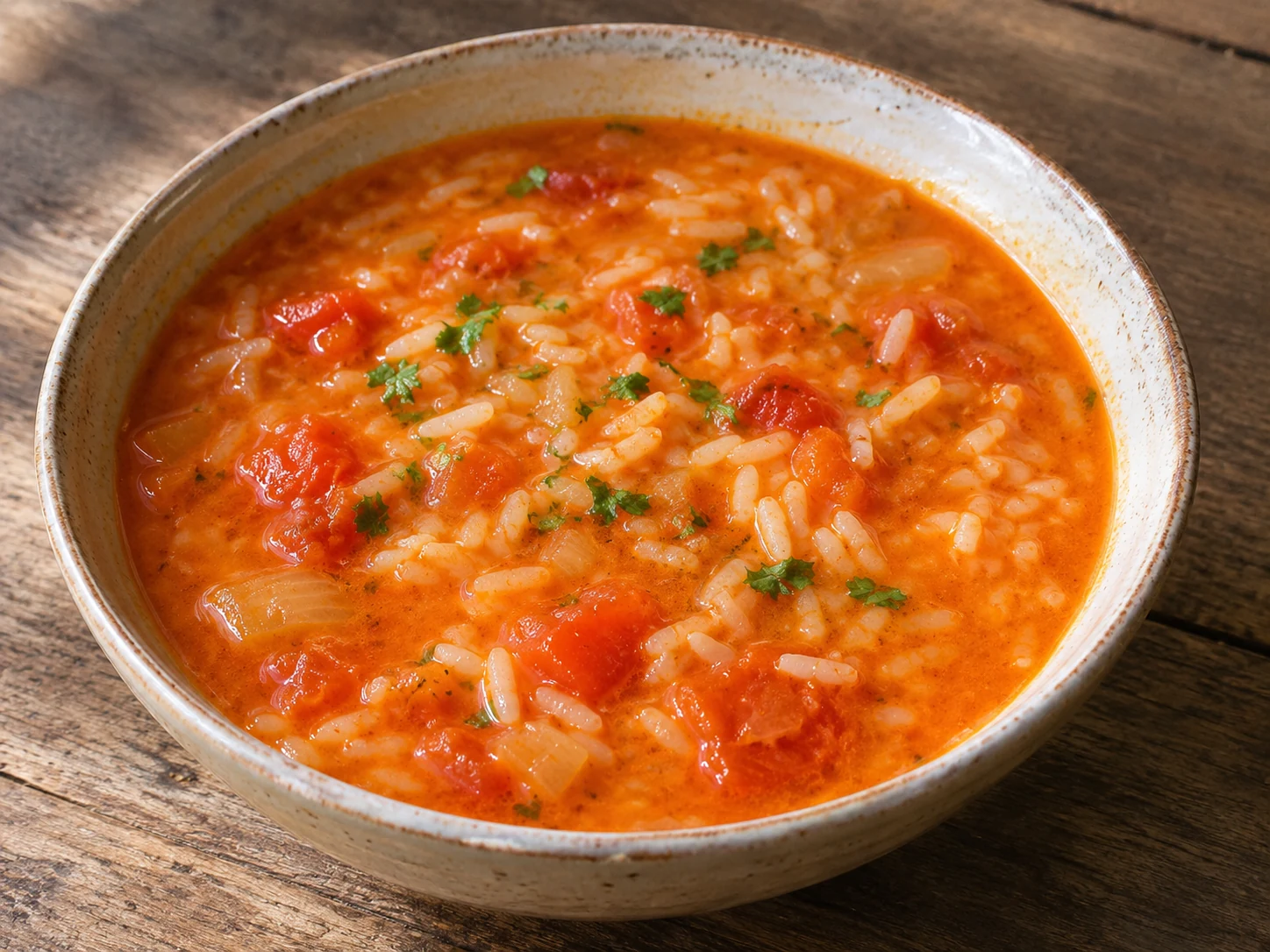
A base of softened tomatoes holds white rice and coconut milk in a fluid soup whose grains remain distinct.
Ingredients
- 800 g prepared tomatoes with their juice
- 100 g dry white rice
- 200 g unsweetened coconut milk
- 150 g onion
- 10 g garlic
- 15 g olive oil
- 800 ml water
- 15 g lime juice
- 10 g fresh parsley
- 3 g salt
- 1 optional pinch of pepper
Preparation
Prepare and weigh tomatoes, slice onion and chop garlic. Rinse and drain rice. Stir coconut milk in its container before weighing.
Heat oil. Soften onion over medium heat for 8 minutes, then add garlic for 1 minute. Add tomatoes with their juice and cook 10 minutes, stirring.
Pour in 700 ml water and reserve 100 ml. Bring to a simmer, add rice and stir to release grains.
Cook partly covered for 15–20 minutes according to rice, stirring the bottom regularly. Check grains and add reserved water if needed.
When rice is almost tender, add coconut milk and salt. Heat gently 5 minutes until grains are tender, without a vigorous boil.
Switch off heat, rest 5 minutes and adjust fluidity. Add lime and optional pepper. Divide between four bowls and add chopped parsley.
Introduction
This soup combines tomato’s fresh acidity with a small amount of rice and the softness of coconut milk. The aim is a soup containing tender grains, not savoury rice pudding or risotto. Cooking has two stages: first build the vegetables’ flavour, then cook rice in that liquid before finishing with coconut. The mixture remains fluid enough to ladle into four soup plates.
The proposal is contemporary, inspired by products used at Angolan tables. It does not claim to reproduce a documented traditional soup. Rice supplies texture here; one hundred dry grams suffice for four portions because grains keep absorbing after cooking. Avoid spontaneously doubling that quantity to “enrich” the soup. Provide a separate accompaniment for a more substantial lunch and count it separately in nutritional intake.
Cultural context
Angola’s embassy in Türkiye presents several products and preparations of the Angolan table, while the 2004 FAO/WFP report describes its food-crop context. These sources locate an inspiration rather than attest the tomato, rice and coconut combination proposed here. Proportions, order of incorporation and the choice of fluid soup are contemporary editorial decisions. Context sources: https://www.embassyangolatr.org/tr/angola/cultura and https://www.fao.org/4/j2771p/j2771p00.htm
Tips
Weigh rice dry, not after cooking.
Mix separated coconut milk before measuring it.
Pass the spoon over the whole bottom while rice cooks.
Allow for thickening during rest.
Taste before adding all the lime.
Planning
Choose ripe, fragrant, sound tomatoes. Remove stalks and hard parts, then weigh eight hundred grams of flesh with its juice. Thin skins may remain. For a gentler mouthfeel, briefly blanch tomatoes, cool and peel before weighing; this optional step takes a few extra minutes. Keep cutting juices, which belong in the base. Plain canned tomatoes may replace fresh at the same weight, but account for any added salt.
Use ordinary white rice with a cooking time of about fifteen to twenty minutes according to the packet. Brown rice and wild-rice blends are not direct substitutes: their longer cooking would upset evaporation and tomato texture. Rinse the hundred grams in a fine sieve, then drain thoroughly. Rinsing limits loose starch without preventing grains giving the liquid some body. Do not soak for a long time without subsequently adapting cooking time.
Check coconut milk: it must be an unsweetened culinary product, not a flavoured drinking beverage. A can may separate into a thick layer and clear liquid. Stir before weighing two hundred grams so you do not use only the fatty upper layer. Highly concentrated coconut cream thickens more and changes nutritional intake; to follow the formula, choose coconut milk and read its label. The estimate uses the combined “coconut milk or cream” reference, an explicitly acknowledged approximation.
Slice onion and chop garlic before switching on heat. The pan should be wide enough for tomatoes to cook without excessive splashing but deep enough for the final liquid. Sweat onion in oil without aiming for brown colouring. Briefly add garlic, then tomato. Let tomato collapse and release juice; pieces should lose their raw appearance. If sticking starts first, add two spoonfuls of the measured water and lower heat slightly.
Pour in seven hundred millilitres water, reserve the last hundred and return to a simmer before adding drained rice. Stir immediately to release grains, then maintain steady moderate heat. Stir again at short intervals over the whole bottom because rice can settle and stick. Taste a few grains near the end of the stated time: centres should be tender without a chalky part. If liquid runs short first, add reserved water rather than increasing heat.
Incorporate coconut milk when rice is almost ready. Five minutes over gentle heat then suffice to bring the mixture together; avoid a strong boil that concentrates soup too quickly. At switch-off, consistency should look slightly thinner than wanted at serving. A five-minute rest already thickens it noticeably. Add lime off heat after tasting tomato, whose acidity varies greatly. Keep a small reserve of hot water if serving is delayed a few minutes.
Serving
Serve in four warm bowls, distributing grains before pouring the last liquid. Add chopped parsley at the last moment to preserve freshness. Bread is optional because rice already supplies starch. At a table with several dishes, serve small portions rather than an overfilled bowl that would thicken before being eaten. Extra citrus may be offered separately without automatically pouring it into every plate.
Storage
Cool promptly in shallow containers, refrigerate at 4 °C or below and eat within 24 hours. Rice keeps absorbing in the cold: allow some water for reheating. Reheat the needed quantity only once, stirring until thoroughly hot in the centre. Do not keep soup at room temperature for several hours on the grounds that it will be boiled later.
Variations
For a less rustic version, blend the tomato and onion base before adding rice; remove the pan from heat and follow the blender’s hot-liquid directions. Replacing parsley with fresh coriander changes aroma without changing the method. Already cooked rice must be weighed and incorporated under a different formula because the water-to-grain ratio changes. Do not replace coconut milk with sweet dessert cream.
Nutrition notes
Rice provides carbohydrate and coconut milk contributes fat; these observations are not health claims. Estimates per serving use edible weights, exclude accompaniments and count all oil. Brands, cooking and yield change results. Optional spices in tiny amounts are excluded. If energy is absent, calculate using protein and carbohydrate at 4 kcal/g, fat at 9 kcal/g and fibre at 2 kcal/g. Ciqual’s “coconut milk or cream” reference is a proxy for the chosen unsweetened coconut milk; its actual composition may differ.
Conclusion
The desired result is tender grains in softened tomato broth, with perceptible coconut but no pasty texture. Adjust water after the short rest instead of adding more rice. This is an editorial proposal and is not advertised as kitchen-tested.
Enjoy your meal
Enjoy your meal!