Sweet potato and red bean soup
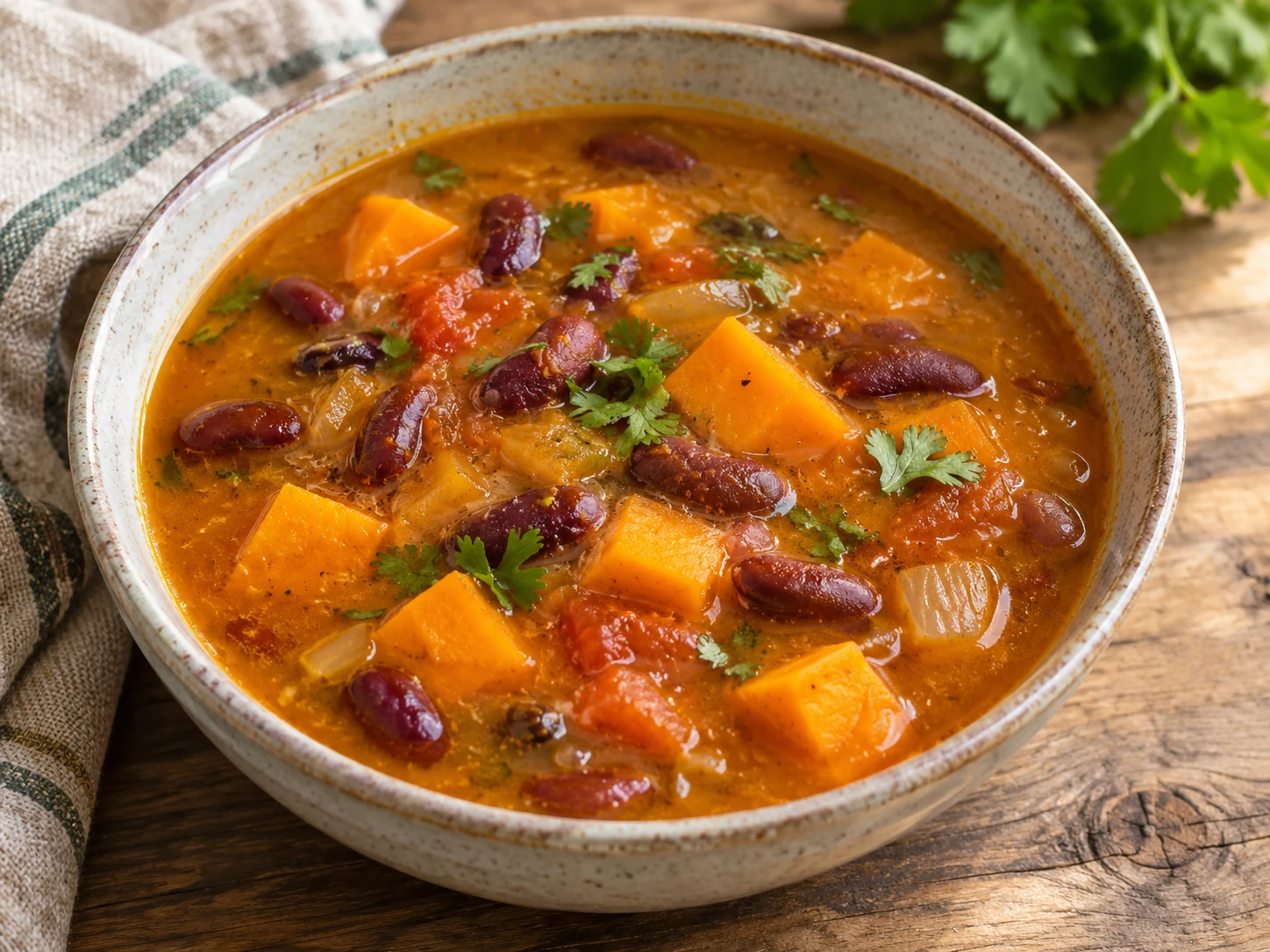
Tender sweet potato cubes and ready-cooked red beans make a thick soup flavoured with ginger and finished with lime.
Ingredients
- 600 g peeled sweet potato
- 400 g plain cooked, drained red beans
- 150 g onion
- 250 g tomatoes
- 10 g garlic
- 15 g fresh ginger
- 20 g olive oil
- 1 litre water
- 20 g lime juice
- 3 g salt
- 1 optional pinch of gindungo
Preparation
Peel and weigh sweet potato, then cut into 2 cm cubes. Rinse and drain the cooked beans. Slice onion, chop garlic, grate ginger and cut tomatoes.
Heat oil in a 3-litre pan. Soften onion over medium heat for 8 minutes without strong colouring. Add garlic and ginger for 1 minute.
Add tomatoes with their juice and cook 5 minutes, stirring the bottom. Add sweet potato cubes and 900 ml water. Reserve 100 ml.
Bring to a simmer and cook partly covered for 20–25 minutes until a large cube is tender to the centre. Add some reserved water if needed.
Add cooked beans and simmer 10 minutes. Mash two spoonfuls of sweet potato with a few beans in a bowl and return to the soup.
Adjust fluidity with remaining water, add salt and optional gindungo. Switch off heat, stir in lime juice and taste. Divide between four bowls.
Introduction
This soup depends on contrasting textures rather than a long list of seasonings. Sweet potato should become tender and release just enough flesh to give the liquid body; red beans, added later, remain recognizable. Onion and tomato build a savoury base, ginger adds aromatic warmth and lime lightens the root’s sweetness. The quantities make four light lunch portions. For a larger meal, provide a separate accompaniment and include it in the nutritional calculation.
This is a contemporary creation inspired by produce present in Angolan diets. It bears no provincial speciality’s name and is not presented as a collected family recipe. Choosing ready-to-use beans is essential to the schedule: the stated forty-five minutes include neither soaking nor cooking dried beans. First prepare fresh vegetables, then warm the legumes in their broth. The recipe thus avoids promising simultaneous cooking for two ingredients with different requirements.
Cultural context
The FAO/WFP report on Angola dated 6 August 2004 describes roots, maize and beans among food crops. It supplies agricultural context, not evidence of this soup or its proportions. The proposed combination, partial thickening and citrus finish belong to this editorial work. The recipe therefore remains described as contemporary and is assigned no provincial name. Context source: https://www.fao.org/4/j2771p/j2771p00.htm
Tips
Weigh beans after cooking and draining.
Keep root cubes evenly sized.
Add beans only when sweet potato is tender.
Mashing a small portion is enough to thicken the liquid.
Adjust lime off the heat, in small additions.
Planning
Choose a firm sweet potato without wet or mouldy areas. Its flesh may vary in colour; orange varieties give a brighter soup while white flesh looks more understated. Peel, remove damaged ends and weigh six hundred grams of usable flesh. Cut into roughly two-centimetre cubes. Very uneven cubes would leave some hard while others already disintegrate; correcting their size before cooking is easier than extending the whole cooking time.
The four hundred grams of beans refers to a cooked, drained weight. Use plain canned beans or beans fully cooked beforehand. Rinse canned beans in a colander and let water drain before weighing. Slightly split beans are suitable, but a can whose contents are already crushed makes a pastier result. Do not put dried red beans straight into this soup: their preparation requires a separate procedure and must not be improvised within this recipe’s time. Preseasoned canned beans would change salt, fat and flavour.
Slice onion finely enough to soften without needing to brown. Grate ginger after removing damaged skin; large slices would remain fibrous in a soup eaten with a spoon. Chop garlic and finely dice tomatoes, retaining their juice. An underripe tomato gives less rounded flavour: cook it a few extra minutes before adding water rather than automatically compensating with sugar. Preparing ingredients before heating oil prevents garlic burning while you finish cutting.
Use a heavy-bottomed pan of at least three litres. Onion should become soft and translucent; if it colours quickly, lower heat and add a spoonful of water. Garlic and ginger spend only one minute alone in the fat. Tomato then adds moisture that helps release cooking residues. Stir with a spatula reaching the bottom corners. There is no need for a heavily reduced sauce: a cohesive base without a pronounced raw-garlic smell is enough before adding root and water.
Start with nine hundred millilitres of water, reserving the last hundred for the end. Maintain a steady simmer, partly covered. Test a large cube with a knife tip after around twenty minutes: it should yield to the centre. Time depends on variety and actual size. If liquid drops before the root is tender, add some reserved water. Avoid a vigorous boil that breaks edges and makes the bottom harder to monitor.
Only then add beans and cook ten minutes longer. To thicken, take two spoonfuls of sweet potato and a few beans, mash in a bowl and return to the pan. This adds body without puréeing the whole soup. Once reincorporated, watch the bottom more closely because particles settle. Switch off heat before adding lime. Taste a slightly cooled spoonful and adjust salt, acidity and chilli separately instead of increasing everything at once.
Serving
Divide cubes and beans between four bowls first, then add liquid for comparable portions. Serve hot without waiting for a long reduction: soup thickens further in the bowls. A sharp-flavoured leafy salad makes a good complement. Sweet potato already provides starch; bread may be offered according to appetite without treating it as essential. Serve extra chilli separately and tell guests if gindungo is present.
Storage
Transfer leftovers promptly to shallow containers, refrigerate at 4 °C or below and eat within 48 hours. Reheat only the needed quantity, once, until thoroughly hot in the centre, stirring. Add a little water if soup has thickened, then taste before adding salt. Do not leave the pan cooling on the worktop overnight.
Variations
Replacing some sweet potato with firm squash changes texture and requires checking doneness earlier. Cooked white beans give another version that should be named explicitly. For a smoother preparation, blend one third of the soup before returning reserved beans, off the heat with an appliance suitable for hot liquids. Do not replace cooked bean weight with the same dry weight. A spoonful of ginguba paste changes creaminess but introduces the peanut allergen and must be counted additionally.
Nutrition notes
Sweet potato and beans supply carbohydrate; beans also contribute protein and fibre. These observations are not medical promises. Per-serving values are estimates calculated from edible weights; brands, rinsing and yield can change them. Accompaniments are excluded and all oil is counted. Optional spices in tiny quantities are excluded. When reference energy is absent, it is calculated using protein and carbohydrate at 4 kcal/g, fat at 9 kcal/g and fibre at 2 kcal/g.
Conclusion
Aim for whole beans in a lightly thickened liquid, with meltingly tender but still visible sweet potato. Times are guides: checking tenderness and adjusting water matter more than an exact minute. This editorial formula is not presented as kitchen-tested.
Enjoy your meal
Enjoy your meal!