Pineapple roasted with Angolan coffee
Pineapple wedges are roasted in lightly sweetened coffee juice.
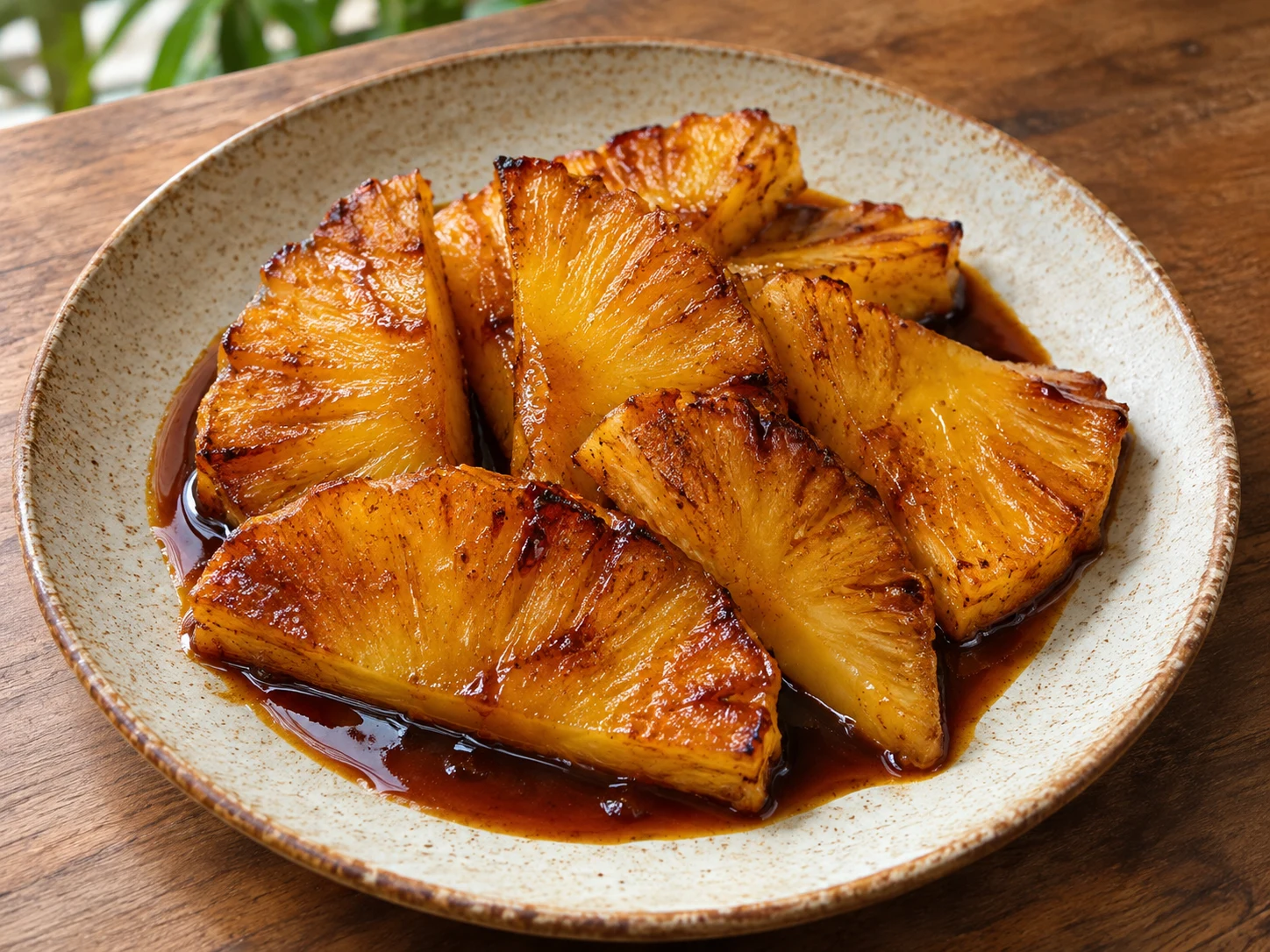
Ingredients
- 800 g trimmed pineapple flesh
- 120 ml prepared filtered Angolan coffee
- 35 g sugar
- 10 ml neutral oil
Preparation
Preheat the oven to 200°C.
Cut similar wedges, removing the hard core if necessary, and place in an oiled dish.
Mix the coffee with the sugar and pour around the fruit.
Roast 25–35 minutes, basting twice, until tender with golden edges.
If the juice remains thin, reduce it briefly separately, then drizzle over the fruit.
Serve warm.
Introduction
Pineapple wedges are roasted in lightly sweetened coffee juice. The oven concentrates the fruit, colours its edges and turns the liquid into a small amount of sauce. Coffee brings an aromatic bitterness that contrasts with pineapple's sweetness and acidity. This contemporary creation highlights coffee identified as Angolan, without inventing a plantation origin or presenting the recipe as an ancient traditional dessert. Eight hundred grams of trimmed flesh provide four portions. The preparation contains neither cream nor alcohol.
Coffee should accompany the fruit rather than conceal it beneath burnt syrup. A very dark roast, overly long extraction or excessive reduction can compound their bitterness. Use normally prepared filtered coffee and watch how it develops in the dish. The amount of sugar is moderate; it helps thicken the juice without turning every wedge into candied fruit. Pineapple ripeness remains the chief determinant of sweetness. A very hard fruit with little fragrance does not automatically become pleasant through adding more sugar.
Cultural context
This recipe is a contemporary creation inspired by ingredients from the Angolan table, not an attested traditional recipe. The references document the products and their context; they are not the source of the proposed formula. The proportions and method are an original editorial proposal. The institutional texts cited provide agricultural or cultural context and do not establish a traditional origin for this formula.
https://www.fao.org/4/j2771p/j2771p00.htm https://www.embassyangolatr.org/tr/angola/cultura
Tips
Weigh the pineapple after trimming.
Check the origin of the coffee.
The dessert contains caffeine.
Remove the fruit if the liquid needs reducing separately.
Golden edges are different from burnt sugar.
Planning
Choose a sound, fragrant pineapple without mould or signs of fermentation. Peel, remove the eyes and weigh 800 g of ready-to-use flesh. A thin core can remain if tender; remove it if fibrous. Cut wedges of similar thickness so they hold during roasting. Thin slices cook more quickly and produce a different texture.
Check the coffee's Angolan origin on its label: any African brand is not necessarily Angolan. Prepare 120 ml of plain filtered coffee. A very concentrated espresso should be diluted; the same volume of a strong extract is not equivalent. The stated sugar is added separately. The 10 ml of oil lightly grease the dish and do not form a fatty sauce.
Heat the oven to 200°C and choose a wide dish in which the fruit does not overlap. A wide, open dish evaporates quickly; a narrow dish retains more juice. Grease with the 10 ml of oil and arrange the wedges. Dissolve the sugar in the coffee and pour around and partly over the fruit, leaving space for the edges to colour.
Place on the middle shelf and roast for 25–35 minutes, basting twice with a spoon and avoiding splashes on your hands. Turn gently if one side is submerged, to encourage colour. The fruit should be tender but keep its shape, with golden edges; do not blacken it to obtain a caramel flavour.
Watch the liquid as it concentrates. If it dries before the fruit softens, add one or two spoonfuls of hot water and lower the heat. If the fruit is ready but the juice remains thin, remove the fruit and reduce the juice briefly in a saucepan to avoid overcooking it. Stir and stop before a thick sauce forms that will harden as it cools.
Taste a cooled spoonful of juice. Hot concentrated coffee may seem less sweet and more bitter than at serving temperature. Pour a moderate amount over the fruit. If juice burns, do not scrape it from the dish. Sugar cannot repair a burnt flavour. Record dish depth, fruit ripeness and cooking time rather than adding everything at random.
Serving
Serve warm, with two or three wedges per person according to size and a drizzle of juice. Pineapple should remain central, without a heap of cream or syrup. A deep plate accommodates the juice. If preparing ahead, cool the fruit and sauce promptly and refrigerate. Reheat gently or serve chilled, adjusting the amount of sauce to its observed consistency. Accompaniments are not included in the nutrition estimate.
Storage
Cool leftovers promptly in a shallow container, refrigerate at 4 °C or below and consume within 48 hours. Reheat preparations intended to be eaten hot only once, until thoroughly hot in the centre. For salads, keep the dressing and crunchy ingredients separate where possible.
Variations
A verified-origin decaffeinated coffee reduces caffeine but does not guarantee none. Another sugar changes colour and flavour without making burning acceptable. A little fresh ginger infused in the coffee gives another variation that should be named clearly. Drained canned pineapple does not behave like fresh fruit: it is already cooked and may have been in syrup, so sugar and cooking time need reassessment. Ripe mango requires a different technique because its flesh falls apart much faster.
Nutrition notes
Estimated values per serving, excluding accompaniments. Calculated from edible weights and reference foods; brands, cooking and actual yield may change the results. All fat is counted. Where energy is unavailable in the table, it is estimated from protein and carbohydrate (4 kcal/g), fat (9 kcal/g) and fibre (2 kcal/g). Very small optional quantities of spices are not counted.
Conclusion
The desired result depends on the textures described and seasoning adjusted at serving time. This editorial formula is not presented as kitchen-tested. Enjoy your meal!
Enjoy your meal
Enjoy your meal!