Múcua and coconut milk custard
Rehydrated múcua is combined with coconut milk and eggs.
Ingredients
- 400 ml unsweetened coconut milk
- 200 ml water
- 30 g food-grade múcua powder
- 4 eggs
- 90 g sugar, including 40 g for the optional caramel
- 20 ml additional water for the caramel
Preparation
Dilute the múcua in 200 ml water and leave to hydrate for 10 minutes.
Mix with the coconut milk, eggs and 50 g sugar without foaming.
If desired, make a light caramel with 40 g sugar and 20 ml water and divide among six ramekins.
Add the custard and bake in a water bath at 150°C for 35–45 minutes, until the centre is set.
Cool promptly and refrigerate for at least four hours.
Introduction
Rehydrated múcua is combined with coconut milk and eggs. The custard sets through gentle coagulation of the eggs in a water bath, without gelatin or another thickener. The acidity of múcua balances the richness of coconut. This contemporary creation draws on Angolan ingredients; it is not presented as an old baobab custard. Six ramekins provide even portions and make cooking easier to control than one large, deep mould.
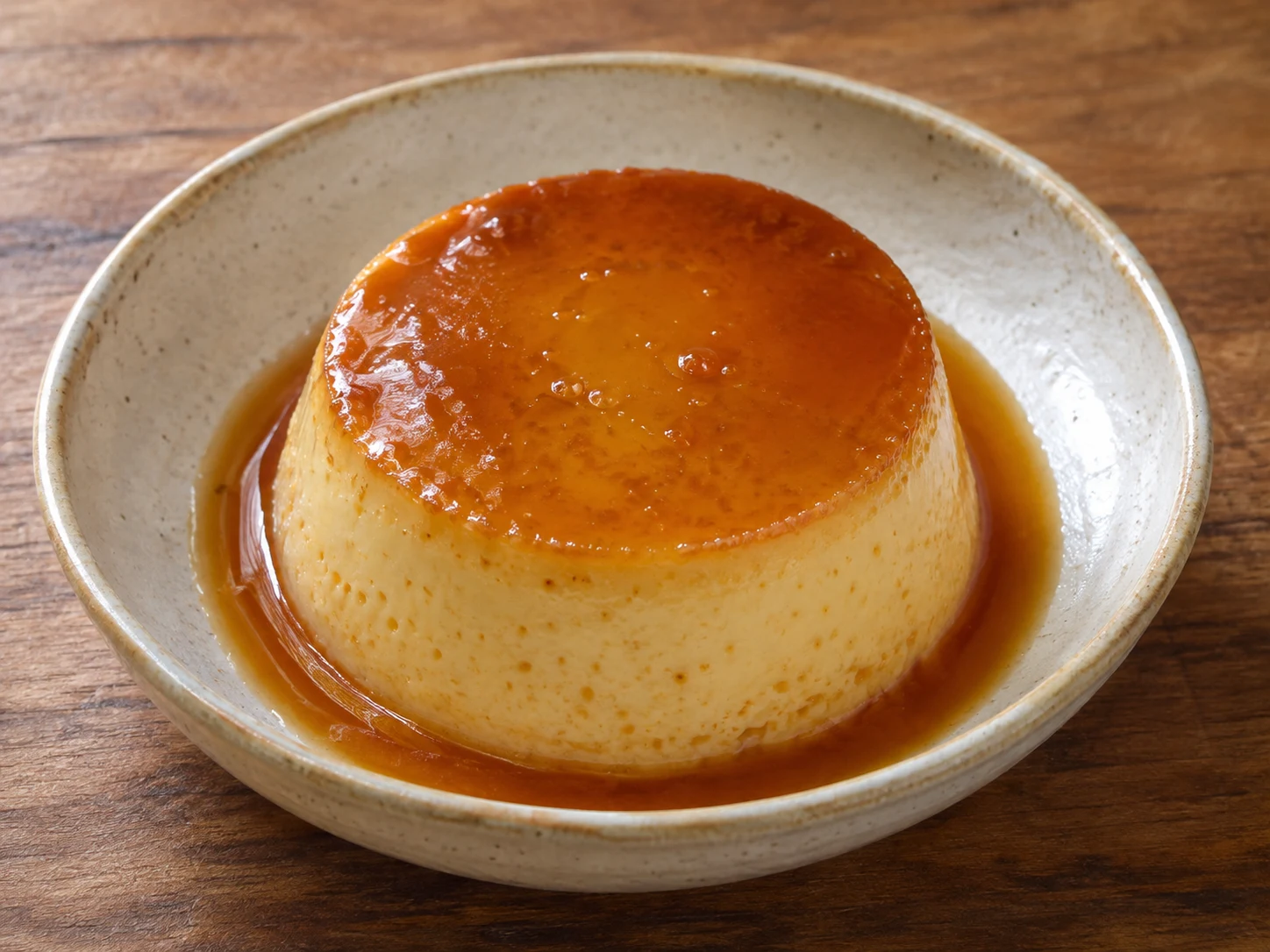
A light caramel is optional and corresponds to the illustration. The 40 g of sugar used for caramel are included in the nutrition estimate; leaving it out reduces sugar and energy. The remaining 50 g go into the custard. Use plain, unsweetened, food-grade pulp powder. A prepared drink or syrup does not have the same concentration and cannot replace 30 g of powder directly.
Cultural context
This recipe is a contemporary creation inspired by ingredients from the Angolan table, not an attested traditional recipe. The references document the products and their context; they are not the source of the proposed formula. The proportions and method are an original editorial proposal. The institutional texts cited provide agricultural or cultural context and do not establish a traditional origin for this formula.
https://www.fao.org/4/j2771p/j2771p00.htm https://www.embassyangolatr.org/tr/angola/cultura
Tips
Use plain food-grade múcua powder.
The optional caramel is included in the nutrition estimate.
Never touch hot caramel.
Keep the water bath gentle.
Check that the centre has set before cooling, then chill for four hours.
Planning
Read the composition of the coconut milk and choose it unsweetened. A diluted coconut drink does not provide the same richness or setting properties. Mix the contents of the can before measuring, since the fat and water may separate. Use fine, food-grade múcua without seed or shell fragments. This recipe does not explain how to extract pulp from whole fruit.
Use four medium or large eggs with intact shells, cracking them separately before adding them to the mixture. Eggs are a major allergen. Choose oven-safe ramekins of similar size. Prepare a deep dish for the water bath and a kettle or hot water, with protection for handling. Differences in acidity and coconut milk can alter the set; this editorial formula has not been kitchen-tested.
Dilute the powder in 200 ml of water, starting with a little water and adding the rest. Leave to hydrate for 10 minutes, stirring. Sieve out coarse fibres without forcing hard debris through. Mix with the coconut milk. Beat the eggs with 50 g of sugar just until combined, then bring the mixtures together without prolonged beating or foaming.
For the optional caramel, heat 40 g of sugar with 20 ml of water until light amber. A very dark caramel is bitter. Pour carefully into the ramekins: caramel is hotter than simply boiled liquid and causes burns. Do not taste with a finger or touch it to test it. Let it stabilise before adding the custard.
Divide the mixture among six ramekins placed in the water-bath dish. Pour hot water around them, not into the custards, to an appropriate height. Bake at 150°C. The water bath must not boil vigorously, which causes holes and a rubbery texture. Check after 35 minutes and continue as necessary, often to about 45 minutes depending on depth. The centre must be set, with no liquid wave when the ramekin is moved gently.
Remove the ramekins carefully from the bath and cool promptly; do not leave them in hot water. Refrigerate once the intense heat has dissipated, for at least four hours. Chilling helps the texture settle. An undercooked custard is not corrected by a night in the refrigerator. To unmould, run a thin blade around the edge and invert onto a plate. Serving in the ramekin is also valid and avoids breaking a fragile custard.
Serving
Serve cold, in the ramekins or unmoulded according to how firmly they hold. The acidity of múcua should remain perceptible; an extra sweet sauce is unnecessary. A small amount of fresh fruit can be offered separately but is not included in the calculation. Keep refrigerated until serving and take out only the quantity needed. For a buffet, replenish small portions instead of leaving everything on the table for a long time. Consume promptly after proper refrigerated storage and avoid repeated cycles at room temperature.
Storage
Cool leftovers promptly in a shallow container, refrigerate at 4 °C or below and consume within 48 hours. Reheat preparations intended to be eaten hot only once, until thoroughly hot in the centre. For salads, keep the dressing and crunchy ingredients separate where possible.
Variations
Without caramel, use only the 50 g of sugar in the mixture and pour it directly into the ramekins. Animal milk changes the recipe, allergens and nutrition and must not be a silent substitution. An egg-free version requires another setting technique. A more acidic powder calls for a cautious trial; adding sugar cannot fix every texture problem. One large mould requires a different cooking time, not simply the time for small ramekins.
Nutrition notes
Estimated values per serving, excluding accompaniments. Calculated from edible weights and reference foods; brands, cooking and actual yield may change the results. All fat is counted. Where energy is unavailable in the table, it is estimated from protein and carbohydrate (4 kcal/g), fat (9 kcal/g) and fibre (2 kcal/g). Very small optional quantities of spices are not counted.
Conclusion
The desired result depends on the textures described and seasoning adjusted at serving time. This editorial formula is not presented as kitchen-tested. Enjoy your meal!
Enjoy your meal
Enjoy your meal!