Red bean and plantain bake
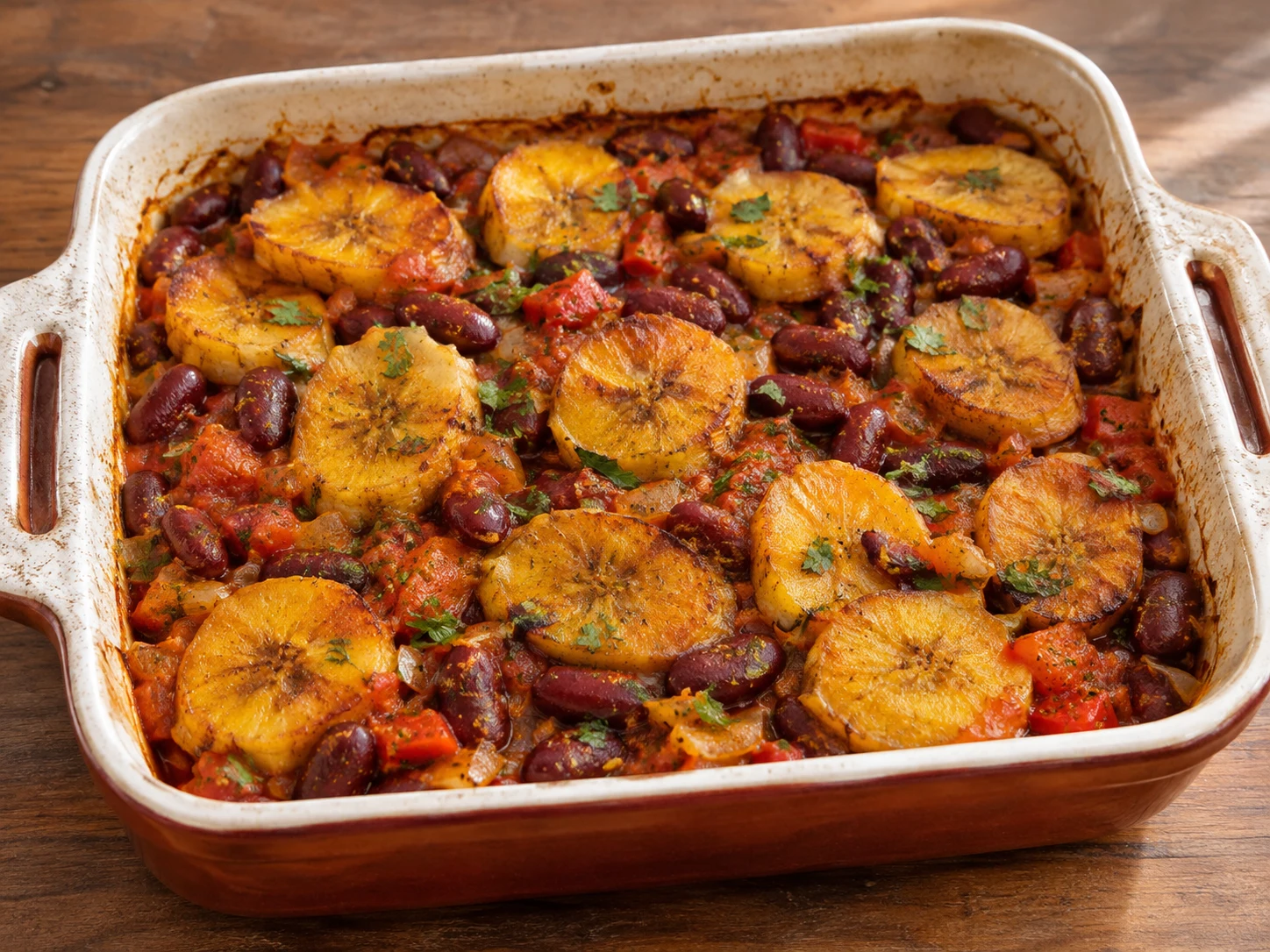
This bake alternates kidney beans in tomato sauce with plantain slices precooked in the oven.
Ingredients
- 600 g cooked drained red kidney beans
- 500 g peeled firm yellow plantain
- 400 g chopped tomatoes
- 150 g onion
- 25 ml oil
- 100 ml water
- 2 garlic cloves
- 3 g salt
- Black pepper
Preparation
Slice the plantain into rounds, mix with 10 ml oil and roast for 20 minutes at 200 °C.
Soften onion and garlic in the remaining 15 ml oil.
Add tomatoes and water, cook for 15 minutes, then incorporate cooked beans and salt.
Alternate beans and plantain in a dish, finish with visible slices and bake for another 20 minutes.
The recipe contains no cheese.
Introduction
This bake alternates kidney beans in tomato sauce with plantain slices precooked in the oven. It contains neither cheese nor a cream mixture: here the word gratin means an oven finish that brings the layers together and lightly colours the surface. The beans are already cooked before assembly. Plantain brings moderate sweetness and a texture that remains recognisable when it is chosen yellow and still firm. This contemporary proposal draws on products of the Angolan table without being presented as an attested traditional variation of feijoada.
The four portions can form a plant-based meal, completed with fresh vegetables according to appetite. The dish already contains pulses and a starchy food; there is no need to add rice or bread systematically. The point of building layers is to preserve two textures rather than cooking everything together until crushed. The sauce should be plentiful enough to avoid a dry bottom, but reduced enough not to leave the plantain slices floating.
Cultural context
This recipe is a contemporary creation inspired by ingredients of the Angolan table, not an attested traditional recipe. The references document the products and their context; they are not the source of the proposed formula. The proportions and method are an original editorial proposal. The institutional texts cited provide agricultural or cultural context and do not establish a traditional origin for this formula.
https://www.fao.org/4/j2771p/j2771p00.htm https://www.embassyangolatr.org/tr/angola/cultura
Tips
Do not confuse dry and cooked bean weights.
Precook the plantain before assembly.
Keep the sauce reduced but present between the layers.
The dish contains no cheese.
Rest briefly to serve without crushing all the layers.
Planning
The six-hundred-gram weight refers to kidney beans cooked and then drained. Plain canned beans are convenient: rinse and let them drain before weighing. This recipe does not call for dry kidney beans to be used directly in the bake. If starting with dry beans, soaking and full cooking must be carried out separately using a suitable method. This dish's oven stage does not replace that initial preparation.
Choose yellow plantain still firm enough to hold its shape. A very green plantain will be less sweet and may need more cooking; a ripe dessert banana is too fragile for the intended result. Weigh five hundred grams of flesh after peeling. The chopped tomatoes are unseasoned to retain control over salt. Prepare a medium-sized oven dish deep enough for two layers without forming an overly thick mass. A wide shape encourages an even finish and leaves more slices visible.
Preheat the oven to two hundred degrees. Cut the plantain into even slices, about one and a half centimetres thick, then mix with the ten millilitres of oil intended for this first cooking. Spread on a tray in a single layer. Bake for about twenty minutes, turning halfway. The slices should become tender and lightly coloured without drying out. This precooking is essential: raw plantain placed between already-ready beans would not cook at the same rate.
During roasting, soften the onion in the remaining fifteen millilitres of oil. Add garlic, then tomatoes and water. Simmer for about fifteen minutes, stirring. Then incorporate the beans and salt and check the consistency. A spoonful of sauce should cling to the beans without a large quantity of separate water. If the mixture is too thick, add a few spoonfuls of hot water; if very liquid, briefly continue reducing before assembly.
Spread a first layer of beans in the dish, then some plantain slices. Add the remaining beans and finish with the remaining slices arranged without crushing them. Keep a little sauce visible between them: it protects the surfaces during the final oven stage. Do not press down hard with a spoon, because the beans may break and lose their texture. The dish goes into the oven with components still hot or warm, allowing a finishing stage of about twenty minutes.
On removal, the sauce should simmer at the edges and the centre should be thoroughly hot. Rest for five minutes to stabilise the layers before serving. A golden top must not conceal a dry bottom; if the dish dries too quickly, cover it for part of the time. A bake assembled with cold components needs longer reheating than the planned twenty-minute finish. In that case, monitor the centre and protect the top to avoid burning the plantain.
Serving
Serve with a wide spatula that reaches the bottom of the dish, so each portion contains beans and plantain. A tomato and onion salad, or green leaves prepared separately, provides a useful contrast. For a table with several dishes, reduce the portion rather than presenting this quantity as a small side. Divide leftovers quickly among shallow containers, then refrigerate. Reheat a portion with a few spoonfuls of water if it has lost moisture, until the centre is thoroughly hot.
Storage
Cool leftovers quickly in a shallow container, refrigerate at 4 °C or below and eat within 48 hours. Reheat preparations intended to be eaten hot only once, until thoroughly hot at the centre. For salads, keep the dressing and crunchy elements separate where possible.
Variations
Cooked cowpeas or white beans can make another version whose title must specify the pulse. A small quantity of gindungo can be added to the tomato sauce before assembly. Cheese, meat and cream are unnecessary; adding them would significantly change the taste and nutritional calculation. For a softer surface, cover the dish during the first half of finishing, then uncover. For individual presentation, divide among four small dishes and begin checking earlier, because their depth and heat transfer differ from a large bake.
Nutrition notes
Estimated values per serving, excluding accompaniments. Calculated from edible weights and reference foods; brands, cooking and actual yield may change the results. All fat is counted. When the table does not provide energy, it is estimated from protein and carbohydrate (4 kcal/g), fat (9 kcal/g) and fibre (2 kcal/g). Very small optional quantities of spices are not counted.
Conclusion
The intended result depends on the textures described and seasoning adjusted at serving. This editorial formula is not presented as kitchen-tested. Enjoy your meal!
Enjoy your meal
Enjoy your meal!