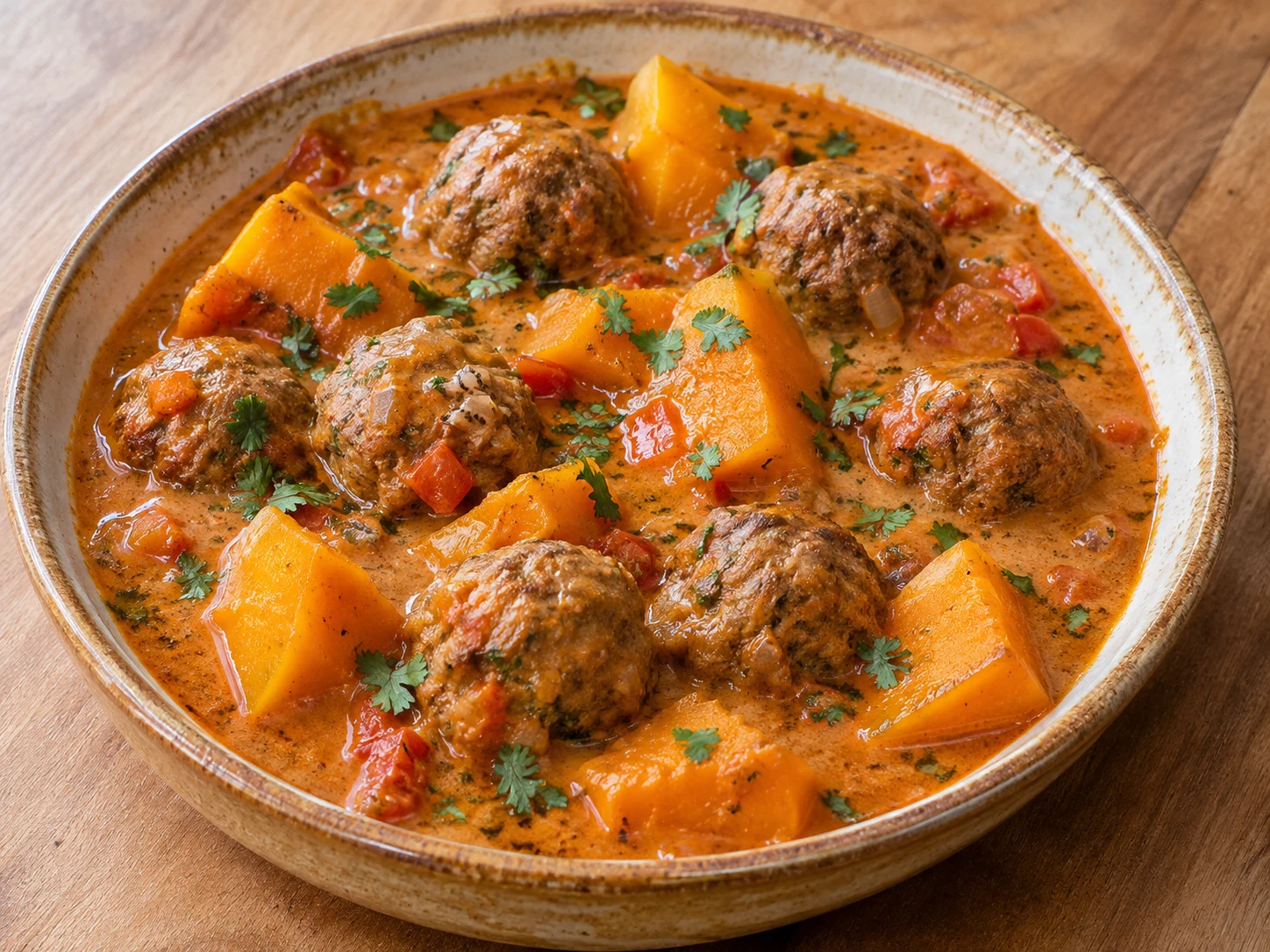
Beef meatballs in peanut and pumpkin sauce
Meatballs give this peanut sauce a different structure from a stew made with chunks of meat.
Ingredients
- 500 g minced beef
- 500 g peeled pumpkin
- 80 g pure unsweetened peanut butter
- 250 g tomatoes
- 150 g onion
- 2 garlic cloves
- 15 ml oil
- 600 ml water
- 3 g salt
- Black pepper
Preparation
Form 16 beef meatballs with a small portion of very finely chopped onion and 1 g salt.
Sear them in the oil and set aside.
Soften the remaining onion, add garlic and tomatoes, then cook for 7 minutes.
Dilute the peanuts in the water and pour into the pan.
Add cubed squash and meatballs, simmer for 25 to 30 minutes and stir gently.
Check that the minced beef is completely cooked at the centre and the squash is tender.
Introduction
Meatballs give this peanut sauce a different structure from a stew made with chunks of meat. Minced beef is shaped into small portions, briefly browned and then finished in a sauce in which cubes of squash also cook. Ginguba binds the liquid, and tomato maintains a balance between the vegetable's sweetness and the richness of the peanuts. This contemporary proposal is inspired by ingredients of Angolan cuisine; it is not presented as an old moamba or a provincial speciality. Sixteen meatballs make four even portions.
The dish needs a sauce fluid enough to surround the meat and cook the squash without sticking. Peanut paste added directly while dry can form clumps and stick to the bottom. It is therefore diluted before incorporation. The meatballs must not be stirred vigorously while they are still fragile. You can gently move the saucepan and baste the portions with their sauce. The meat's external colour, obtained during searing, is not enough to establish that its centre is cooked.
Cultural context
This recipe is a contemporary creation inspired by ingredients of the Angolan table, not an attested traditional recipe. The references document the products and their context; they are not the source of the proposed formula. The proportions and method are an original editorial proposal. The institutional texts cited provide agricultural or cultural context and do not establish a traditional origin for this formula.
https://www.fao.org/4/j2771p/j2771p00.htm https://www.embassyangolatr.org/tr/angola/cultura https://www.foodsafety.gov/food-safety-charts/safe-minimum-internal-temperatures
Tips
The recipe contains peanuts.
Keep minced meat chilled until shaping.
Searing the outside does not prove that the centre is cooked.
Dilute the peanuts before pouring them into the pan.
Add hot water if the sauce thickens before cooking is complete.
Planning
Choose minced beef kept chilled and use it according to the seller's or packaging instructions. The five hundred grams is weighed before cooking. Very fatty meat releases more fat into the sauce; very lean meat may produce firmer meatballs. The recipe adds neither bread nor egg: shaping must therefore remain light, and the first browning gentle enough to set the surface without drying the inside.
Weigh the squash after peeling and removing seeds. Dense flesh, such as butternut squash, holds its cube shape better than a very watery variety. Use ripe tomatoes or plain chopped tomatoes without added industrial seasoning. Use pure, unsweetened peanut paste, and stir the jar well if its oil has separated. Take a small part of the onion for the meatballs and chop that portion very finely. Pieces that are too large would weaken the meat and remain noticeable at the centre.
Divide the beef into sixteen similar portions, about thirty grams each before adding onion. Incorporate the gram of salt intended for the meat and the finely chopped onion, then mix just enough to distribute them. Shape the meatballs with clean, slightly damp hands without squeezing them hard. Place them on a plate reserved for raw meat. Then cut the squash into even cubes and prepare the remaining onion, garlic and tomatoes before starting cooking.
Heat the oil in a wide saucepan and brown the meatballs in small batches. The aim at this stage is not to cook them completely: it is to set the surface so it withstands simmering better. Remove them with a slotted spoon and set aside briefly. In the same pan, soften the remaining onion, add garlic and tomatoes, then cook for about seven minutes. Stir to dissolve the cooking juices, but do not scrape any burnt deposit. Very black browning would add bitterness that peanuts cannot correct.
Dilute the peanut paste with lukewarm water, first using a small amount and then adding the rest. Pour this mixture into the tomato base and bring to a moderate simmer. Add the squash and return the meatballs to the sauce. They must be well surrounded by liquid without being crushed against the bottom. Cook for about twenty-five to thirty minutes, partially covered, watching the thickening. Add a little hot water if the sauce becomes compact before the squash is tender.
Check the centres of the thickest meatballs; minced meat must be fully cooked. The benchmark used for minced beef is seventy-one degrees Celsius at the centre, checked with a clean thermometer. The squash should be tender but still recognisable. If it breaks up while the sauce is still too thin, temporarily remove the pieces and gently reduce the liquid rather than stirring until it becomes a purée. Adjust the remaining salt at the end of cooking, after reduction, then rest for a few minutes off the heat.
Serving
Serve four meatballs per person with an even quantity of squash and sauce. Some plain rice or a portion of funge suits the sauce, but these accompaniments are not included in the recipe's calculation. Serving in a deep plate avoids losing the liquid. To prepare ahead, cool quickly in shallow containers, then reheat gently with a little water if the sauce has thickened. Do not rely on simply making it lukewarm: reheating must reach the centres of the meatballs.
Storage
Cool leftovers quickly in a shallow container, refrigerate at 4 °C or below and eat within 48 hours. Reheat preparations intended to be eaten hot only once, until thoroughly hot at the centre. For salads, keep the dressing and crunchy elements separate where possible.
Variations
Minced poultry requires its own cooking benchmark, higher than that for beef, and must be named in the title. Some squash may be replaced with carrot in small pieces after adjusting the time. A vegetable garnish must not be added at random in large quantities, because it absorbs some sauce and changes the yield. Gindungo remains optional: add a small pinch to the sauce, taste after a few minutes and increase gradually. A very spicy sauce must not mask bitterness caused by burnt cooking.
Nutrition notes
Estimated values per serving, excluding accompaniments. Calculated from edible weights and reference foods; brands, cooking and actual yield may change the results. All fat is counted. When the table does not provide energy, it is estimated from protein and carbohydrate (4 kcal/g), fat (9 kcal/g) and fibre (2 kcal/g). Very small optional quantities of spices are not counted.
Conclusion
The intended result depends on the textures described and seasoning adjusted at serving. This editorial formula is not presented as kitchen-tested. Enjoy your meal!
Enjoy your meal
Enjoy your meal!